Skip to content
Minomycin
Active ingredient: Minocycline

Minomycin

Quality products
24/7 Support
Fast delivery
Delivery from 4 days
Select pack Package Per unit Price

Free delivery on orders from AED 796.00, free express delivery from AED 1,194.00

Secure Payments
Track your order
Best price guarantee

Minomycin contains minocycline, a tetracycline antibiotic that slows bacterial growth and reduces inflammation. It is prescribed for selected bacterial infections and inflammatory acne in appropriate patients. The oral capsule works systemically, so correct dosing and interaction checks matter.

About this product

Minomycin is an oral minocycline product within the tetracycline antibiotic class. Minocycline blocks bacterial protein synthesis, which prevents susceptible bacteria from multiplying. Its anti-inflammatory activity also helps explain its role in dermatology, especially for inflammatory acne.

Pharmacological action

Minocycline enters susceptible bacterial cells and attaches to the 30S ribosomal subunit. This prevents the addition of amino acids to new proteins. Bacterial growth slows, allowing the immune system to clear the infection.

Its anti-inflammatory effects involve pathways linked with inflammatory enzymes, cytokines, and tissue-damaging processes. This second action is relevant to acne, where inflammation contributes to redness, swelling, and tender lesions.

What it contains

Minomycin is an oral minocycline product within the tetracycline antibiotic class. Minocycline blocks bacterial protein synthesis, which prevents susceptible bacteria from multiplying. Its anti-inflammatory activity also helps explain its role in dermatology, especially for inflammatory acne.

The exact amount per intake is selected individually rather than being one fixed dose for every person. Minomycin should therefore be used only according to the regimen prescribed for the diagnosed condition.

Pharmacological Classification

Minocycline is a semisynthetic tetracycline antibiotic. It acts mainly by binding to the 30S bacterial ribosomal subunit, interrupting the transfer of amino acids needed to build bacterial proteins. The FDA prescribing information describes minocycline products for susceptible bacterial infections and selected dermatological uses [1].

Minocycline is absorbed after oral administration and distributes into body tissues. Its prolonged tissue distribution can support less frequent dosing than some older tetracyclines, although the schedule depends on the formulation, condition, kidney and liver function, and the prescriber’s plan.

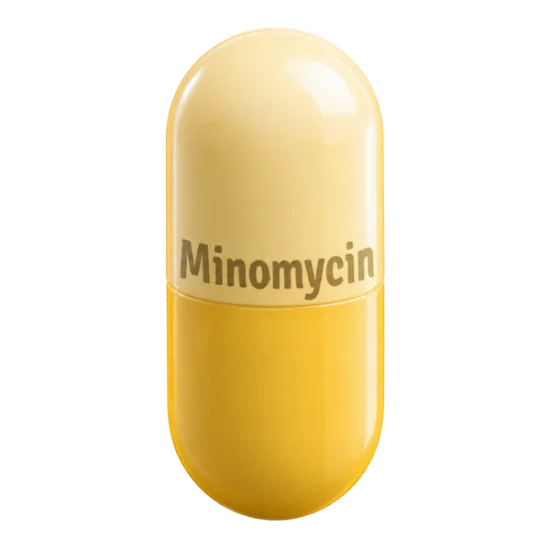
Minomycin is supplied as oral capsules. The product should be swallowed with sufficient fluid.

Take the capsule with a full glass of water while sitting or standing. Remaining upright reduces the chance of irritation in the throat or oesophagus.

Directions for use

Minomycin is taken orally as a capsule. The amount per intake is determined individually, so the prescribed regimen takes priority over general dosing examples. The schedule may differ according to the infection, acne severity, kidney function, age, interacting medicines, and clinical response.

Practical administration points include:

  • Swallow each capsule whole with plenty of water.
  • Take doses at evenly spaced times when the prescription uses a regular schedule.
  • Remain upright after taking the capsule.
  • Avoid taking it at the same time as aluminium-, calcium-, magnesium-, or iron-containing products unless the prescriber or pharmacist has given a suitable separation schedule.
  • Complete the prescribed course for an infection unless the prescriber changes it.
  • If a dose is missed, take it when remembered unless the next dose is near; skip the missed dose rather than doubling.

Minocycline absorption can be reduced by some antacids, mineral supplements, and iron preparations. A practical separation interval is often used, but the exact interval depends on the product and regimen. This is worth checking before treatment if you regularly take indigestion remedies, iron, calcium, or magnesium.

Keep a simple dosing time that fits your daily routine. Taking a missed dose together with the next dose can increase adverse effects without improving treatment.

Minomycin capsules should not be opened, crushed, or chewed unless a prescriber gives a formulation-specific instruction. Altering a capsule can change how the medicine is delivered and may expose the mouth or throat to an unpleasant drug taste.

Reasons not to use it

Minomycin is not suitable for everyone.

  • Serious allergic reaction to minocycline, another tetracycline, or an excipient in the capsule.
  • Severe liver injury linked to minocycline.
  • History of intracranial hypertension that a clinician considers relevant.
  • Pregnancy, planning pregnancy, or breastfeeding unless a specialist has specifically assessed the situation.
  • Use in a young child during tooth development, unless a specialist determines that treatment is necessary.
  • Significant liver disease requiring a different antibiotic strategy.
  • Symptoms suggesting an untreated intracranial-pressure disorder, such as persistent headache with visual changes.
  • Concomitant isotretinoin and other medicines associated with raised intracranial pressure.
  • Aluminium, calcium, magnesium, bismuth, and iron products, which can reduce absorption.
  • Warfarin, because antibiotic treatment may alter anticoagulant control in some patients.
  • Medicines that can affect the liver, when combined exposure increases concern about hepatic injury.
  • Penicillin-class antibiotics, where the combination may be inappropriate for the intended infection and should be selected deliberately.

When this is not for you

Minomycin is not for you if:

  • You have had a serious allergic reaction to minocycline, another tetracycline, or an excipient in the capsule.
  • You have experienced severe liver injury linked to minocycline.
  • You have a history of intracranial hypertension that a clinician considers relevant.
  • You are pregnant, planning pregnancy, or breastfeeding unless a specialist has specifically assessed the situation.
  • The medicine is intended for a young child during tooth development, unless a specialist determines that treatment is necessary.
  • You have significant liver disease requiring a different antibiotic strategy.
  • You have symptoms suggesting an untreated intracranial-pressure disorder, such as persistent headache with visual changes.

Tetracyclines can affect developing teeth and bones. Pregnancy and childhood use require careful clinical assessment. Minocycline can also worsen dizziness in people with vestibular disorders.

Adverse reactions

Minocycline can cause neurological, gastrointestinal, skin, and pigmentation-related adverse effects. Headache, dizziness, drowsiness, fatigue, nausea, and constipation may occur. The risk profile varies with formulation, duration, dose, and individual susceptibility.

Common or Early Effects

Possible effects include:

  • Headache.
  • Dizziness or drowsiness.
  • Fatigue.
  • Nausea or stomach discomfort.
  • Constipation or loose stools.
  • Sensitivity to sunlight.
  • Changes in balance or a spinning sensation.

Minocycline can cause dizziness. That matters when driving, climbing, or operating machinery. Some people notice vestibular symptoms after the first doses, while others develop them later. Avoid driving until you know how the capsules affect concentration and balance. Ask a pharmacist or prescriber for advice if these effects continue.

Pigmentation and Long-Term Effects

Longer courses can cause blue-grey, brown, or slate-coloured pigmentation affecting the skin, gums, nails, teeth, scars, or areas of previous inflammation. The change may be gradual and can persist after treatment. Report new pigmentation promptly because the prescriber may decide that the treatment duration or antibiotic choice should change.

Minocycline has also been associated with autoimmune reactions, liver injury, hypersensitivity reactions, and intracranial hypertension. Severe headache with visual disturbance, marked nausea, vomiting, confusion, jaundice, dark urine, facial swelling, breathing difficulty, or a widespread blistering rash requires urgent medical assessment.

A new persistent headache accompanied by blurred vision is not a symptom to monitor casually. Stop driving and seek urgent medical assessment because raised intracranial pressure is a recognised tetracycline-related concern.

Sun protection is sensible during treatment because tetracycline antibiotics can increase sensitivity to sunlight. A broad-spectrum sunscreen and protective clothing reduce unnecessary ultraviolet exposure.

Diarrhoea that is severe, persistent, bloody, or accompanied by abdominal cramping needs medical evaluation because antibiotic-associated colitis can occur during treatment or after it has finished.

Uses

Minocycline treatment is used when a clinician considers a tetracycline appropriate for the suspected or confirmed infection. Dermatologists may prescribe it for inflammatory acne with papules, pustules, or deeper lesions. It is not intended for every type of skin breakout, and it does not treat viral infections.

The principal clinical uses include:

  • Selected susceptible bacterial infections.
  • Moderate inflammatory acne when topical treatment alone is insufficient.
  • Certain inflammatory dermatological conditions when a specialist considers minocycline appropriate.
  • Selected rheumatological use, including rheumatoid arthritis, under specialist supervision.

Minocycline has been studied in rheumatoid arthritis because it may influence inflammatory pathways as well as bacterial protein synthesis. Its use in rheumatoid arthritis is more selective than its dermatological use and depends on the person’s diagnosis, disease activity, previous treatment, and monitoring plan. The American College of Rheumatology treatment framework places greater emphasis on established disease-modifying therapies, so minocycline should not be treated as a routine first choice for every patient with rheumatoid arthritis [2].

Clinical use Main treatment aim Important limitation
Inflammatory acne Reduce susceptible bacteria and inflammatory lesions Improvement may take several weeks
Susceptible bacterial infection Inhibit bacterial growth It does not treat viruses
Selected rheumatoid arthritis use Modulate inflammatory activity Specialist selection and monitoring are required

Acne treatment usually combines an oral antibiotic with a broader skin-care plan. Dermatologists may limit antibiotic exposure and use topical therapy alongside it to reduce prolonged antibiotic use. Minocycline can reduce inflammatory lesions, but it is not a permanent cure for acne and recurrence can occur after treatment ends.

Comparison

Minocycline belongs to a group of antibiotics with different clinical profiles. Comparison should focus on mechanism, patient factors, and the condition being treated rather than brand names.

Option Main clinical distinction Limitation
Minocycline Tetracycline antibiotic with antibacterial and anti-inflammatory activity Dizziness, pigmentation, and autoimmune reactions require attention
Doxycycline Tetracycline antibiotic often used for acne and respiratory or tick-borne infections Gastrointestinal irritation and sun sensitivity can occur
Topical acne treatment Delivers treatment directly to the skin Less suitable when acne is extensive, deep, or widespread

For acne, topical treatment may be preferred when lesions are limited and superficial. Oral minocycline may be considered when inflammation is widespread or deeper. The choice depends on acne severity, previous treatment, pregnancy status, side-effect risk, and antibiotic stewardship.

Minocycline, doxycycline, and older tetracycline medicines belong to the same broad antibiotic family, yet they are not interchangeable. Their absorption, dosing schedules, adverse-effect profiles, tissue distribution, and approved uses differ. Doxycycline is often selected when a clinician wants a different tolerability profile or dosing approach, while minocycline may be considered when its clinical and dermatological properties fit the treatment plan.

Antibiotic choice should reflect the suspected organism and local resistance patterns. WHO antibiotic stewardship principles support using antibiotics only when a bacterial indication is present and selecting the narrowest suitable option [3].

Common mistakes

Several practical errors can reduce benefit or increase side effects:

  • Taking the capsule immediately before lying down.
  • Swallowing it with only a small sip of water.
  • Taking it together with iron, calcium, magnesium, or an antacid.
  • Doubling the next dose after forgetting one.
  • Stopping an infection course early because symptoms improve.
  • Continuing treatment despite severe headache, visual symptoms, jaundice, or facial swelling.
  • Driving after the first dose without knowing whether dizziness occurs.
  • Using old capsules for a new acne flare without reassessing the diagnosis.
  • Treating a viral cold with an antibiotic.
  • Failing to mention isotretinoin, anticoagulants, mineral supplements, or liver disease.

Take it with water. Do not double doses.

One practical point is easy to miss: minocycline-related dizziness can feel like motion sickness or an unstable sensation rather than ordinary sleepiness. A person may still feel mentally alert but be unsafe on stairs or behind the wheel.

What doctors say

In clinical practice, dermatologists often assess whether the acne is inflammatory enough to justify an oral antibiotic. They also look for a plan that limits antibiotic exposure, because repeated or prolonged courses can encourage resistance and may increase cumulative adverse effects. A doctor may combine oral minocycline with topical treatment rather than relying on the capsule alone.

A rheumatologist approaches minocycline differently. Rheumatoid arthritis requires assessment of joint inflammation, functional impact, disease duration, laboratory findings, and the risk of progressive joint damage. Minocycline may have a role in selected cases, but it is not a universal replacement for standard disease-modifying treatment.

The FDA safety information supports attention to neurological symptoms, pigmentation, liver injury, hypersensitivity, and autoimmune reactions during minocycline therapy [4]. Consistent dosing helps the prescriber judge response, while missed doses and unreported supplements can make the treatment appear less suitable than it is.

Questions and answers

Can Minomycin affect driving, concentration, or work with machinery?

Minocycline can cause dizziness, drowsiness, vertigo, or reduced coordination in some patients. FDA safety information from 2020 describes vestibular and neurological reactions that may affect activities requiring balance or alertness . Avoid driving and machinery until your response is clear, especially after the first doses or a dose change. If dizziness persists, worsens, or occurs with visual symptoms, urgent medical assessment is appropriate.

Can the capsule be split, crushed, or chewed?

Minomycin is supplied as an oral capsule, so it should be swallowed whole unless a prescriber provides a formulation-specific alternative. Crushing or chewing can produce an unpleasant taste and may alter how the contents contact the mouth and throat. Product formulation guidance from the EMA published in 2018 supports preserving the intended dosage form when administering oral medicines [5]. Do not open the capsule to divide the amount between doses.

How soon can an effect become noticeable?

The timing depends on the condition, bacterial susceptibility, severity, and individual response. Acne inflammation may begin to settle over several weeks, while an infection should show a clinically appropriate response within the period expected by the treating clinician. Dermatology guidance from the American Academy of Dermatology issued in 2024 supports assessing acne treatment over a planned course rather than judging it after only a few doses . Worsening symptoms, new fever, spreading redness, or severe pain needs prompt reassessment.

What should happen after a missed dose?

Take the missed capsule when remembered if the next scheduled dose is not near. If the next dose is close, skip the missed dose and resume the usual schedule. The FDA prescribing information from 2020 advises against taking two doses together after a missed dose . A missed dose during infection treatment should not be compensated for by extending or changing the course without clinical instruction.

Can Minomycin be taken with food or on an empty stomach?

Minocycline may be taken with food when stomach discomfort occurs, but mineral-containing products can interfere with absorption. Calcium, magnesium, aluminium, iron, and bismuth require a separate timing plan, as described in antibiotic administration guidance from WHO published in 2023 . Avoid taking the capsule with a mineral supplement unless the interval has been established for your regimen. Use plenty of water and remain upright after swallowing.

Do you offer anonymous delivery?

Your order will be securely packed and shipped within 24 hours. This is exactly what your package will look like (images of an actual item sent). It has the size and look of a regular private letter (24x11x0.7 cm) and its contents cannot be seen.

Comparison

Compare treatments for Antibiotics

Sources

  1. U.S. Food and Drug Administration (2020). Minocycline hydrochloride prescribing information
  2. American Academy of Dermatology (2024). Guidelines of care for the management of acne vulgaris
  3. World Health Organization (2023). The WHO AWaRe antibiotic book: Information on selected antibiotics
  4. U.S. Food and Drug Administration (2020). Minocycline hydrochloride extended-release capsules: safety information
  5. European Medicines Agency (2018). Guideline on the clinical investigation of medicinal products for the treatment of acne vulgaris

Minomycin: What Customers Say

3.3
Based on 3 reviews
Layla, 27 Jebel Ali Several weeks
Verified
Rating: 4 out of 5

I used the prescribed capsule schedule for inflammatory acne. The first several days brought mild dizziness, so I took it after dinner and stayed upright. By the later weeks, the painful spots were less frequent, although I still needed topical treatment.

12 Oct 2026
Sana, 59 Deira A few weeks
Verified
Rating: 3.5 out of 5

The capsules were manageable for my joint symptoms, but constipation and fatigue became irritating after a few weeks. I had been taking an iron supplement at the same time, and separating the products made the routine easier after the timing was reviewed.

26 Oct 2026
Reem R., 62 Al Majaz Several weeks
Verified
Rating: 2.5 out of 5

I took the capsules as prescribed for several weeks, then stopped after developing a persistent headache with blurred vision and sought urgent assessment. The symptoms were taken seriously, and I was glad I had not simply continued or doubled a missed dose.

10 Nov 2026
Get our free app Shop faster and track your orders 3.8 · 425 reviews Install