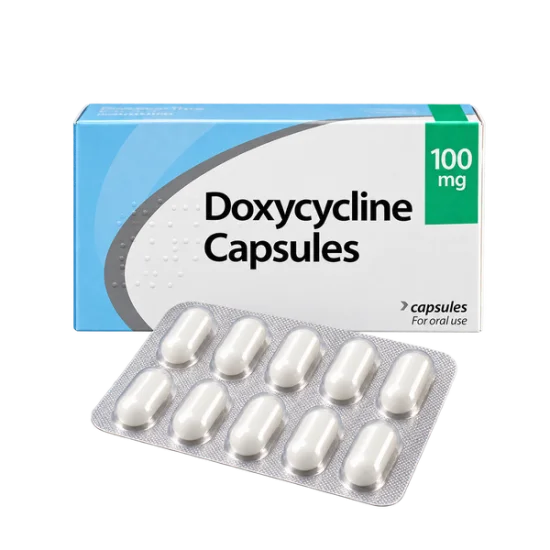
Sharjah, took the prescribed doxycycline course for a chest infection: “The breathing symptoms improved after several days, but the first doses made me feel nauseated. Taking the capsule after a light meal helped, and I learned not to lie down afterward.”
Doxycycline
Doxycycline helps block bacterial protein production, slowing the growth of susceptible organisms. It is used in adults and selected younger patients for respiratory, skin, tick-borne, and sexually transmitted bacterial infections when the organism is susceptible.
About this product
Doxycycline belongs to the tetracycline class of antibiotics. It is bacteriostatic, which means it usually stops susceptible bacteria from multiplying rather than killing every organism immediately.
Pharmacological action
The medicine enters bacterial cells and binds to the 30S ribosomal subunit, interrupting protein synthesis needed for growth and reproduction [1].
What it contains
Each capsule contains doxycycline for oral use. The dose is decided individually, taking age, other medicines, the infection, and kidney and liver health into account. Other capsule ingredients are not specified in the available product information.
Directions for use
The prescribed dose is decided individually, taking age, other medicines, the infection, kidney and liver health, and treatment history into account.
- Take the prescribed dose at the scheduled time.
- Swallow each capsule whole with a generous amount of water.
- Take it while upright and avoid lying down immediately afterward.
- Keep doses evenly spaced when more than one dose is prescribed per day.
- Complete the prescribed course unless the prescriber changes it because of a reaction or a new clinical finding.
- If a dose is missed, take it when remembered unless the next dose is close.
- Do not double the next dose to compensate for a missed capsule.
Doxycycline can be taken with food when stomach upset occurs, though the food type matters because calcium, magnesium, aluminium, and iron can reduce absorption. Plain water is the safest drink for swallowing the capsule.
Standard Dosing Regimens and Treatment Duration
Dosing varies by infection. Some conditions use an initial higher schedule followed by a lower maintenance schedule, while others use a consistent daily dose. Children, older adults, and people taking interacting medicines may require a different plan.
Stopping early can leave surviving bacteria behind. Those organisms may multiply again, and incomplete treatment can contribute to antibiotic resistance. Do not save unused capsules for a later illness.
A doctor may change treatment when symptoms fail to improve, laboratory results identify a resistant organism, or adverse effects outweigh the expected benefit.
Reasons not to use it
- Previous serious allergy to doxycycline or another tetracycline
- Pregnancy, unless a specialist determines that treatment is necessary
- Breastfeeding when an alternative is more appropriate
- Children younger than 8 years, except for specific serious infections where specialist guidance supports use
- Severe swallowing difficulty or active oesophageal disease
- A history of raised intracranial pressure
- Concurrent oral isotretinoin or another systemic retinoid
- Significant liver disease requiring careful medicine selection
The FDA prescribing information and European regulatory safety information describe age, pregnancy, hypersensitivity, and interaction precautions for doxycycline [2].
When this is not for you
Doxycycline may not be for you if you have a serious tetracycline allergy, are pregnant without specialist advice, or cannot follow swallowing and interaction instructions. The medicine is generally avoided or used only after careful clinical assessment in the following situations:
- Pregnancy, unless a specialist determines that treatment is necessary
- Breastfeeding when an alternative is more appropriate
- Children younger than 8 years, except for specific serious infections where specialist guidance supports use
- Severe swallowing difficulty or active oesophageal disease
- A history of raised intracranial pressure
- Concurrent oral isotretinoin or another systemic retinoid
- Significant liver disease requiring careful medicine selection
Tetracyclines can affect developing teeth and bones. Short courses may be used in some children when the infection risk is serious, but this is a clinical decision rather than routine treatment. Pregnancy decisions require assessment of the infection, gestational stage, and available alternatives.
Adverse reactions
Gastrointestinal effects are among the most familiar problems with doxycycline. Nausea, loose stools, abdominal discomfort, and vomiting may occur. Taking the capsule with suitable food can improve stomach tolerance, but mineral-containing products still require separation.
Common or clinically relevant reactions include:
- Nausea or indigestion
- Diarrhoea or abdominal discomfort
- Headache
- Increased sensitivity to sunlight
- Skin rash
- Thrush or other changes in normal microorganisms
- Irritation or pain in the throat or chest from oesophageal injury
Seek urgent medical attention for facial swelling, breathing difficulty, widespread blistering rash, severe skin peeling, fainting, severe headache with visual changes, or watery or bloody diarrhoea that persists after treatment.
Severe headache with blurred or double vision can signal raised pressure around the brain, a rare reaction known as intracranial hypertension. The risk may be higher when doxycycline is combined with oral retinoid medicines.
Photosensitivity and Dermatological Reactions
Doxycycline can make the skin react more strongly to ultraviolet light. Sunburn may develop faster than expected, including during ordinary outdoor activity in the UAE.
Use high-protection sunscreen, wear a hat and covering clothing, and limit direct midday sun. Tanning beds also increase ultraviolet exposure.
A mild rash may be drug-related, while a rash with blisters, mouth sores, eye irritation, or skin peeling needs urgent evaluation. Do not treat a rapidly spreading rash as ordinary sunburn.

Uses
Doxycycline may be prescribed for several infection categories, but the correct indication depends on the suspected organism and the patient’s clinical findings. A capsule formulation provides a measured oral dose, while the treatment schedule varies by condition.
| Infection category | Examples of clinical use |
|---|---|
| Respiratory infections | Selected atypical respiratory infections and susceptible bacterial infections |
| Skin and soft-tissue conditions | Acne, certain staphylococcal infections, and selected inflammatory skin infections |
| Genitourinary infections | Chlamydial infections and other specifically diagnosed susceptible infections |
| Tick-borne disease | Rickettsial infections and Lyme disease in appropriate patients |
A clinician may select doxycycline when the suspected bacteria are susceptible, when atypical organisms are possible, or when the medicine’s tissue distribution suits the infection. It is not an automatic choice for every cough, urinary symptom, or skin lesion.
Management of Respiratory and Skin Infections
Respiratory use may include infections involving atypical organisms, where standard beta-lactam antibiotics may not cover the suspected pathogen. The choice depends on symptoms, examination findings, disease severity, allergy history, and regional resistance patterns.
In dermatology, doxycycline is used for inflammatory acne and selected bacterial skin infections. Its value in acne also relates to anti-inflammatory activity, which can reduce inflammatory lesions over time. Improvement is gradual, so a few days of treatment may not show the full effect.
Treatment of Genitourinary and Sexually Transmitted Infections
Doxycycline is widely used for confirmed or suspected chlamydial infection under established treatment protocols. Sexual partners may also require assessment and treatment, depending on the diagnosis and local public-health guidance. Sexual contact should follow the specific instructions given for the diagnosed infection, because transmission can continue before treatment is complete.
Doxycycline is not a universal treatment for every urinary tract infection. Many common urinary pathogens require a different antibiotic, and urine testing may be needed when symptoms suggest a urinary infection.
Comparison
Doxycycline occupies a useful place among antibiotics because it combines activity against several atypical organisms with good distribution into tissues. Its anti-inflammatory effects also make it useful in selected dermatological conditions.
| Antibiotic approach | Typical strength | Main limitation |
|---|---|---|
| Doxycycline and other tetracyclines | Atypical coverage, tissue distribution, oral use | Photosensitivity, mineral interactions, pregnancy and age restrictions |
| Beta-lactam antibiotics | Strong coverage for many common susceptible bacteria | Limited activity against many atypical organisms |
| Macrolide antibiotics | Useful against selected respiratory and sexually transmitted pathogens | Resistance and medicine-specific cardiac or gastrointestinal concerns |
Doxycycline may be favoured when chlamydial, rickettsial, borrelial, or atypical respiratory infection is suspected. A beta-lactam may be more suitable for another organism, while a macrolide may be chosen when the patient’s history or infection pattern makes it preferable. WHO antibiotic stewardship guidance supports selecting the narrowest suitable treatment and avoiding unnecessary antibiotic exposure [3].
Common mistakes
Several practical errors reduce absorption or increase irritation:
- Swallowing the capsule with only a small sip of water
- Taking it immediately before lying down
- Combining it with iron, calcium, magnesium, or antacids
- Treating sun protection as optional
- Stopping as soon as fever or pain improves
- Doubling a dose after forgetting one
- Using leftover antibiotics for a new cough or skin problem
- Assuming diarrhoea is harmless when it is severe, persistent, or bloody
- Taking oral isotretinoin without mentioning it to the prescriber
- Continuing a suspected allergy despite rash progression
One easily missed detail is the timing of dairy products and fortified drinks. They can be part of a healthy diet but still interfere with doxycycline absorption when taken together.
Another is posture. The capsule should travel fully into the stomach before the patient lies down.
What doctors say
In clinical practice, prescribers usually focus on three questions: whether bacteria are likely to be responsible, whether doxycycline covers the suspected organism, and whether the patient can take it safely.
A doctor will often ask about pregnancy, swallowing problems, sun exposure, acne medicines, anticoagulants, antacids, iron, and recent antibiotics. Those details can change the treatment plan even when the infection itself appears straightforward.
The European Medicines Agency and national prescribing guidance emphasise patient-specific selection, interaction review, and correct administration for tetracycline antibiotics [4].
Questions and answers
Can doxycycline be taken with iron, calcium, magnesium, or antacids?
Minerals can bind doxycycline and reduce its absorption, so iron supplements, calcium, magnesium, aluminium antacids, and bismuth products should be separated from the antibiotic. The exact spacing depends on the interacting product and the prescribed schedule. FDA prescribing information reviewed in 2024 lists polyvalent-cation interactions as a practical administration concern. A written medicine timetable helps prevent accidental overlap.
How does doxycycline differ from beta-lactam antibiotics?
Doxycycline blocks bacterial protein synthesis at the 30S ribosomal subunit, while beta-lactam antibiotics interfere with bacterial cell-wall construction. This difference gives doxycycline useful activity against organisms that beta-lactams may not cover, including several atypical pathogens. The CDC sexually transmitted infection guidance published in 2021 uses doxycycline in specific chlamydial treatment protocols. Neither class is automatically better; the suspected organism and patient factors determine the choice.
Can doxycycline affect driving, concentration, or machinery work?
Doxycycline does not usually cause sedation, but nausea, dizziness, headache, blurred vision, or severe illness can reduce concentration. The NHS medicine information reviewed in 2025 advises avoiding driving or machinery work when a person feels dizzy or has visual symptoms. Severe headache with visual disturbance requires prompt assessment because it can indicate raised intracranial pressure. Test your response to the medicine before performing safety-sensitive work.
Should doxycycline be taken with food or on an empty stomach?
Doxycycline may be taken with food when stomach irritation occurs, but calcium-rich foods and mineral products can reduce absorption. Plain water remains the preferred fluid. FDA information updated in 2024 permits administration with food in situations where gastrointestinal irritation is a concern, while still warning about mineral interactions. Take the capsule upright and avoid taking it immediately before sleep.
What should happen if the expected result does not come?
Contact the prescriber if symptoms worsen, fail to improve within the expected clinical timeframe, or return after treatment. The cause may be viral, the bacteria may be resistant, the infection may require drainage or another intervention, or the diagnosis may need reassessment. NICE guidance on antimicrobial prescribing, reviewed in 2023, supports reassessing treatment when symptoms do not follow the expected course. Do not increase the dose or extend treatment independently.
What should be done after a missed doxycycline dose?
Take the missed capsule when remembered unless the next scheduled dose is close. If the next dose is near, skip the missed dose and return to the regular schedule. Do not take two capsules together unless a prescriber has specifically instructed this. FDA dosing information reviewed in 2024 uses this approach to reduce avoidable adverse effects from dose doubling.
Is alcohol allowed during doxycycline treatment?
Alcohol can worsen nausea, dizziness, and dehydration, and heavy alcohol use may affect antibiotic handling by the liver. The British National Formulary information reviewed in 2025 advises caution, especially in people with liver disease or repeated heavy alcohol intake. Avoid alcohol if it makes you unwell or if the prescriber has identified a liver-related concern. Alcohol does not replace the need to complete the prescribed course.
Do you offer anonymous delivery?
Your order will be securely packed and shipped within 24 hours. This is exactly what your package will look like (images of an actual item sent). It has the size and look of a regular private letter (24x11x0.7 cm) and its contents cannot be seen.
Comparison
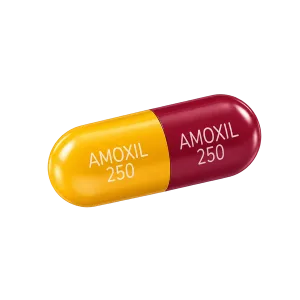
Amoxil
Ampicillin
Augmentin
Bactrim
Ciplox
Cipro
Sources
- U.S. Food and Drug Administration (2024). Prescribing Information: Doxycycline Hyclate.
- U.S. Food and Drug Administration (2024). Doxycycline: Labeling Information and Safety Warnings.
- World Health Organization (2023). The WHO AWaRe Antibiotic Book.
- European Medicines Agency (2024). Summary of Product Characteristics: Doxycycline.