Skip to content
Amoxil
Active ingredient: Amoxicillin

Amoxil

Quality products
24/7 Support
Fast delivery
Delivery from 4 days
Select pack Package Per unit Price

Free delivery on orders from AED 796.00, free express delivery from AED 1,194.00

Secure Payments
Track your order
Best price guarantee

Amoxil contains amoxicillin, a penicillin-family antibiotic that blocks bacterial cell-wall formation. It is prescribed for susceptible bacterial infections affecting the chest, ears, throat, sinuses, urinary tract, and teeth.

About this product

Amoxil contains amoxicillin, a penicillin-family antibiotic that blocks bacterial cell-wall formation. It is prescribed for susceptible bacterial infections affecting the chest, ears, throat, sinuses, urinary tract, and teeth. The capsules are intended for individualized treatment based on age, other medicines, and health conditions.

Pharmacological action

Amoxil belongs to the penicillin class of beta-lactam antibiotics. Its active antibacterial substance is amoxicillin, which interferes with the enzymes bacteria need to build peptidoglycan, a structural material in their cell walls. Without a stable cell wall, susceptible bacteria rupture and die.

This bactericidal action differs from medicines that only slow bacterial growth.

The FDA product information describes Amoxil as an oral amoxicillin product used against susceptible infections caused by several Gram-positive and Gram-negative organisms [1].

What it contains

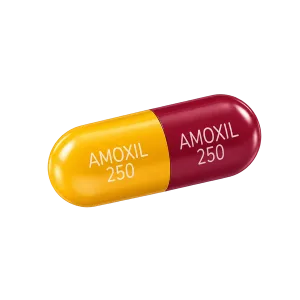
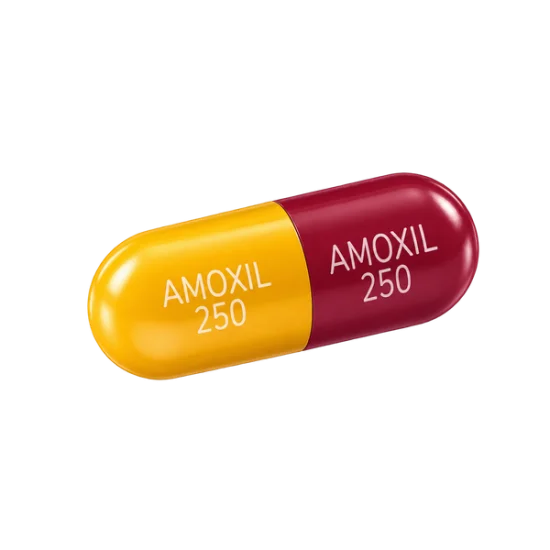
Amoxil capsules contain amoxicillin, a penicillin-family antibiotic. The pack marking is “AMOXIL 250”; the capsule strength and regimen are selected individually based on age, other medicines, health conditions, and the infection.

Directions for use

Use Amoxil exactly at the prescribed dose and interval. Treatment may involve several doses during the day, with the schedule determined by the infection, age, kidney function, and clinical response.

  • Swallow the capsule with water.
  • Amoxicillin may be taken with or without food.
  • Space doses as evenly as practical across the day.
  • Complete the prescribed course unless the prescriber changes it.
  • If a dose is missed, take it when remembered unless the next dose is close.
  • Do not double the next dose to compensate for a missed one.
  • Seek urgent medical help after a suspected overdose, especially with repeated vomiting, reduced urine, confusion, or a seizure.

Food does not usually prevent amoxicillin absorption, so taking it with a meal can be useful if it causes stomach discomfort. Finishing early because symptoms improve can leave surviving bacteria behind and may contribute to treatment failure or resistance.

One practical detail is easy to miss: improvement in fever or pain does not prove that the infection has been eradicated. Fever may improve first. Pain may also settle. The infection can persist. Symptoms can settle before the bacterial burden has been adequately controlled. Contact the prescriber if the illness worsens or fails to improve as expected.

Do not estimate a child’s dose by splitting an adult capsule. Weight-based paediatric dosing requires the child’s current weight and the concentration of the selected formulation.

Reasons not to use it

Amoxil is not suitable for a person with a known serious allergy to amoxicillin, penicillin, or another beta-lactam antibiotic. It also requires careful assessment in people with kidney impairment, a history of antibiotic-associated colitis, infectious mononucleosis, or previous severe skin reactions to antibiotics.

Specific medicines can alter the risk or reliability of treatment:

  • Warfarin and other vitamin K antagonists: the INR may change during antibiotic treatment, requiring closer monitoring.
  • Methotrexate: amoxicillin may increase methotrexate toxicity by reducing its clearance.
  • Allopurinol: the chance of an amoxicillin-associated rash may rise.
  • Probenecid: it can increase and prolong amoxicillin concentrations.
  • Other antibiotics: combining antibacterial medicines without a defined clinical reason can increase adverse effects and may not improve treatment.
  • Hormonal contraception: severe vomiting or diarrhoea can reduce absorption of oral contraceptive tablets; additional contraceptive advice may be needed in that situation.

Pregnancy and breastfeeding require an individual assessment of infection severity, alternatives, and expected benefit. Amoxicillin is used in pregnancy when clinically appropriate, but the prescriber should know about the pregnancy or breastfeeding status.

When this is not for you

Amoxil is NOT for you if you have a serious penicillin allergy or need treatment for a viral infection; a clinician should assess safer or more appropriate options.

Adverse reactions

Amoxicillin is often tolerated without serious problems, though digestive symptoms can occur. Common reactions include:

  • Nausea
  • Loose or watery stools
  • Stomach pain
  • Vomiting
  • Mild skin rash
  • Headache

Mild diarrhoea can occur during antibiotic treatment. Severe, persistent, or bloody diarrhoea needs prompt medical assessment because antibiotic-associated colitis can occur during treatment or after the last capsule.

Allergic reactions may range from an itchy rash to anaphylaxis. Emergency symptoms include difficulty breathing, swelling of the lips or tongue, faintness, widespread blistering, or rapidly worsening hives. Stop taking the medicine and obtain urgent medical care if these symptoms develop.

A delayed rash during treatment can also occur, especially with some viral illnesses. A clinician should assess the rash rather than assuming that every skin change represents a simple allergy.

Keep a record of the reaction if one occurs: when it started, which symptoms appeared, and how soon it followed the capsule. This helps clinicians distinguish allergy from non-allergic rash or digestive intolerance.

Uses

Amoxil may be prescribed for bacterial infections when the responsible organism is expected or confirmed to be susceptible. Common clinical uses include:

  • Upper respiratory infections caused by susceptible bacteria
  • Bacterial sinusitis
  • Otitis media, meaning a middle-ear infection
  • Tonsillitis and selected throat infections
  • Lower respiratory infections, including some cases of bronchitis or pneumonia
  • Dental abscesses and other odontogenic infections
  • Selected urinary tract infections
  • Certain skin and soft-tissue infections
  • Eradication regimens for Helicobacter pylori when combined with other prescribed medicines

The choice depends on the examination, symptoms, local resistance patterns, and sometimes a culture result. A cough alone does not establish a bacterial chest infection. Green or yellow mucus alone does not prove that antibiotics are needed.

Infection area Clinical examples
Ear, nose and throat Otitis media, bacterial sinusitis, tonsillitis
Chest and lungs Selected bronchitis and community-acquired pneumonia
Teeth and urinary tract Dental abscesses and susceptible urinary infections

Some infections need a different antibiotic because the organism produces beta-lactamase enzymes that can break down amoxicillin. The prescriber may select another treatment when resistance, allergy, recent antibiotic exposure, or the severity of illness changes the risk assessment.

Comparison

Amoxicillin is one member of the beta-lactam family. The preferred option depends on the suspected organism, infection site, allergy history, resistance risk, and whether beta-lactamase production is likely.

Antibacterial approach Main distinction
Amoxicillin Broad oral penicillin activity against susceptible organisms
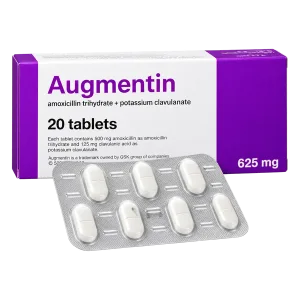
Amoxicillin plus clavulanate Adds beta-lactamase inhibition when resistance mechanisms are suspected
Doxycycline or another non-beta-lactam Different mechanism and may be selected for allergy, resistance, or organism-specific reasons

Ampicillin is closely related to amoxicillin and has overlapping antibacterial activity, but oral absorption and clinical use differ. Penicillin V is more narrowly positioned for selected susceptible infections. Dicloxacillin, flucloxacillin, and nafcillin are designed for specific staphylococcal situations, while benzathine penicillin G is a long-acting injectable formulation.

Piperacillin/tazobactam is administered parenterally in hospital settings and provides a different spectrum from oral amoxicillin. The addition of clavulanate does not make every infection more responsive; it is useful when beta-lactamase-mediated resistance is clinically relevant, while it can also increase gastrointestinal adverse effects.

Common mistakes

Several practical errors reduce the chance of a good result:

  • Taking leftover capsules for a new illness
  • Stopping after the first improvement without a treatment decision
  • Sharing capsules with a family member
  • Doubling a missed dose
  • Using antibiotics for a viral cold
  • Ignoring a previous penicillin allergy
  • Taking doses at widely different times
  • Failing to mention warfarin, methotrexate, or probenecid
  • Treating severe diarrhoea as an ordinary stomach upset
  • Opening capsules or estimating a child’s dose without a confirmed calculation

A common misconception is that a stronger smell, darker mucus, or a longer cough automatically means antibiotics are required. Diagnosis depends on the full clinical picture, not one symptom.

Another mistake is expecting every bacterial infection to improve immediately. If symptoms continue to worsen after treatment has started, the patient may need examination, a different antibiotic, drainage of an abscess, or investigation for a non-bacterial cause.

What doctors say

In clinical practice, doctors usually focus on three questions before prescribing Amoxil: is the infection likely to be bacterial, is amoxicillin suitable for the suspected organism, and can the patient take it safely?

A physician may choose amoxicillin for a susceptible respiratory, ear, dental, or urinary infection when oral treatment is appropriate. The decision may change after a culture result, recent antibiotic exposure, worsening symptoms, or a history of resistant infection.

Consistency matters because uneven intervals can leave periods when antibiotic concentrations are lower than intended. The WHO’s antibiotic stewardship guidance stresses targeted use, correct duration, and avoidance of antibiotics for viral illnesses [2].

A doctor would also expect symptoms to be monitored rather than judged by one dose. Persistent fever, increasing shortness of breath, spreading facial swelling, flank pain, or worsening weakness may indicate that the diagnosis or treatment needs reassessment.

Questions and answers

Which symptoms mean stopping Amoxil and seeking urgent medical care?

The FDA product information identifies breathing difficulty, facial or throat swelling, widespread hives, collapse, and severe blistering skin reactions as urgent warning signs; the relevant safety information dates from 2006 [3]. Severe or bloody diarrhoea also needs prompt assessment, even if it begins after the course ends. A rapidly worsening infection, confusion, or severe weakness requires medical review rather than extra capsules. Do not take another dose after a suspected severe allergic reaction until a clinician has assessed the situation.

Can Amoxil affect driving, concentration, or work with machinery?

The NHS medicines information reviewed in 2024 explains that amoxicillin does not usually impair driving or concentration for most people. Dizziness, severe illness, vomiting, or an allergic reaction can still make driving or machinery work unsafe. Wait until you feel well and alert before performing tasks that require balance, rapid decisions, or sustained attention. Emergency symptoms such as breathing difficulty or faintness require immediate care, not continued work.

What should I do if the expected result does not come?

NICE guidance for respiratory and ear infections, published in 2018, supports reassessment when symptoms worsen or fail to follow the expected clinical course. Do not increase the dose, extend the course, or switch to leftover antibiotics independently. The infection may be viral, resistant, incorrectly located, complicated by an abscess, or unrelated to bacteria. Contact the prescriber promptly if fever persists, breathing becomes difficult, pain spreads, or there is no meaningful improvement after the expected early treatment period.

Can Amoxil be combined with warfarin or other medicines?

The FDA label for amoxicillin describes clinically relevant interaction concerns with probenecid and highlights the need to consider other medicines, with the reference label dating from 2006. Warfarin may require closer INR monitoring because infection and antibiotic treatment can alter anticoagulation control. Methotrexate, allopurinol, and probenecid also deserve specific review before treatment. Provide a complete list of prescription medicines, non-prescription products, and supplements so the interaction risk can be assessed accurately.

How long does a course last, and is long-term use acceptable?

The WHO antibiotic stewardship framework published in 2022 supports the shortest clinically appropriate course for the diagnosed infection rather than automatic prolonged use. Duration varies with the body site, organism, severity, response, and immune status. Long-term or repeated use is not appropriate without a defined medical reason because it can increase diarrhoea, allergy, fungal overgrowth, and selection of resistant bacteria. A prescriber should decide whether treatment continues, changes, or stops.

Do you offer anonymous delivery?

Your order will be securely packed and shipped within 24 hours. This is exactly what your package will look like (images of an actual item sent). It has the size and look of a regular private letter (24x11x0.7 cm) and its contents cannot be seen.

Comparison

Compare treatments for Antibiotics

Sources

  1. U.S. Food and Drug Administration (2006). AMOXIL (amoxicillin) Capsules, Tablets, and Oral Suspension — prescribing information.
  2. World Health Organization (2022). The WHO AWaRe Antibiotic Book: Antibiotic Treatment for Common Infections in Children and Adults.
  3. U.S. Food and Drug Administration (2006). Amoxicillin labeling: warnings, contraindications, and adverse reactions.

Amoxil: What Customers Say

3.4
Based on 4 reviews
Saeed, 40 Umm Al Quwain 7 days
Verified
Rating: 3 out of 5

I took 250 mg capsules for 7 days for a diagnosed throat infection. The pain eased after a few days, but I still had mild stomach discomfort after each dose, so I took them with food.

1 Oct 2026
Grace, 28 Khor Fakkan 7 days
Verified
Rating: 5 out of 5

I took 250 mg capsules for 7 days, and my sinus symptoms improved during the course without major side effects. I nearly forgot an evening dose once and took the next dose according to the prescribed schedule rather than doubling it.

10 Oct 2026
Joel, 45 Al Khawaneej 5 days
Verified
Rating: 3.5 out of 5

I took 250 mg capsules for 5 days for a dental infection after the abscess was assessed. The first two days brought loose stools, which settled, but the dental treatment itself was still needed.

20 Oct 2026
Latifa, 50 Al Dhaid
Verified
Rating: 2 out of 5

I took one 250 mg capsule before developing an itchy rash shortly after starting treatment, then stopped further doses while getting urgent medical advice. The clinician treated it as a possible antibiotic allergy.

30 Oct 2026
Get our free app Shop faster and track your orders Install