I used the prescribed tablets for a chest infection and took each dose with breakfast or dinner. My cough improved after several days, but the first two days brought mild nausea. Eating before the tablet made a noticeable difference.
Amoxicillin, paired with clavulanate in Augmentin, is a penicillin-class antibiotic for susceptible bacterial infections. It is prescribed for adults and children when a clinician expects bacteria that may resist amoxicillin alone.
About this product
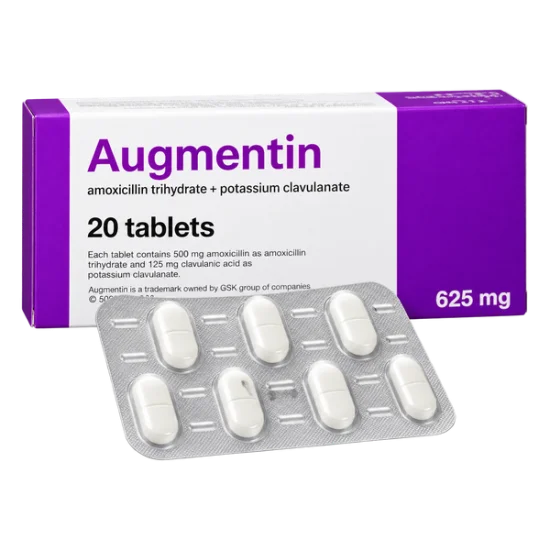
Augmentin contains amoxicillin paired with clavulanate and belongs to the penicillin class of antibiotics.
Pharmacological action
Amoxicillin attaches to bacterial penicillin-binding proteins. These proteins help build and maintain peptidoglycan in the cell wall. When the process is blocked, susceptible bacteria lose structural integrity and die.
Some bacteria produce beta-lactamase enzymes. These enzymes can open the beta-lactam ring in amoxicillin, stopping the antibiotic from reaching its target. Clavulanate binds to several of these enzymes and reduces their activity, allowing amoxicillin to work against selected beta-lactamase-producing organisms.
The combination does not overcome every form of antibiotic resistance. Bacteria may resist through altered binding proteins, reduced drug entry, active drug efflux, or beta-lactamases that clavulanate does not inhibit. Culture results and local resistance patterns can influence the choice of treatment.
The World Health Organization places amoxicillin–clavulanate within the broad group of antibiotics that require responsible prescribing because unnecessary use promotes resistance [1]. A wider antibacterial spectrum is not automatically better for every infection.
What it contains
Augmentin contains amoxicillin trihydrate and potassium clavulanate in tablet form. The strength supplied on this product page is not specified. This combination is called co-amoxiclav or amoxicillin–clavulanate.
Amoxicillin is the antibacterial component. It belongs to the beta-lactam penicillin group and kills susceptible bacteria by interfering with peptidoglycan, a structural material required for a stable cell wall. Potassium clavulanate has limited antibacterial activity by itself. Its main role is to inhibit certain beta-lactamase enzymes that would otherwise break down amoxicillin.
| Component | Pharmacological role | Plain-language meaning |
|---|---|---|
| Amoxicillin trihydrate | Beta-lactam antibacterial | Damages the bacterial cell wall |
| Potassium clavulanate | Beta-lactamase inhibitor | Protects amoxicillin from selected resistance enzymes |
| Combined formulation | Co-amoxiclav antibiotic | Covers bacteria that may resist amoxicillin alone |
The dose is decided individually, taking age, other medicines, kidney function, liver health, infection severity, and treatment history into account. Augmentin treats bacterial disease; it does not treat viral colds or influenza.
Directions for use
The prescribed dose is decided individually, taking age, other medicines, kidney function, liver function, and the type of infection into account. Use Augmentin tablets by mouth exactly at the prescribed frequency and for the prescribed duration.
Practical administration points include:
- Take each dose at the beginning of a meal.
- Swallow the tablet with water.
- Space doses as evenly as the prescription allows.
- Complete the prescribed course unless a clinician changes it because of an adverse reaction or a different diagnosis.
- Do not share tablets with another person.
- Do not save leftover antibiotics for a later illness.
- If a dose is missed, take it when remembered unless the next scheduled dose is close; do not double the next dose.
Kidney impairment can require a different regimen or a different formulation. Liver disease also matters because co-amoxiclav can rarely affect liver function. Children may require weight-based dosing and a formulation selected for their age and ability to swallow.
Reasons not to use it
This medication is not for you if you have previously experienced an immediate, severe allergic reaction to penicillins, amoxicillin, clavulanate, or another beta-lactam antibiotic. It is also unsuitable when a previous course of amoxicillin–clavulanate caused cholestatic jaundice or significant liver injury.
Extra caution or a revised treatment plan may be needed with:
- Known kidney impairment
- A history of liver disease or antibiotic-related jaundice
- Infectious mononucleosis, because amoxicillin-containing treatment can cause a prominent rash
- Pregnancy or breastfeeding, where the expected benefit and clinical need should guide use
- Previous severe antibiotic-associated diarrhoea
- Suspected glandular fever rather than bacterial infection
Important medicine interactions include:
- Warfarin and other vitamin K antagonists: clotting results may change, so monitoring may be required.
- Methotrexate: amoxicillin may increase methotrexate exposure and toxicity risk.
- Allopurinol: the chance of an amoxicillin-associated rash may increase.
- Probenecid: it can alter amoxicillin elimination and is not routinely combined without a clear prescribing reason.
- Combined hormonal contraceptives: vomiting or severe diarrhoea can reduce absorption; follow the contraceptive product’s missed-dose advice.
- Other antibiotics or supplements: do not add them to Augmentin unless a clinician has prescribed the combination.
Tell the prescriber about previous antibiotic allergies, kidney problems, liver disease, blood thinners, methotrexate, and recent antibiotic treatment before starting. The EMA product information describes these contraindications, warnings, and interaction considerations for amoxicillin–clavulanate [3].
When this is not for you
Do not take Augmentin without medical advice if you have ever had a serious immediate allergy to penicillin-type antibiotics or if this medicine previously caused jaundice or liver damage. Make sure the prescriber knows about kidney or liver disease, pregnancy or breastfeeding, glandular fever, severe antibiotic-associated diarrhoea, and any medicines such as warfarin or methotrexate.
Adverse reactions
The most frequent adverse effects involve the digestive system. Nausea, loose stools, diarrhoea, vomiting, abdominal discomfort, and indigestion can occur. Taking the tablet with food may help, but severe or persistent diarrhoea requires medical assessment.
Other possible effects include:
- Headache or dizziness
- Mild skin rash
- Oral or vaginal candidiasis
- Temporary changes in liver enzyme results
- Itching or urticaria
- Rare inflammation of the liver or bile ducts
- Rare severe allergic reactions
- Rare antibiotic-associated colitis caused by Clostridioides difficile
Diarrhoea that is severe, watery, bloody, persistent, or accompanied by abdominal cramps can occur during treatment or after the course has ended. Do not self-treat significant antibiotic-associated diarrhoea with anti-motility products before receiving medical advice.
Seek urgent medical care for facial or throat swelling, wheezing, faintness, widespread blistering rash, skin peeling, or difficulty breathing. These symptoms can indicate anaphylaxis or a serious cutaneous reaction. The FDA prescribing information lists gastrointestinal reactions, hypersensitivity, and hepatic events among the clinically relevant safety concerns for amoxicillin–clavulanate [2].
Uses
Augmentin is prescribed for bacterial infections caused by organisms susceptible to amoxicillin–clavulanate. The clinical indication depends on the infected site, examination findings, laboratory results, kidney function, and local treatment guidance.
Common medical uses include:
- Bacterial sinusitis and selected upper respiratory infections
- Community-acquired lower respiratory infections
- Bacterial bronchitis exacerbations when antibiotic treatment is appropriate
- Pneumonia caused by susceptible organisms
- Urinary tract infections
- Skin and soft-tissue infections, including infected wounds and cellulitis
- Dental infections and some oral or jaw infections
- Bone and joint infections in selected cases
- Intra-abdominal or pelvic infections when prescribed within a suitable treatment plan
Antibiotics do not shorten uncomplicated viral coughs, most viral sore throats, or influenza. Symptoms such as fever, facial pain, painful urination, wound redness, or breathing difficulty do not identify the responsible organism on their own.
A doctor may choose Augmentin when the suspected bacteria could produce beta-lactamase or when previous treatment with a narrower antibiotic has been unsuitable. The choice should match the infection rather than simply relying on the broadest available coverage.
Comparison
The most useful comparison is between co-amoxiclav and antibiotics that contain amoxicillin alone. The correct choice depends on the suspected organism, infection site, allergy history, recent antibiotic exposure, and local resistance information.
| Antibiotic approach | Main distinction | Typical clinical consideration |
|---|---|---|
| Co-amoxiclav | Amoxicillin plus clavulanate | Used when beta-lactamase-producing bacteria are a concern |
| Amoxicillin alone | One penicillin antibacterial | May be sufficient for susceptible infections with lower resistance risk |
| Non-penicillin antibiotic | Different active substance and mechanism | Considered when allergy, resistance, or infection-specific factors limit penicillin use |
Co-amoxiclav generally causes more gastrointestinal adverse effects than amoxicillin alone because clavulanate can disturb intestinal tolerance. A broader spectrum can also exert more selection pressure on normal bacteria. For these reasons, an antibiotic with fewer components may be preferred when it is clinically adequate.
A person with a history of immediate penicillin allergy may need a different antibiotic class. Substituting one treatment for another without clinical assessment can lead to treatment failure or a serious allergic reaction.
Common mistakes
Several practical errors reduce the chance of a good result:
- Taking doses only when symptoms feel severe
- Taking the tablet without food despite repeated stomach upset
- Doubling a missed dose
- Stopping as soon as the fever falls
- Using leftover tablets for a later infection
- Treating a common cold with an antibiotic
- Ignoring a new rash or persistent diarrhoea
- Forgetting to mention warfarin, methotrexate, or a penicillin allergy
- Crushing or chewing the tablet without confirming that the specific tablet can be altered
- Giving an adult tablet to a child without weight-based prescribing
One detail patients often miss is that a rash during amoxicillin treatment can have different causes. A mild rash may occur with a viral illness, while hives, swelling, breathing symptoms, or rapid progression can signal allergy and require urgent action.
Another practical issue is dehydration. Vomiting or frequent diarrhoea can make oral treatment unreliable and may require clinical review, especially in children, older adults, and people with kidney disease.
What doctors say
In clinical practice, doctors usually assess three points before choosing Augmentin: whether the illness is bacterial, whether the likely bacteria are susceptible, and whether the patient can tolerate a penicillin antibiotic. A broad-spectrum option should have a clear clinical reason.
Doctors also look at treatment response. Fever, pain, wound redness, breathing symptoms, or urinary symptoms that worsen after starting treatment may indicate an incorrect diagnosis, resistant bacteria, a complication, or a problem with absorption. Changing antibiotics without reassessment can delay the right treatment.
A common prescribing mistake is using a broad antibiotic for a minor viral illness. Another is stopping after the first improvement when a defined course has been prescribed. The correct duration varies by infection and patient factors; extending treatment independently does not provide extra protection.
The UAE Ministry of Health and Prevention, along with international stewardship guidance from WHO, supports responsible antibiotic use and avoidance of unnecessary exposure. Prescribers may use examination findings, cultures, kidney function, and recent antibiotic history when deciding whether Augmentin is suitable.
Questions and answers
What should be checked or discussed with a doctor before starting Augmentin?
Tell the doctor about penicillin or cephalosporin allergies, previous jaundice from antibiotics, kidney disease, liver disease, pregnancy, and recent antibiotic use. Mention medicines such as warfarin, methotrexate, allopurinol, and probenecid because interactions may affect the treatment plan. The EMA product information reviewed in 2025 lists hypersensitivity, hepatic history, renal impairment, and selected interactions as issues requiring attention.
Examination, urine testing, wound assessment, or a culture can be useful when the diagnosis is uncertain. MOHAP guidance and local prescribing practice in the UAE may influence the selected regimen.
What should be done after a missed Augmentin dose?
Take the missed dose when remembered if the next scheduled dose is not close. If the next dose is due soon, skip the missed dose and return to the usual schedule. Never take two doses together to compensate.
The FDA patient information for amoxicillin–clavulanate, available in its established prescribing materials through 2025, uses this approach to reduce avoidable adverse effects. Repeated missed doses should be discussed with the prescriber because inconsistent exposure can make treatment less reliable.
Can an Augmentin tablet be split, crushed, or chewed?
Swallow the tablet whole with water unless a prescriber or pharmacist has confirmed that altering that specific tablet is suitable. Crushing or chewing can make swallowing easier, but it may produce an unpleasant taste and can affect dose delivery if the tablet has special release characteristics. Do not assume that every tablet with the same active ingredients can be handled in the same way.
The EMA product information current through 2025 distinguishes dosage-form instructions from the active ingredients themselves. Children or adults who cannot swallow tablets may need a different formulation and an individually calculated dose rather than a crushed adult tablet.
Can people under 18 use Augmentin?
Children can receive amoxicillin–clavulanate when a clinician considers it appropriate, but dosing is based on body weight, infection type, kidney function, and the formulation used. An adult tablet should not be selected for a child simply because the child has similar symptoms to an adult. A liquid formulation may be more suitable for some children.
WHO paediatric antibiotic guidance available in 2025 stresses weight-based prescribing and appropriate formulation selection. Parents should provide the child’s current weight, allergy history, and recent antibiotic exposure before treatment is chosen.
Can Augmentin be combined with warfarin or other blood thinners?
Warfarin can be used with amoxicillin–clavulanate only when the prescriber considers the combination appropriate and monitoring is arranged. Infection itself, altered diet, and antibiotic treatment may change the INR, increasing the need for follow-up. Report unusual bruising, nosebleeds, blood in urine, or black stools promptly.
The FDA Augmentin prescribing information identifies anticoagulant-related monitoring as a relevant interaction issue. The same principle does not apply identically to every blood thinner, so the exact anticoagulant name and dose should be provided before treatment begins.
Do you offer anonymous delivery?
Your order will be securely packed and shipped within 24 hours. This is exactly what your package will look like (images of an actual item sent). It has the size and look of a regular private letter (24x11x0.7 cm) and its contents cannot be seen.
Comparison
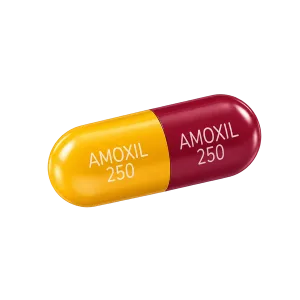
Amoxil
Ampicillin
Augmentin Current
Bactrim
Ciplox
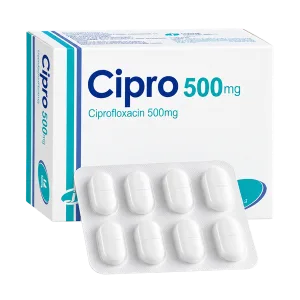
Cipro
Sources
- World Health Organization (2022). The WHO AWaRe Antibiotic Book: Antibiotic Use in Common Infections.
- U.S. Food and Drug Administration (2015). AUGMENTIN (amoxicillin/clavulanate potassium) Prescribing Information.
- European Medicines Agency (2019). Summary of Product Characteristics for Augmentin.