I took the prescribed tablet each morning for several weeks. The first period brought nausea and lighter sleep, but my panic episodes became less frequent later. I still needed a dose review because the improvement was incomplete.
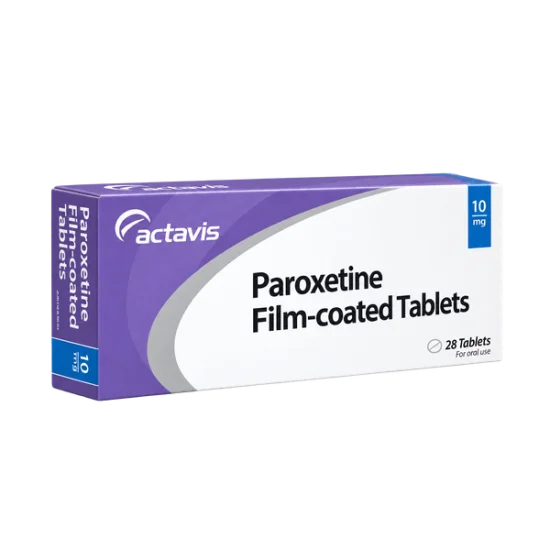
Paroxetine
Adults diagnosed with depression, panic disorder, obsessive-compulsive disorder, or an anxiety disorder may be prescribed Paroxetine. It is an SSRI that raises serotonin signalling in the brain and can reduce persistent low mood, fear, intrusive thoughts, and panic symptoms.
About this product
Treatment is individualised because interactions and withdrawal effects require careful planning.
Paroxetine belongs to the selective serotonin reuptake inhibitor (SSRI) class.
Pharmacological action
At nerve endings, serotonin is released into the synaptic cleft, the small space between nerve cells. A transporter normally carries some serotonin back into the presynaptic nerve terminal. Paroxetine inhibits this transporter, leaving more serotonin available to stimulate nearby receptors. The process gradually changes communication within neural circuits involved in mood, fear, compulsive behaviour, and stress responses [1].
Neurotransmitter modulation in the central nervous system
Serotonin is linked with several functions rather than one single emotion. It contributes to mood regulation, impulse control, sleep, appetite, gastrointestinal activity, and sexual response. This explains why an SSRI can improve anxiety while also causing nausea, loose stools, delayed orgasm, or changes in sleep.
Paroxetine is not intended to produce euphoria. Its clinical purpose is to reduce pathological symptoms and help restore day-to-day functioning. A person may still experience normal sadness, worry, or tiredness during treatment.
What it contains
Its active substance is paroxetine, which may be supplied in a hydrochloride salt form. The product is supplied as film-coated tablets.
Directions for use
The dose is decided individually, taking age, other medicines, and health conditions into account. Paroxetine tablets are taken by mouth, usually on a regular daily schedule selected by the prescriber. The treatment plan may start cautiously and change gradually according to response and tolerability.
Useful administration principles include:
- Take the tablet at the same time each day.
- Swallow it with water.
- Take it with food if nausea occurs.
- Do not take an extra tablet to compensate for a missed dose.
- If a dose is missed, follow the prescriber’s specific missed-dose plan rather than doubling the next dose.
- Do not stop regular treatment abruptly.
Film-coated tablets should be swallowed whole unless the prescribed product specifically allows another method. Crushing or chewing can alter how a tablet is released and may make swallowing more difficult.
A missed dose is usually managed by taking the next scheduled dose at the usual time when the missed dose is remembered late. Taking two doses close together increases the chance of nausea, dizziness, agitation, tremor, or other adverse effects.
Reasons not to use it
Paroxetine is not suitable for everyone. This medication is not for you if you are taking a monoamine oxidase inhibitor (MAOI), have recently stopped one without an appropriate washout interval, or are using pimozide or thioridazine. These combinations can cause dangerous serotonin effects, cardiac rhythm problems, or severe neurological reactions.
Specific situations requiring a prescribing decision include:
- current or previous bipolar disorder, because an antidepressant can trigger mania or hypomania;
- a history of seizures;
- significant liver or kidney impairment;
- a bleeding disorder or treatment with anticoagulants, aspirin, or non-steroidal anti-inflammatory drugs;
- pregnancy or breastfeeding;
- use of other serotonergic medicines, including some migraine treatments, opioids, and herbal products containing serotonin-active compounds;
- planned treatment with tamoxifen.
Paroxetine inhibits CYP2D6, an enzyme involved in converting tamoxifen into active metabolites. This interaction may reduce tamoxifen activation and can affect treatment planning. Pimozide and thioridazine have cardiac safety concerns when combined with medicines that alter their metabolism or prolong QT-related electrical activity.
When this is not for you
Talk to a prescriber before using paroxetine if you take medicines for depression, migraine, pain, sleep, or blood clotting, or if you use herbal or recreational products. Extra care is needed if you have bipolar symptoms, seizures, liver or kidney problems, bleeding problems, or if you are pregnant or breastfeeding. Do not start it without medical advice if you are taking an MAOI, pimozide, or thioridazine.
Adverse reactions
Paroxetine can cause side effects because serotonin transporters are present in the brain, gut, platelets, and other tissues. Nausea, diarrhoea, dry mouth, headache, sweating, dizziness, tiredness, and sleep disturbance are recognised reactions. Many early gastrointestinal symptoms lessen after the first couple of weeks, while sexual dysfunction may persist for as long as treatment continues.
Potential effects include:
- nausea or reduced appetite;
- constipation or loose stools;
- dry mouth and increased sweating;
- headache or dizziness;
- fatigue, sleepiness, insomnia, or vivid dreams;
- restlessness or increased anxiety during initiation;
- reduced libido, delayed orgasm, or difficulty reaching orgasm;
- erectile or ejaculatory difficulties;
- weight change;
- raised cholesterol in some patients;
- bruising or bleeding more easily, especially with other medicines affecting clotting.
Clinical trial frequencies vary by formulation, indication, age group, and reporting method. A side effect that is mild at the start may still deserve review if it persists, interferes with work, or affects relationships.
Sexual adverse effects are often under-reported because patients may feel uncomfortable raising them. They are a recognised SSRI issue, not evidence of personal failure. Management may involve dose adjustment, changing treatment, or assessing other causes.
Seek urgent medical help for severe agitation, confusion, fever, sweating, muscle rigidity, or diarrhoea, especially after combining serotonergic medicines. These symptoms can indicate serotonin toxicity. Severe allergic swelling, fainting, chest pain, seizures, unusual bleeding, or suicidal thoughts also require urgent attention.
Paroxetine can increase suicidal thoughts or behavioural changes in some younger patients, especially during treatment initiation or dose changes. Any sudden worsening of depression, impulsivity, agitation, or self-harm thinking requires immediate clinical contact and should not be managed by stopping the medicine without a plan.
Alcohol may worsen drowsiness, impaired judgement, sleep disruption, and depression-related symptoms. Avoiding alcohol is the safer clinical choice during treatment, especially during initiation or after a dose change.

Uses
Paroxetine may be prescribed for major depressive disorder, panic disorder, obsessive-compulsive disorder, social anxiety disorder, generalized anxiety disorder, and post-traumatic stress disorder, depending on the approved indication and the clinician’s assessment. The diagnosis matters because the same tablet can be used for different symptom patterns, while the treatment plan and expected response differ.
The main treatment targets include:
- Major depressive disorder: persistent low mood, loss of interest, guilt, reduced energy, disrupted sleep, appetite change, and impaired concentration.
- Generalized anxiety disorder: excessive worry across several areas of life, tension, irritability, and difficulty controlling anxious thoughts.
- Panic disorder: recurrent panic attacks, fear of further attacks, and avoidance of places or situations.
- Obsessive-compulsive disorder: unwanted intrusive thoughts and repetitive behaviours or mental rituals.
- Social anxiety disorder: marked fear of social scrutiny, embarrassment, or performance situations.
- Post-traumatic stress disorder: intrusive memories, avoidance, hypervigilance, and persistent changes in mood after trauma.
Treatment response varies by condition. Anxiety and obsessive symptoms may take longer to improve than some physical symptoms of depression. A partial response can also occur, meaning that sleep or appetite improves before motivation and concentration.
Paroxetine should be used for a defined clinical purpose. It is not a general-purpose tablet for occasional stress, ordinary sadness, or a single difficult day.
Comparison
Paroxetine is an SSRI. Other medicines used for similar conditions may act on serotonin alone, serotonin and noradrenaline, or several receptor systems.
| Treatment approach | Main pharmacological action | Practical distinction |
|---|---|---|
| Paroxetine | Selective serotonin reuptake inhibition | Useful across depressive and several anxiety-related disorders; withdrawal symptoms can be prominent after abrupt stopping |
| Sertraline or fluoxetine | Selective serotonin reuptake inhibition | Same broad class, but individual tolerability, interactions, half-life, and symptom response differ |
| Serotonin–noradrenaline reuptake inhibition | Increases serotonin and noradrenaline signalling | May be considered when low energy, pain symptoms, or an inadequate SSRI response are prominent |
The closest alternatives are not interchangeable tablet-for-tablet. Paroxetine has a relatively short elimination half-life compared with fluoxetine, so missed doses or sudden cessation may be felt more quickly by some people. Fluoxetine remains in the body longer, while sertraline may be selected when a different interaction or tolerability profile is preferred.
An SSRI can be a reasonable first pharmacological approach for depression or anxiety, yet it may worsen activation, gastrointestinal symptoms, or sexual dysfunction in some patients. A serotonin–noradrenaline medicine can introduce blood-pressure effects and other tolerability concerns. The choice depends on diagnosis, previous response, other medicines, sleep, seizure risk, pregnancy considerations, and the consequences of sexual or gastrointestinal adverse effects.
Common mistakes
Several avoidable errors can reduce benefit or increase adverse effects:
- stopping after a few days because mood has not changed;
- taking extra tablets after a stressful event;
- switching between morning and evening without tracking symptoms;
- stopping suddenly when feeling better;
- restarting the previous dose after several missed days;
- hiding sexual side effects from the prescriber;
- combining paroxetine with serotonergic pain, migraine, or herbal products;
- using alcohol to counteract anxiety or sleep disturbance;
- assuming another SSRI can be substituted at the same tablet strength;
- crushing a film-coated tablet without confirming that the formulation allows it.
One common misunderstanding is that early nausea proves the treatment will never work. Mild gastrointestinal effects can settle, while the therapeutic effect develops later. The reverse can also happen: persistent or severe symptoms should not be dismissed as something that must simply be endured.
What doctors say
In clinical practice, prescribers usually set expectations early: paroxetine is a regular treatment, not a rescue tablet for an isolated episode of anxiety. Improvement is assessed through function, sleep, panic frequency, intrusive thoughts, and mood rather than through a single emotional test.
Doctors also watch for activation during the first phase. A patient who feels unusually restless, impulsive, sleepless, or agitated may need prompt review even if mood has not yet improved. This is different from ordinary mild nervousness.
A second practical issue is discontinuation. Paroxetine is associated with withdrawal symptoms after abrupt cessation, including dizziness, electric-shock sensations, irritability, anxiety, nausea, sweating, and disturbed sleep. A planned taper is usually considered when treatment ends; the pace depends on duration, dose, symptoms, and prior withdrawal experience.
The EMA, the FDA, and the Royal College of Psychiatrists describe antidepressant use as a balance between symptom relief and tolerability. The FDA label also emphasises monitoring during initiation and dose changes [2].
Questions and answers
What should happen if the expected result does not come?
The FDA prescribing information reviewed in 2016 describes the need to assess response and tolerability rather than increase treatment independently. Lack of improvement may reflect an incorrect diagnosis, insufficient treatment duration, an inadequate dose, another medical condition, or an interaction. The clinician may adjust the plan, extend monitoring, add psychological treatment, or select another mechanism. Sudden worsening, suicidal thoughts, severe agitation, or mania-like symptoms require urgent medical attention.
How does Paroxetine differ from the closest alternatives?
The EMA product information available in 2024 describes paroxetine as an SSRI, while medicines such as venlafaxine also affect noradrenaline transport. Paroxetine is often considered when serotonin-focused treatment fits the diagnosis, but it may cause sexual dysfunction, nausea, or withdrawal symptoms. Fluoxetine has a longer persistence in the body, and sertraline has a different interaction and tolerability profile. The best option depends on the patient’s clinical history rather than on a universal ranking.
Can Paroxetine be used by anyone under 18?
WHO guidance published in 2023 supports careful assessment of depression and suicide risk in young people, while paediatric antidepressant prescribing requires close monitoring. Paroxetine is not automatically suitable for children or adolescents, and approval differs by indication and jurisdiction. Young people may experience increased agitation, behavioural change, or suicidal thinking after starting or changing an antidepressant. A specialist-led decision should consider psychological treatment, family support, diagnosis, and immediate safety.
Can the tablet be split, crushed, or chewed?
The FDA label updated in 2016 distinguishes tablet administration from modified-release formulations, which may have different handling requirements. A film-coated tablet should generally be swallowed whole unless the specific product has been designed and prescribed for splitting. Crushing or chewing can alter release characteristics and may produce an unpleasant taste or swallowing difficulty. Modified-release tablets require extra caution because breaking them can change exposure across the day.
What should be discussed with a doctor before starting Paroxetine?
The EMA safety information from 2024 highlights the importance of discussing MAOIs, pimozide, thioridazine, tamoxifen, other antidepressants, seizure history, bipolar symptoms, pregnancy, breastfeeding, liver disease, kidney disease, and medicines that increase bleeding. Mention any previous withdrawal symptoms or severe reactions to antidepressants. A complete medicine list should include non-prescription painkillers, migraine treatments, sleep products, and herbal preparations. This information helps determine whether paroxetine fits the diagnosis and whether the starting plan needs additional monitoring.
Do you offer anonymous delivery?
Your order will be securely packed and shipped within 24 hours. This is exactly what your package will look like (images of an actual item sent). It has the size and look of a regular private letter (24x11x0.7 cm) and its contents cannot be seen.
Comparison
Amitriptyline
Anafranil
Paroxetine Current
Prozac
Remeron
Pharmaceutical forms and formulation considerations
Paroxetine is supplied as film-coated pills for oral administration. Products may use immediate-release tablets or modified-release formulations, but these formulations are not automatically interchangeable. Release characteristics affect how quickly the active substance enters the bloodstream and how the daily schedule is managed.
The strength and daily dose are selected individually. Age, other medicines, liver or kidney function, previous antidepressant response, panic symptoms, and sensitivity to side effects all influence titration. A controlled-release tablet must not be treated as equivalent to an immediate-release tablet without a prescriber’s instruction.
The tablet coating can make swallowing easier and may protect the tablet during handling. A person should not crush, chew, or split a tablet unless the specific formulation has been prescribed for that method.
Sources
- European Medicines Agency (2024). Summary of Product Characteristics (SmPC) — paroxetine-containing medicines.
- U.S. Food and Drug Administration (2016). PAXIL (paroxetine hydrochloride) prescribing information.