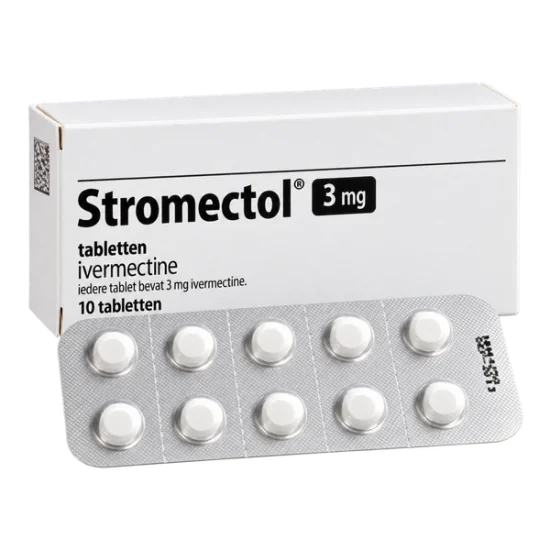
I took Stromectol for confirmed strongyloidiasis. My stomach discomfort did not disappear the same day, but the follow-up plan helped me understand why the response was not instant.
Stromectol contains ivermectin, an antiparasitic medicine for adults and eligible children with selected parasitic infections. Ivermectin acts on parasite nerve and muscle channels, leading to paralysis and clearance.
About this product
Stromectol contains ivermectin, an antiparasitic used for selected infections caused by worms and other parasites. It is prescribed for adults and eligible children when conditions such as strongyloidiasis or onchocerciasis require treatment.
Pharmacological action
Ivermectin binds to glutamate-gated chloride channels found in many invertebrates. This increases chloride-ion flow through parasite nerve and muscle cells. The resulting paralysis prevents feeding, movement, and reproduction, allowing the body to clear the affected organisms.
Human nerve cells do not use these channels in the same way. The medicine still requires careful dosing because excessive exposure can affect the central nervous system, especially when the blood–brain barrier is impaired or interacting medicines increase ivermectin exposure.
What it contains
Stromectol tablets contain ivermectin, an antiparasitic medicine in the macrocyclic lactone class. The product presentation contains tablets, with 10 tablets in the pack. Ivermectin is absorbed after oral administration and acts mainly on parasite-specific chloride channels, disrupting nerve and muscle activity.
The FDA-approved uses of oral ivermectin include intestinal strongyloidiasis caused by Strongyloides stercoralis and onchocerciasis caused by Onchocerca volvulus. Dosing differs between strengths and between users, so there is no single amount that suits everyone; the prescribed regimen depends on body weight, diagnosis, and clinical circumstances rather than tablet strength alone [1].
Tablet presentation
Stromectol is supplied as oral tablets containing ivermectin. The number of tablets prescribed depends on the calculated regimen. A tablet should not be treated as a universal single-dose treatment for every parasitic infection.
Directions for use
Dosing differs between strengths and between users, so there is no single amount that suits everyone. The prescriber calculates the regimen from the infection, body weight, age, medical history, and treatment response.
- Take Stromectol by mouth exactly at the prescribed interval.
- Use water to swallow the tablet.
- Take the complete prescribed course when a multi-dose regimen is ordered.
- Do not take additional tablets because symptoms remain.
- Do not repeat treatment for suspected reinfection without a new clinical assessment.
- If a dose is missed, take it when remembered unless the next scheduled dose is near; do not double the next dose.
- Tell the prescriber about liver disease, immune suppression, pregnancy, breastfeeding, or neurological illness before treatment.
For some parasitic infections, treatment consists of one administration. Other situations require repeat dosing, follow-up testing, or treatment of contacts and environmental sources. A single dose should never be assumed to cover every indication.
Timing matters. Some prescribing instructions use administration away from meals, while other clinical regimens may differ. The regimen selected by the treating clinician takes priority because food can affect ivermectin exposure.
Reasons not to use it
Stromectol is not for you if you have had a serious allergic reaction to ivermectin or one of the tablet ingredients. It is also unsuitable for self-treatment when the diagnosis is uncertain, when severe neurological symptoms are present, or when a clinician has identified a condition requiring hospital care.
Special assessment is needed for:
- Pregnancy or possible pregnancy
- Breastfeeding
- Children below the age or weight threshold appropriate for the prescribed regimen
- Significant liver disease
- Known or suspected meningitis or impaired blood–brain barrier
- Severe immune suppression
- Previous serious reaction to an antiparasitic medicine
- Concurrent treatment with medicines that affect the central nervous system or drug metabolism
Warfarin and anticoagulant treatment
Ivermectin may increase or alter the anticoagulant effect of warfarin, historically marketed as Coumadin, in some patients. The interaction can raise the INR and increase bleeding risk. A prescriber may arrange additional INR testing and adjust warfarin only when clinically justified.
Other medicines and supplements also need review. Sedatives, medicines that affect liver enzymes, and products with neurological effects may change the safety profile. The interaction risk depends on the complete regimen, not one isolated tablet.
When this is not for you
Do not stop warfarin independently. Report unusual bruising, nosebleeds, blood in urine, black stools, prolonged bleeding, or severe headache during combined treatment.
Give the prescriber the exact names of anticoagulants, sedatives, seizure medicines, and supplements before ivermectin is started. “Blood thinner” or “sleep tablet” may not identify the interaction precisely enough.
Adverse reactions
Mild reactions can occur after ivermectin, especially when many parasites die at the same time. Some symptoms reflect the inflammatory response to dying organisms rather than direct toxicity from the tablet.
Commonly reported reactions include:
- Abdominal pain or discomfort
- Nausea
- Vomiting
- Diarrhoea
- Headache
- Dizziness
- Weakness or fatigue
- Itching or skin rash
In onchocerciasis, itching, fever, muscle pain, swollen lymph nodes, low blood pressure, or eye inflammation may reflect a Mazzotti-type reaction caused by microfilarial death. The risk and intensity depend on parasite burden.
Neurological symptoms need prompt medical assessment. These include confusion, marked drowsiness, loss of coordination, tremor, seizures, or difficulty walking. Severe vomiting, fainting, breathing difficulty, facial swelling, and extensive blistering or peeling skin also require urgent care.
A mild headache may settle without treatment. Dizziness can be more troublesome when standing, driving, or operating machinery. Alcohol can worsen impaired concentration and balance.
One detail patients sometimes miss is the timing of symptoms after treatment. A reaction several hours later can still be medicine-related or parasite-related. Record when symptoms began and whether they followed the dose, rather than taking an extra tablet to counter them.
Uses
Stromectol is used when a clinician has identified, or has strong clinical evidence of, a susceptible parasitic infection. The principal approved indications involve nematodes, which are microscopic roundworms that can live in the intestine or tissues.
| Parasite or condition | Clinical relevance | Role of ivermectin |
|---|---|---|
| Strongyloides stercoralis | Causes strongyloidiasis, which may persist for years | Eliminates susceptible intestinal larvae and adult worms |
| Onchocerca volvulus | Causes onchocerciasis, also called river blindness | Reduces microfilariae and transmission potential |
| Lymphatic filariasis | A tissue-dwelling filarial infection | May be used in public-health programmes with other medicines |
Strongyloidiasis management
Strongyloides stercoralis can penetrate the skin, migrate through the body, and mature in the intestine. The parasite can reinfect the same person through an internal autoinfective cycle. This explains why infection may remain clinically silent for a long time.
Immunosuppression changes the risk. Corticosteroids, organ transplantation, haematological disease, and some other immune-suppressing conditions can allow rapid multiplication of the parasite. Hyperinfection may involve the lungs, gastrointestinal tract, and bloodstream, where complications can become severe.
Ivermectin is commonly selected for strongyloidiasis because it targets the parasite during its intestinal life cycle. Follow-up testing may be needed after treatment, especially when symptoms persist or immunosuppression continues.
Onchocerciasis and filariasis protocols
Onchocerca volvulus is transmitted by infected blackflies. Adult worms live in subcutaneous tissue, while microfilariae migrate through the skin and eyes. Ivermectin reduces the microfilarial burden, which helps control itching, inflammatory skin disease, and eye complications.
Lymphatic filariasis has a different tissue distribution and public-health treatment strategy. Ivermectin may be included in mass drug administration programmes, often alongside other antiparasitic medicines selected for the local transmission setting. A person should not copy a community programme dose for individual treatment.
Clinical evaluation of secondary uses
Physicians sometimes prescribe ivermectin outside the approved tablet indications. These are off-label uses, meaning the clinician applies established pharmacology to a clinical situation that is not the primary indication on the regulatory label. The dose, duration, and formulation can differ from the regimen used for strongyloidiasis or onchocerciasis.
Head lice, scabies, and some forms of filariasis may be managed with ivermectin in selected circumstances. Oral treatment is not automatically preferred. Topical treatment, contact treatment, environmental measures, or treatment of close contacts may also be needed depending on the infection.
Dermatological and ophthalmic applications
Ivermectin has been studied or used under medical direction for head lice and difficult ectoparasitic infestations. A physician may consider oral therapy when topical treatment has failed, cannot be used, or is unsuitable for the patient’s circumstances. Treatment decisions should account for age, body weight, pregnancy status, neurological conditions, and other medicines.
Blepharitis is a broad term for inflammation of the eyelid margins. Some cases are associated with mites, bacterial overgrowth, allergy, or eyelid-gland dysfunction. Ivermectin may be considered in selected mite-related cases, but oral Stromectol is not a general treatment for every form of blepharitis.
Research into ivermectin for viral diseases has generated public discussion, yet laboratory activity does not establish clinical benefit in humans. The FDA and WHO have not established oral ivermectin as a general treatment for COVID-19. Stromectol should remain directed toward a diagnosed or clinically justified parasitic indication [2].

Comparison
Different parasitic infections need different treatment strategies. Comparing by mechanism is more useful than comparing tablet names.
| Treatment approach | Typical clinical role | Main limitation |
|---|---|---|
| Oral ivermectin | Selected nematode and ectoparasite infections | Dose depends on diagnosis, weight, and patient factors |
| Topical antiparasitic treatment | Localised skin or scalp infestations | May require repeat application and contact management |
| Combination antiparasitic therapy | Community filariasis programmes or complex infections | Must follow a defined public-health or specialist protocol |
Ivermectin is valuable when the target parasite is susceptible and the medicine reaches the relevant site of infection. It does not remove every cause of abdominal symptoms, rash, eye irritation, or itching. A persistent symptom may represent treatment failure, reinfection, an inflammatory reaction, or a different disease.
The EMA and WHO describe ivermectin within carefully defined antiparasitic uses rather than as a general-purpose anti-inflammatory medicine. Clinical selection depends on the organism, transmission setting, and risk of complications [3].
Common mistakes
Several practical errors can reduce treatment success or increase risk:
- Taking tablets intended for another person or another diagnosis
- Repeating a dose because itching continues
- Using a dose from a prior infection without renewed assessment
- Omitting information about warfarin or other long-term medicines
- Driving after dizziness or unusual drowsiness develops
- Assuming oral ivermectin replaces treatment of household contacts in contagious infestations
- Stopping follow-up after strongyloidiasis when immune suppression remains
- Treating every rash as scabies without confirming the cause
- Using veterinary ivermectin products instead of a human formulation
- Taking extra tablets after vomiting without professional dosing instructions
Crushing or chewing the tablet can make swallowing easier for some people, but the method should follow the prescriber’s directions because the intended dose must be taken accurately. Do not alter tablets for a child without a clinician’s plan.
What doctors say
In clinical practice, physicians usually begin by establishing the likely parasite and the reason for treatment. A positive test, travel or exposure history, symptoms, eosinophilia, and immune status may all influence the decision.
Doctors also distinguish parasite clearance from symptom relief. Itching can continue after organisms have been eliminated, and gastrointestinal symptoms may have another cause. For strongyloidiasis, follow-up is more important when corticosteroids or other immunosuppressants are planned.
A clinician would also avoid extrapolating from one patient to another. Body weight, infection intensity, organ function, and drug interactions can alter the regimen. Stromectol should be used as a targeted antiparasitic treatment rather than a general remedy for unexplained symptoms.
Questions and answers
Can Stromectol be taken with warfarin or other medicines?
Warfarin and ivermectin may require closer INR monitoring because the anticoagulant effect can change in some patients. The FDA prescribing information (2022) describes the need to consider concomitant medicines and patient-specific risk before treatment. Sedatives, seizure medicines, and medicines affecting hepatic metabolism also deserve review. A prescriber should set the monitoring plan rather than relying on a standard interval.
How long does one dose of Stromectol keep working?
The clinical effect depends on the parasite, the dose selected, and whether reinfection occurs. CDC clinical guidance updated in 2024 describes ivermectin regimens that vary by infection and follow-up requirements [4]. One administration may be sufficient for a defined indication, while another condition may require repeat treatment. Symptom duration alone cannot show whether the parasite has been cleared.
Can alcohol be used while taking Stromectol?
Alcohol may intensify dizziness, drowsiness, nausea, and impaired coordination during treatment. The FDA Stromectol prescribing information from 2022 advises caution when dizziness, drowsiness, or impaired coordination could affect activities such as driving [1]. Avoid alcohol until you know how the tablet affects you, especially after the first dose. Greater caution is needed when other sedating medicines are present.
How long does a Stromectol course last, and is long-term use acceptable?
The course may involve one administration, repeated doses, or structured follow-up, depending on the infection. WHO guidance published in 2023 describes ivermectin use within defined parasite-control programmes rather than unrestricted long-term self-treatment . Long-term or repeated use requires a documented indication and clinical monitoring. Do not extend treatment because symptoms have not resolved.
Can the tablet be split, crushed, or chewed?
The tablet should be swallowed in the manner specified by the prescriber so the intended amount is taken accurately. FDA product information from 2022 identifies Stromectol as an oral tablet and provides administration information for the prescribed regimen . Splitting can make dose measurement unreliable when only part of a tablet is needed. Crushing or chewing may also be unsuitable for a person with swallowing problems unless a clinician has given a specific plan.
Do you offer anonymous delivery?
Your order will be securely packed and shipped within 24 hours. This is exactly what your package will look like (images of an actual item sent). It has the size and look of a regular private letter (24x11x0.7 cm) and its contents cannot be seen.
Comparison
Sources
- U.S. Food and Drug Administration (2022). Stromectol (ivermectin) tablets prescribing information.
- U.S. Food and Drug Administration (2021). Ivermectin and COVID-19: FDA guidance for consumers.
- World Health Organization (2023). Guideline for the control and elimination of human onchocerciasis.
- Centers for Disease Control and Prevention (2024). Clinical Care of Strongyloidiasis.