Skip to content
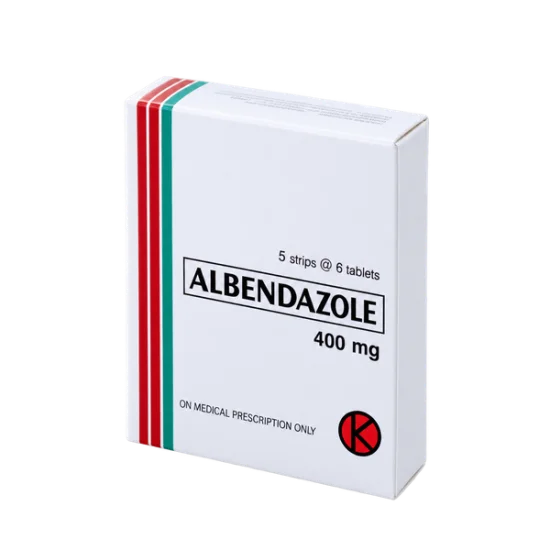
Albendazole
Active ingredient: Albendazole

Albendazole

Quality products
24/7 Support
Fast delivery
Delivery from 4 days
Select pack Package Per unit Price

Free delivery on orders from AED 796.00, free express delivery from AED 1,194.00

Secure Payments
Track your order
Best price guarantee

Albendazole, the active ingredient of Albendazole, is a benzimidazole anthelmintic for intestinal and tissue-dwelling worm infections. It is used in adults and children when the parasite and patient factors support treatment. The drug disrupts parasite microtubules, reducing glucose uptake and impairing survival.

About this product

Albendazole tablets contain albendazole, a benzimidazole antiparasitic agent. The medicine acts against several helminths, including roundworms, hookworms, whipworms, pinworms, and some tissue parasites. The amount taken at each administration is selected individually rather than being one fixed amount, and the exact regimen depends on the diagnosed infection, age, body weight, organ function, and whether treatment is a single administration or a longer course.

Pharmacological action

Albendazole is converted in the liver to albendazole sulfoxide, the active systemic metabolite. It binds to parasite β-tubulin and interferes with microtubule formation. Microtubules support movement, cell division, nutrient transport, and energy use inside the parasite. When this system fails, the parasite absorbs less glucose, becomes depleted of energy, and gradually dies or loses its ability to reproduce [1].

The drug targets parasite cells more strongly than human cells because helminths have a different sensitivity to tubulin disruption. This selective activity explains why albendazole can treat worms inside the intestine and, under specialist supervision, certain infections involving tissues or the nervous system.

What it contains

Albendazole is supplied here as oral tablets containing the active substance. The tablet should be swallowed according to the prescribed regimen. The amount taken at each administration is selected individually rather than being one fixed amount. Crushing or chewing is not appropriate unless a clinician or pharmacist has specifically confirmed that it is suitable for the individual product and patient.

Directions for use

Albendazole dosing is selected according to the parasite, treatment goal, patient age, body weight, and liver function. The amount per intake is set individually for each person rather than being one fixed number. The treatment may involve one administration or repeated doses over a defined course.

Practical administration points include:

  • Take the tablet by mouth at the prescribed time.
  • Follow the selected frequency and duration exactly.
  • Take albendazole with food when systemic absorption is required.
  • A meal containing some fat can increase absorption of albendazole’s active metabolite.
  • Do not create an extra dose after a missed dose unless the prescriber has instructed you to do so.
  • Keep a record of the treatment time when the regimen involves several daily doses.

For short intestinal infections, physicians often use brief regimens. Tissue infections may require repeated treatment and laboratory monitoring. Children may need weight-based dosing, and young children may require a formulation that is easier to swallow.

If a dose is forgotten, take it when remembered unless the next scheduled dose is near. Avoid doubling doses, because a second dose does not reliably improve parasite clearance and may increase adverse effects.

A common practical mistake is stopping a multi-day course as soon as abdominal symptoms improve. Symptoms can settle before the parasite has been fully controlled. A different mistake is repeating treatment several times without confirming the diagnosis; recurrent symptoms can arise from reinfection or a non-parasitic gastrointestinal condition.

Food instructions differ by treatment objective. For intestinal worms, a clinician may choose a regimen that does not require enhanced systemic absorption. For tissue infections, taking tablets with food is often clinically relevant. The prescriber’s regimen takes priority.

Reasons not to use it

Albendazole is contraindicated or requires specialist assessment in the following situations:

  • A known allergy to albendazole or another benzimidazole compound
  • Active liver disease unless a specialist has assessed the treatment
  • A pregnancy or possible pregnancy without a clinician’s risk assessment
  • A history of serious reaction to a previous albendazole course
  • Low blood count, previous bone-marrow disorder, or treatment with medicines that suppress blood-cell production before a prolonged regimen

Diagnosis matters because an unnecessary antiparasitic course exposes the patient to risk without addressing the actual cause of symptoms [3].

When this is not for you

This medication is not for you if you have an allergy to albendazole or another benzimidazole medicine, active liver disease without specialist assessment, a pregnancy or possible pregnancy that has not been discussed with a clinician, or a previous serious reaction to albendazole. Extra care is needed if you have liver disease, abnormal blood counts, a bone-marrow disorder, or take medicines that can suppress blood-cell production. Pregnancy planning and breastfeeding should be discussed before treatment.

Adverse reactions

Short courses are often tolerated without serious problems, but adverse effects can occur. Reported reactions include:

  • Abdominal pain
  • Nausea or vomiting
  • Diarrhoea
  • Headache
  • Dizziness
  • Temporary elevation of liver enzymes
  • Rash or itching

Longer or higher-exposure treatment courses carry greater concern for liver injury and bone-marrow suppression. Warning signs include yellowing of the skin or eyes, dark urine, unusually pale stools, severe or persistent upper-abdominal pain, marked weakness, fever, sore throat, mouth ulcers, or unexplained bruising. These symptoms need prompt medical assessment.

Severe headache, vomiting, visual changes, confusion, seizures, or new neurological symptoms require urgent evaluation, especially when albendazole is being used for a tissue or central nervous system infection. Such symptoms can arise from the infection itself, treatment-related inflammation, or another medical problem.

Albendazole may cause mild gastrointestinal discomfort. Taking it with food can be easier on the stomach, although food instructions should match the prescribed regimen. Alcohol can add strain to the liver, which makes heavy drinking a poor choice during treatment.

A mild stomach upset can be easier to manage when the tablet is taken with a meal. Severe abdominal pain, jaundice, or repeated vomiting is different and should not be treated as an ordinary temporary side effect.

For extended therapy, clinicians may order liver-function tests and complete blood counts before treatment and at intervals during treatment. The FDA prescribing information describes liver enzyme elevation and reversible blood-count changes among the clinically relevant risks of prolonged use [2].

Uses

Albendazole may be used for infections caused by:

  • Pinworms and other intestinal roundworms
  • Hookworms
  • Whipworms
  • Ascaris species
  • Strongyloides species in selected clinical situations
  • Certain tapeworm infections
  • Neurocysticercosis and hydatid disease under specialist management

The treatment choice depends on laboratory findings, symptoms, travel or exposure history, and the location of the parasite. A single intestinal worm infection and a tissue infection are not managed in the same way.

Albendazole does not treat bacterial diarrhoea, viral gastroenteritis, or every cause of abdominal discomfort. Persistent symptoms after treatment may indicate reinfection, an incorrect diagnosis, or a parasite that needs a different therapeutic approach.

Pinworm treatment often requires attention to household reinfection. Washing hands after using the bathroom, keeping fingernails short, and laundering sleepwear can reduce repeated exposure during the treatment period.

Comparison

Albendazole belongs to the benzimidazole group. Other anthelmintic approaches work through different biological targets, so the best choice depends on the identified parasite rather than on a general preference for one medicine.

Treatment approach Main pharmacological action Typical clinical consideration
Albendazole Disrupts parasite tubulin and glucose use Broad activity against several helminths; regimen varies by infection
Microtubule-active benzimidazole therapy Impairs parasite cellular structure Choice depends on parasite susceptibility and treatment site
Neuromuscular-blocking anthelmintic therapy Interferes with parasite muscle activity May be preferred for selected intestinal parasites

Albendazole may be favoured when the suspected or confirmed organism is susceptible to benzimidazole therapy and when tissue penetration is clinically needed. A narrower medicine may be selected when the parasite is clearly identified and another mechanism offers a better match.

Common mistakes

Several avoidable errors can reduce the chance of a good result:

  • Taking an extra tablet because symptoms have not improved immediately
  • Repeating treatment without confirming persistent infection
  • Stopping a prescribed multi-day course early
  • Forgetting to mention liver disease or previous abnormal liver tests
  • Ignoring possible pregnancy before treatment
  • Taking prolonged courses without scheduled blood tests
  • Assuming every stomach symptom is caused by worms
  • Failing to address household reinfection in pinworm exposure
  • Combining albendazole with other potentially liver-toxic medicines without review

A short course may not produce an instant change in bowel habits. The parasite’s life cycle, intestinal irritation, and reinfection risk can affect symptom timing. Continuing symptoms after treatment should prompt reassessment rather than automatic dose escalation.

What doctors say

In clinical practice, doctors usually begin by identifying the likely parasite and the anatomical site of infection. Symptoms such as abdominal discomfort, anal itching, diarrhoea, weight loss, or anaemia can have several causes, so treatment should match diagnostic evidence.

A physician will also distinguish a short intestinal course from prolonged therapy for a tissue infection. The latter may require blood counts, liver tests, imaging, or specialist follow-up. The dose per intake is individualised rather than selected from a single universal schedule.

One practical observation is that treatment failure does not always mean that albendazole was ineffective. Reinfection, incomplete household control, incorrect diagnosis, poor absorption, or an organism with reduced susceptibility can produce continuing symptoms.

WHO guidance places prevention, diagnosis, and population-based control within the wider management of soil-transmitted helminth infections. Albendazole can form part of that strategy, but personal treatment still depends on the patient’s diagnosis and clinical circumstances [4].

Questions and answers

Which symptoms mean stopping Albendazole and seeking urgent medical care?

Stop further doses and seek urgent medical assessment for jaundice, dark urine, severe upper-abdominal pain, unusual bruising, fever with a sore throat, mouth ulcers, breathing difficulty, facial swelling, seizures, confusion, or major visual changes. These symptoms can signal liver injury, blood-count problems, severe allergy, or complications associated with the underlying infection. The FDA prescribing information identifies hepatic and haematological toxicity as serious concerns during albendazole therapy. This remains relevant in 2026 because prolonged regimens still require closer monitoring than brief intestinal treatment. Prompt assessment helps distinguish drug toxicity from infection-related complications.

How does Albendazole differ from the closest alternative by mechanism?

Albendazole binds parasite tubulin and interferes with microtubule formation and glucose utilisation. Other anthelmintics may paralyse the parasite’s muscles or alter its neuromuscular signalling instead. The most suitable option depends on the organism, infection site, patient age, pregnancy status, and liver function. WHO treatment guidance published in 2017 supports parasite-specific selection rather than treating all worm infections with one universal mechanism.

What should be checked or discussed with a doctor before starting?

Discuss possible pregnancy, breastfeeding, liver disease, previous abnormal liver tests, blood disorders, allergies, and every medicine or supplement being used. A clinician may arrange pregnancy assessment, liver-function tests, or a complete blood count when the treatment is prolonged or the patient has relevant risk factors. The EMA’s 2024 pharmacovigilance principles support reviewing organ function and concomitant medicines when adverse effects may be clinically significant. This discussion is also relevant before repeating a previous course.

What should happen after a missed dose?

Take the missed dose when remembered unless the next scheduled dose is close. In that situation, skip the missed dose and continue at the planned time; do not double the amount. A clinician may give different instructions for a specialist multi-day regimen, so the next step depends on the prescribed schedule. CDC clinical guidance updated in 2024 emphasises following the selected regimen for the diagnosed helminth rather than improvising additional doses.

Can alcohol be used while taking Albendazole?

Avoid heavy alcohol intake during treatment because albendazole is processed by the liver and can increase liver-related concerns. A single drink does not create the same exposure as repeated heavy drinking, but individual risk depends on liver health, treatment duration, and other medicines. People with liver disease or prolonged therapy should avoid alcohol unless their treating clinician has given specific advice. Liver safety remains a central consideration in the 2015 FDA prescribing information for albendazole.

Is Albendazole suitable for older adults?

Older adults may use albendazole when the diagnosis and treatment plan support it, but liver function, kidney status, nutrition, and concurrent medicines deserve closer review. Age can increase the effect of medicines that interact through hepatic metabolism or add liver toxicity. A short intestinal course may require less monitoring than prolonged treatment for a tissue infection. WHO clinical principles from 2023 support adapting antiparasitic treatment to individual risk rather than using age alone as an exclusion.

Do you offer anonymous delivery?

Your order will be securely packed and shipped within 24 hours. This is exactly what your package will look like (images of an actual item sent). It has the size and look of a regular private letter (24x11x0.7 cm) and its contents cannot be seen.

Sources

  1. U.S. Food and Drug Administration (2015). ALBENZA (albendazole) prescribing information.
  2. U.S. National Library of Medicine (2020). LiverTox: Albendazole.
  3. European Medicines Agency (2018). Good pharmacovigilance practices (GVP) guidelines.
  4. Centers for Disease Control and Prevention (2024). Clinical Care of Soil-transmitted Helminths.

Albendazole: What Customers Say

3.1
Based on 4 reviews
Hassan, 42 Abu Dhabi A short course
Verified
Rating: 3.5 out of 5

The stomach discomfort settled after several days, but the first dose caused mild nausea. Taking it with dinner made the next dose easier.

1 Oct 2026
Anil, 53 Jumeirah The first week
Verified
Rating: 3.5 out of 5

I felt more tired than expected during the first week. My doctor arranged blood tests, and I did not continue taking extra tablets on my own.

11 Oct 2026
Khalid, 33 Al Khawaneej A short course
Verified
Rating: 3 out of 5

The medicine was straightforward to swallow. The main problem was repeated itching until everyone followed the hygiene measures at the same time.

21 Oct 2026
James, 51 Dubai A course
Verified
Rating: 2.5 out of 5

The first course did not solve everything, so further testing was needed. The symptoms were not all caused by worms, and repeating the tablets would not have addressed the other problem.

27 Oct 2026
Get our free app Shop faster and track your orders Install