Skip to content
Propecia
Active ingredient: Finasteride

Propecia

Quality products
24/7 Support
Fast delivery
Delivery from 4 days
Select pack Package Per unit Price

Free delivery on orders from AED 796.00, free express delivery from AED 1,194.00

Secure Payments
Track your order
Best price guarantee

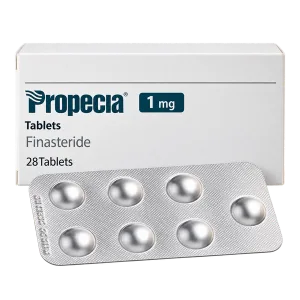
Propecia is a prescription oral tablet for adult men with male pattern hair loss, also called androgenetic alopecia. It contains finasteride, which lowers scalp DHT to help slow hair thinning and support hair growth with continuous use.

About this product

Propecia contains finasteride in an oral tablet. Finasteride belongs to the 5-alpha-reductase inhibitor class and is used as a hair loss treatment for adult men with androgenetic alopecia. The regimen for the chosen strength should be confirmed with a healthcare professional before starting.

Pharmacological action

Finasteride inhibits type II 5-alpha-reductase, the enzyme that converts testosterone into dihydrotestosterone (DHT). Reduced DHT activity in susceptible scalp follicles can slow follicle miniaturisation and support thicker hair growth. This biochemical mechanism has been studied in male androgenetic alopecia [1].

What it contains

Propecia contains finasteride in an oral tablet. Finasteride belongs to the 5-alpha-reductase inhibitor class and is used as a hair loss treatment for adult men with androgenetic alopecia.

Pharmacological role of finasteride

Finasteride is used at different strengths for different medical purposes. The regimen for the chosen strength should be confirmed with a healthcare professional before starting.

Directions for use

The regimen for the chosen strength should be confirmed with a healthcare professional before starting.

  • Swallow the tablet with water.
  • Take it with food or on an empty stomach.
  • Use it consistently rather than taking extra tablets after a missed dose.
  • Continue treatment as prescribed because the benefit depends on ongoing suppression of scalp DHT.
  • If a dose is missed, take the next scheduled dose at the usual time. Do not double the dose.

Propecia tablets are intended to be swallowed whole. Crushing, splitting, or chewing can increase contact with the active substance and may create a handling risk for women who are pregnant or may become pregnant. The specific tablet-handling warning is addressed in the patient safety information for finasteride [2].

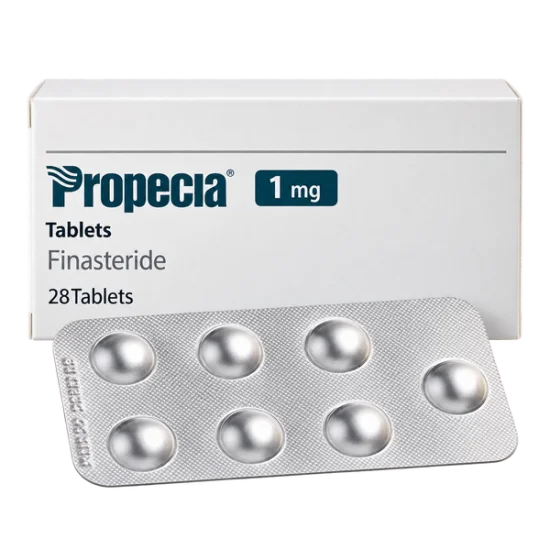
A 28-tablet presentation corresponds to a supply of treatment. The length of treatment is measured in months, not days. Stopping early can make a useful response difficult to judge.

Reasons not to use it

Propecia should not be used by anyone with a previous hypersensitivity reaction to finasteride or any tablet component. Propecia is not indicated for children or adolescents. Women who are pregnant or may become pregnant must not take Propecia.

When this is not for you

NOT for you if: you are pregnant or may become pregnant, are a child or adolescent, or have previously had hypersensitivity to finasteride or any tablet component.

It should not be taken by women or children. Women who are pregnant or may become pregnant should not handle crushed or broken tablets. Men with liver disease should provide that history before treatment because finasteride is metabolised in the liver.

Adverse reactions

Clinical trials of Propecia reported sexual adverse reactions more often with finasteride than with placebo. During the first year, decreased libido occurred in about 1.8% of men taking finasteride compared with about 1.3% receiving placebo. Erectile difficulty occurred in about 1.4% compared with 0.6%, while ejaculation disorders occurred in about 1.4% compared with 0.9% [3].

These events were uncommon, and many resolved during treatment or after discontinuation. Reports of sexual symptoms persisting after treatment have also been described. A persistent symptom deserves medical assessment rather than automatic continuation or abrupt self-management.

Possible adverse effects include:

  • Reduced sexual desire
  • Erectile difficulty
  • Reduced ejaculate volume or ejaculation problems
  • Breast tenderness or enlargement
  • Testicular discomfort
  • Rash, itching, or other hypersensitivity symptoms
  • Depressed mood, anxiety, or suicidal thoughts

Seek urgent medical attention for facial swelling, breathing difficulty, severe rash, or thoughts of self-harm. Breast lumps, nipple discharge, or persistent breast pain also require prompt assessment.

One practical detail is easy to miss: finasteride lowers prostate-specific antigen (PSA) levels. After approximately six months of treatment, PSA may be reduced by around half, so the clinician interpreting a PSA result must know that finasteride is being used. This adjustment helps prevent an apparently low result from being interpreted without the relevant medication context.

Tell the clinician ordering a PSA test that you take finasteride. Do this before the blood test, not only after receiving the result.

Uses

Propecia is intended for adult men with male pattern hair loss. It is used as a hair loss treatment for adult men with androgenetic alopecia.

Comparison

Finasteride and topical minoxidil work through different mechanisms. Finasteride reduces DHT formation, while minoxidil acts locally on the hair-growth cycle and follicle environment. A clinician may consider one approach or a combination based on the pattern of loss, medical history, and tolerability.

Approach Main mechanism Main limitation
Finasteride 1 mg Inhibits type II 5-alpha-reductase and lowers scalp DHT Prescription treatment; sexual and mood-related adverse effects require attention
Topical minoxidil Supports follicle activity through a local growth-promoting effect Scalp irritation and unwanted facial hair can occur; benefit also requires continued use
Hair restoration procedures Redistributes or implants hair in selected areas Does not stop the underlying follicle miniaturisation without medical management

Propecia is aimed at the hormonal driver of male pattern hair loss. Minoxidil does not replace finasteride’s DHT-lowering action. The choice depends on the clinical pattern and the balance between expected benefit, convenience, and adverse effects.

Common mistakes

Several habits can make treatment seem less useful than it is:

  • Expecting visible regrowth within days or a few weeks.
  • Taking several tablets after missing a dose.
  • Stopping after an early shedding phase without assessing the longer trend.
  • Comparing photographs taken in different lighting or with wet versus dry hair.
  • Forgetting to mention finasteride before a PSA test.
  • Crushing tablets without considering who may come into contact with the powder.
  • Treating a new sexual or mood symptom as something that must simply be endured.
  • Assuming that a thicker-looking hairstyle proves that every miniaturised follicle has recovered.

A further mistake is judging the frontal hairline and crown as though they respond identically. Hairline recession may stabilise without producing the same apparent regrowth seen at the vertex.

What doctors say

In clinical practice, dermatologists usually set two expectations early: the purpose is to stabilise the disease process, and the result must be judged over many months. A visible increase in density is useful, but maintaining existing hair can also represent a meaningful response.

Doctors commonly examine the temples, frontal scalp, crown, and mid-scalp separately. A patient may see improvement at the crown while the frontal hairline changes less. That difference reflects regional follicle sensitivity, not necessarily inconsistent tablet use.

A physician will also ask about sexual function and mood during follow-up. These questions are routine and should be answered directly. If a new symptom appears after starting treatment, recording when it began and whether it changes with continued use gives the clinician more useful information than relying on memory.

The FDA prescribing information describes Propecia’s indication, dosing, trial outcomes, adverse reactions, and PSA interaction [4]. Those details support a measured view: finasteride can help many men with androgenetic alopecia, yet it has limitations and requires ongoing monitoring of tolerability.

Questions and answers

How does Propecia differ from other treatments by active substance or mechanism?

Propecia contains finasteride, which inhibits type II 5-alpha-reductase and lowers DHT in the scalp. Topical minoxidil uses a different mechanism and does not reduce DHT. The American Academy of Dermatology’s clinical information on male pattern hair loss, reviewed in 2023, describes finasteride and minoxidil as distinct treatment approaches rather than interchangeable active substances.

Can Propecia tablets be split, crushed, or chewed?

The tablet should be swallowed whole rather than split, crushed, or chewed. Broken tablets create a handling concern for women who are pregnant or may become pregnant because finasteride can affect male fetal development. FDA prescribing information from 2014 gives the specific warning about contact with crushed or broken tablets.

Which condition rules out Propecia completely?

Pregnancy rules out Propecia use because finasteride may harm the development of male fetal genitalia. Women who are pregnant or may become pregnant must not take it, and they should avoid contact with crushed or broken tablets. The EMA’s finasteride product information, published in 2024, also addresses reproductive and sexual safety concerns.

What should be done if the expected result does not appear?

A response should not be judged before several months of consistent use, with six to twelve months providing a more useful assessment window. A dermatologist can examine whether the pattern still fits androgenetic alopecia and assess other causes of shedding. The International Society of Hair Restoration Surgery’s patient guidance from 2024 supports clinical review when hair loss is sudden, patchy, inflamed, or progressing despite treatment.

How soon can the effect of Propecia become noticeable?

Some men notice reduced shedding after approximately three months, while visible density changes commonly require six months or longer. A clearer assessment is often possible around twelve months because hair growth cycles are slow. A controlled clinical study by Kaufman and colleagues, published in 1998, found that finasteride’s benefit developed over sustained treatment rather than immediately after initiation.

Can Propecia be taken with food or on an empty stomach?

Propecia can be taken with or without food, provided the tablet is swallowed whole. Taking it at a consistent time may help maintain the daily routine, but a meal is not required for its action. The FDA’s finasteride prescribing information from 2014 supports oral administration without a food-specific restriction.

Do you offer anonymous delivery?

Your order will be securely packed and shipped within 24 hours. This is exactly what your package will look like (images of an actual item sent). It has the size and look of a regular private letter (24x11x0.7 cm) and its contents cannot be seen.

Comparison

Compare treatments for Hair Loss

Sources

  1. Journal of the American Academy of Dermatology (1998). Finasteride in the treatment of men with androgenetic alopecia
  2. European Medicines Agency (EMA) (2024). Summary of Product Characteristics (SmPC) — finasteride
  3. Food and Drug Administration (FDA) (2014). PROPECIA (finasteride) tablets, 1 mg: Prescribing Information
  4. American Academy of Dermatology (2023). Male pattern hair loss: diagnosis and treatment information

Propecia: What Customers Say

4.2
Based on 5 reviews
Ramon, 49 Mussafah Nine months
Verified
Rating: 5 out of 5

Mussafah, took one 1 mg tablet daily for nine months: “The crown looked less exposed after about six months, and the change was clearer by month nine. I had no sexual symptoms, but I needed reminders during the first few weeks.”

20 Oct 2026
John, 45 Ras Al Khaimah Five months
Verified
Rating: 4 out of 5

Ras Al Khaimah, used 1 mg daily for five months: “Shedding seemed lower around month three. I later noticed reduced libido, so I discussed stopping rather than ignoring it. The hair result had been modest by that point.”

31 Oct 2026
Majid, 52 Fujairah Twelve months
Verified
Rating: 5 out of 5

Fujairah, took Propecia for twelve months: “The treatment appeared to preserve what I had more than create a full new hairline. I found the crown photographs more helpful than looking in the mirror every morning.”

2 Nov 2026
Arjun, 57 Dubai Marina Eight months
Verified
Rating: 3.5 out of 5

Dubai Marina, used one tablet daily for eight months: “The first two months gave me no visible sign of change, and I nearly stopped. By month six, the crown looked denser in similar photographs. I had mild breast tenderness that settled after medical review.”

8 Nov 2026
Adnan B., 35 Deira Four months
Verified
Rating: 3.5 out of 5

Deira, took 1 mg daily for four months: “I noticed less hair on the pillow but no clear regrowth yet. The daily routine was easy, although I was uncomfortable starting treatment until the possible sexual effects had been explained.”

15 Nov 2026
Get our free app Shop faster and track your orders 3.8 · 425 reviews Install