The swelling in my big toe settled over the next day, and I could walk more comfortably. I had loose stools after taking another dose too soon, so I stopped and contacted the clinic.
Colchicine
Acute gout flares cause sudden pain, swelling, and tenderness in a joint. Colchicine contains colchicine and is used for gout-related inflammation and selected inflammatory conditions. It reduces inflammatory-cell activity rather than lowering uric acid.
About this product
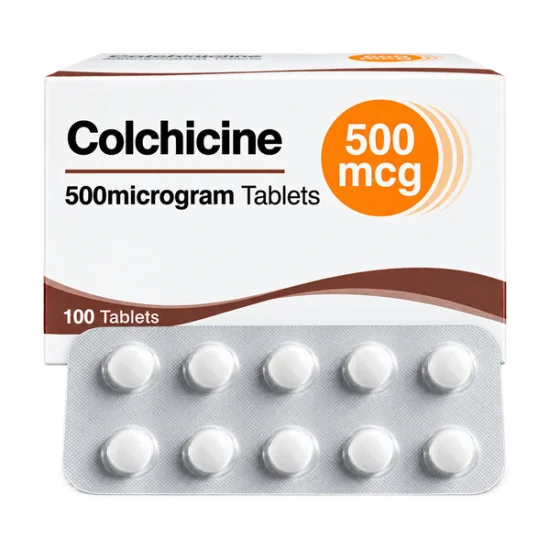
Colchicine is a targeted anti-inflammatory agent supplied here as 500 microgram tablets. It is used mainly for acute gout flares and for preventing recurrent flares during urate-lowering treatment. Physicians also prescribe it for selected inflammatory disorders, including familial Mediterranean fever and pericarditis, when clinically appropriate.
Pharmacological action
Colchicine binds to tubulin, a protein needed to form microtubules inside cells. Microtubules act like internal scaffolding and transport tracks. When colchicine disrupts their assembly, neutrophils become less able to move toward urate crystals and release inflammatory substances.
The process can be understood in four steps:
- Urate crystals activate immune cells in the affected tissue.
- Neutrophils move toward the crystals.
- Colchicine interferes with tubulin and microtubule formation.
- Reduced neutrophil movement and activation lessen the inflammatory response.
Colchicine also affects intracellular signalling linked to the NLRP3 inflammasome. This complex helps activate interleukin-1 beta, an inflammatory messenger involved in gout and several other inflammatory processes.
The mechanism explains both the benefits and the risks. A small, carefully selected dose can suppress harmful inflammation, while excessive exposure can impair rapidly dividing cells and produce gastrointestinal, muscle, nerve, bone-marrow, or multi-organ toxicity. The pharmacology is described in the FDA prescribing information for colchicine [1].
What it contains
Colchicine contains colchicine as its active ingredient and is supplied as 500 microgram tablets for oral use. The exact amount and frequency depend on the condition being treated and are agreed with a doctor or pharmacist.
Directions for use
The amount and frequency of Colchicine depend on the condition being treated and are agreed with a doctor or pharmacist. The 500 microgram tablet is taken by mouth with water. The treatment plan may be a short course for an acute flare, regular prevention, or a specialist-directed regimen for another inflammatory condition.
Key administration principles include:
- Use only the prescribed number of tablets.
- Do not repeat doses early because pain remains.
- Do not use an acute-flare schedule for cardiovascular prevention.
- Swallow tablets with water; taking them after food may be easier for people prone to stomach upset.
- If a dose is missed, take it when remembered unless the next scheduled dose is near.
- Never double the next dose to compensate for a missed tablet.
- Keep a written record if colchicine is being taken alongside several daily medicines.
Patients with reduced kidney function or liver disease may need a lower dose, longer intervals, or avoidance of colchicine. The same applies when medicines raise colchicine concentrations by inhibiting CYP3A4 or P-glycoprotein.
Reasons not to use it
- Severe kidney disease or markedly reduced renal function
- Severe liver disease
- Previous serious reaction to colchicine
- Concurrent use of potent CYP3A4 or P-glycoprotein inhibitors
- Unexplained muscle weakness or a history of severe colchicine-related toxicity
- Significant blood-count abnormalities
- Pregnancy or breastfeeding without a specific clinical assessment
- A suspected acute abdomen, severe infection, or symptoms that have not been diagnosed
Do not combine colchicine with another colchicine-containing medicine. Accidental duplication can occur when a person receives medicines from more than one prescriber.
When this is not for you
Colchicine is NOT for you if you have severe kidney or liver disease, take a potent interacting medicine, or have unexplained muscle weakness; seek clinical advice before use. Toxicity risk rises with age, kidney impairment, liver impairment, dehydration, and interacting treatment. A prescribed dose for one person may be excessive for another.
Adverse reactions
The most common adverse effects involve the digestive system. Diarrhoea, nausea, abdominal pain, and vomiting may occur, especially when exposure is too high or the treatment is repeated too soon.
Common gastrointestinal adverse effects
Early diarrhoea can be a warning sign rather than a harmless inconvenience. Continuing to take additional colchicine while diarrhoea is worsening can increase the risk of severe toxicity.
Other possible adverse effects include:
- Abdominal cramping
- Reduced appetite
- Vomiting
- Tiredness
- Muscle pain or weakness
- Tingling or numbness
- Reduced blood-cell production in serious toxicity
Severe weakness, dark urine, difficulty walking, unusual bruising, fever, sore throat, or reduced urination requires urgent medical assessment. These symptoms may indicate muscle injury, nerve toxicity, bone-marrow suppression, or organ impairment.
One practical detail is easy to miss: diarrhoea can begin before more serious toxicity becomes obvious. Treating it only with an anti-diarrhoeal product while continuing excessive colchicine may delay recognition of the problem.
Renal and hepatic precautions
Kidney problems can slow colchicine elimination and allow the drug to accumulate. Liver problems can also increase exposure, especially when combined with interacting medicines. Severe renal or hepatic impairment may rule out certain regimens.
CYP3A4 inhibitors and P-glycoprotein inhibitors are important interaction groups. Examples include clarithromycin, erythromycin, certain azole antifungals, ciclosporin, some antiviral medicines, and selected calcium-channel blockers. The exact interaction depends on the drug, dose, and organ function.
Some statins and fibrates can increase concern about muscle injury when used with colchicine. This does not mean every combination is prohibited, but muscle pain or weakness should be reported promptly.
Uses
Colchicine is a targeted anti-inflammatory agent supplied here as 500 microgram tablets. It is used mainly for acute gout flares and for preventing recurrent flares during urate-lowering treatment. Physicians also prescribe it for selected inflammatory disorders, including familial Mediterranean fever and pericarditis, when clinically appropriate.
Colchicine does not dissolve urate crystals directly. Its benefit comes from reducing the inflammatory reaction triggered by monosodium urate crystals inside a joint. The treatment plan depends on the purpose of use, kidney and liver function, age, interacting medicines, and the patient’s previous response.
Primary role in gout management
During a gout flare, urate crystals activate neutrophils, a type of white blood cell. Colchicine interferes with the movement and activation of these cells, which can reduce swelling and pain as the inflammatory response settles.
Investigation in other inflammatory states
Colchicine has been studied in inflammatory conditions beyond gout. Trials involving COVID-19 did not establish a routine role for colchicine in treating the infection, and it should not be started for that purpose without a specific prescription.
The drug has also been used in selected cases of pericarditis, where inflammation affects the sac around the heart. The suitable dose and duration differ from gout treatment, and treatment decisions depend on the diagnosis and accompanying medicines.
Role of low-dose colchicine in cardiovascular health
Low-dose colchicine has been evaluated as an anti-inflammatory treatment for selected patients with coronary artery disease and atherosclerotic cardiovascular disease. In this setting, the aim is to reduce inflammation within arterial plaques rather than treat joint pain.
The US Food and Drug Administration approved low-dose colchicine for reducing cardiovascular risk in specific adults with established atherosclerotic disease or multiple cardiovascular risk factors. This indication uses a continuous regimen prescribed for cardiovascular prevention, not an occasional flare regimen.
| Clinical purpose | Main inflammatory target | Prescribing approach |
|---|---|---|
| Acute gout flare | Neutrophil-driven joint inflammation | Short course determined by the prescriber |
| Flare prevention | Recurrent crystal-related inflammation | Regular low-dose treatment |
| Selected cardiovascular prevention | Inflammation associated with atherosclerotic disease | Continuous low-dose treatment for eligible patients |
Management of coronary artery disease
Research has examined whether low-dose colchicine can reduce events such as myocardial infarction, stroke, or coronary revascularisation in people already diagnosed with coronary artery disease. It is an adjunct to established cardiovascular care, not a replacement for antiplatelet treatment, lipid-lowering therapy, blood-pressure control, smoking cessation, or diabetes management.
Targeting atherosclerotic cardiovascular disease
Atherosclerosis involves lipid accumulation, immune-cell activity, and inflammation within arterial walls. Colchicine may reduce inflammatory signalling linked to plaque activity, including pathways associated with the NLRP3 inflammasome.
The cardiovascular evidence is clinically relevant but not universal. A doctor considers kidney function, liver function, blood counts, infection risk, interacting medicines, and the patient’s complete cardiovascular treatment plan before prescribing low-dose colchicine.

Comparison
Colchicine is an oral, single-ingredient anti-inflammatory treatment. Unlike urate-lowering treatment, it does not lower uric acid or dissolve urate crystals; it reduces the inflammatory reaction triggered by monosodium urate crystals.
Common mistakes
Several recurring errors reduce benefit or increase risk:
- Taking extra tablets because the joint pain has not improved quickly.
- Using colchicine as a general painkiller for back pain, headache, or injury.
- Continuing treatment through severe diarrhoea or repeated vomiting.
- Forgetting to mention clarithromycin, erythromycin, antifungal treatment, or ciclosporin.
- Assuming the cardiovascular regimen is identical to the acute-gout regimen.
- Taking colchicine from an old prescription during a new flare without checking kidney and liver considerations.
- Combining two medicines that both contain colchicine.
- Stopping prescribed urate-lowering therapy whenever colchicine is used for a flare.
- Ignoring new muscle weakness while also taking a statin.
A patient who develops severe gastrointestinal symptoms should not simply reduce the interval between tablets. The next step is clinical assessment.
What doctors say
In clinical practice, doctors usually set expectations around inflammation rather than immediate pain relief. Colchicine works by modifying the inflammatory response, so persistent pain may require reassessment of the diagnosis, treatment timing, or joint involvement.
A physician also checks whether the patient is using colchicine for a flare, prevention, pericarditis, or cardiovascular risk reduction. These purposes cannot be treated as interchangeable.
For recurrent gout, colchicine may control flares while urate-lowering treatment addresses the underlying crystal burden. It does not replace long-term management of elevated uric acid when that treatment is indicated.
Clinicians pay close attention to kidney function, liver function, age, body weight, blood counts, and interacting medicines. A low dose can still become toxic when clearance is reduced or metabolism is inhibited. The indication determines the dose. Kidney function changes exposure. Interactions can raise toxicity risk.
Questions and answers
How soon can the effect of Colchicine become noticeable?
Gout inflammation may begin to ease within several hours to a day when colchicine is started promptly, though the response varies with the stage and severity of the flare. Persistent or worsening pain can indicate delayed treatment, an alternative diagnosis, infection, or the need for medical reassessment. The EMA’s 2024 colchicine product information emphasises that gastrointestinal symptoms can occur before more severe toxicity. Do not repeat doses early if the effect seems slow.
Can Colchicine be combined with statins?
Colchicine may be prescribed with a statin, but the combination requires attention to muscle toxicity. Muscle pain, marked weakness, tenderness, or dark urine should be reported urgently, especially in people with kidney impairment or higher colchicine exposure. The FDA’s 2023 prescribing information for colchicine describes interaction-related safety considerations that apply when colchicine is used in cardiovascular care. Never stop essential cardiovascular treatment without a prescriber’s direction.
Is Colchicine suitable during pregnancy and breastfeeding?
Pregnancy and breastfeeding require an individual assessment of the condition, alternatives, kidney function, and treatment duration. Colchicine has been used in some pregnancy-related inflammatory conditions under specialist supervision, but self-treatment is inappropriate. The FDA’s 2023 prescribing information supports clinician-led decisions about colchicine use during pregnancy rather than automatic avoidance or automatic use. A breastfeeding patient should disclose the medicine and the infant’s age before treatment is selected.
Can older adults use Colchicine?
Older adults can receive colchicine when the indication and dose are appropriate, but reduced kidney function, liver disease, dehydration, and polypharmacy increase toxicity risk. Symptoms such as diarrhoea, weakness, numbness, or confusion deserve prompt attention because older patients may deteriorate quickly. The WHO’s 2017 Medication Without Harm initiative supports medication review when several medicines are used together. Renal function and interacting medicines should be reviewed before repeated courses or long-term treatment.
Do you offer anonymous delivery?
Your order will be securely packed and shipped within 24 hours. This is exactly what your package will look like (images of an actual item sent). It has the size and look of a regular private letter (24x11x0.7 cm) and its contents cannot be seen.
Comparison
Allopurinol
Colchicine Current
Sources
- U.S. Food and Drug Administration (2023). Colcrys (colchicine) Prescribing Information