Skip to content
Chlorhexidine
Active ingredient: Chlorhexidine

Chlorhexidine

Quality products
24/7 Support
Fast delivery
Delivery from 4 days
Select pack Package Per unit Price

Free delivery on orders from AED 796.00, free express delivery from AED 1,194.00

Secure Payments
Track your order
Best price guarantee

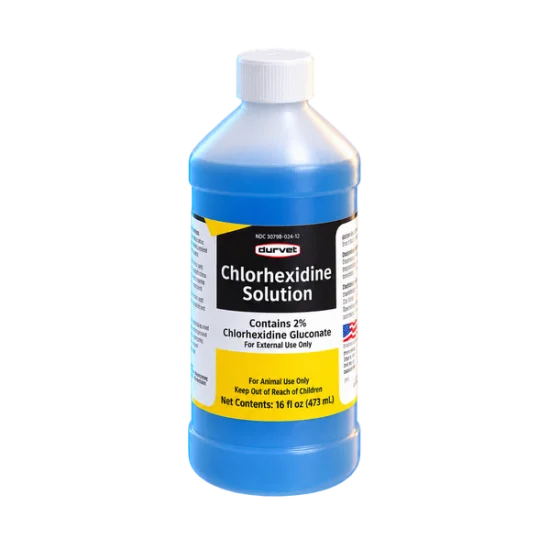
This 2% external-use preparation is intended for clinician-directed antiseptic care of the skin, where it reduces bacterial contamination by damaging microbial cell membranes. It must not be swallowed or used as an oral rinse.

About this product

Chlorhexidine gluconate, a cationic bisbiguanide antiseptic, is the active substance in Chlorhexidine solution.

Pharmacological action

Chlorhexidine is a cationic polybiguanide whose positively charged molecule binds to negatively charged bacterial surfaces. It disrupts microbial cell membranes, restricting multiplication at lower effective concentrations and causing leakage of cellular contents at higher concentrations. Binding to skin and mucosal proteins contributes to residual antimicrobial activity after application.

What it contains

Chlorhexidine contains chlorhexidine gluconate at a concentration of 2% in a liquid bottle formulation. It belongs to the antiseptic class known as cationic polybiguanides. The positive charge of the molecule allows it to bind to negatively charged bacterial surfaces.

The product is intended for external use only. It is not a gargle and should not be used for gingivitis, mouth sores, sore throat treatment, dental plaque control, or any other application inside the mouth.

Chlorhexidine has two related antimicrobial actions:

  • At lower effective concentrations, it interferes with bacterial membranes and restricts multiplication. This is called a bacteriostatic effect.
  • At higher concentrations, it causes stronger membrane disruption and leakage of cellular contents. This produces a bactericidal effect.
  • The compound can bind to skin and mucosal proteins, which contributes to residual antimicrobial activity after application.
  • It acts against many Gram-positive and Gram-negative bacteria, although activity varies by organism and formulation.
  • It is not a substitute for treatment directed at a diagnosed infection requiring systemic therapy.

The solution is designed for use on the external body surface. Contact with the eyes, middle ear, meninges, brain tissue, and deep wounds can cause serious injury.

Before use, identify the intended external skin area and keep the solution away from the eyes, ears, mouth, and other sensitive tissues.

A useful practical detail is that chlorhexidine can remain active on the skin after the liquid has been removed, but this does not make repeated or excessive application appropriate. More product does not automatically produce better antisepsis.

Directions for use

The correct amount and contact time are determined individually. Age, other medicines, health conditions, skin integrity, and the reason for use all influence the instructions.

For external antiseptic use:

  • Apply only to the intended external skin area.
  • Use the amount specified for the clinical purpose.
  • Keep the solution away from the eyes, mouth, nose, ear canal, genital mucosa, and deep wounds.
  • Do not swallow the liquid.
  • Do not inject it.
  • Do not apply it to large areas, severely damaged skin, or burns unless specifically directed.
  • Allow the required contact time before rinsing or covering the area.
  • Do not combine it with another antiseptic without professional direction.
  • If a dose or application is missed, do not compensate by applying a large quantity later.

A bottle intended for external use should not be poured into an unmarked container. Accidental transfer into a drinking bottle or oral-care container creates a serious risk of ingestion.

Do not use chlorhexidine immediately after washing the same area with ordinary soap unless the clinical directions allow it; soap residue can reduce antiseptic activity.

Chlorhexidine should be used only for the duration specified for the treatment purpose. Prolonged unsupervised application may increase irritation without adding useful protection.

Reasons not to use it

Chlorhexidine is not suitable for a person with a known allergy or previous serious reaction to chlorhexidine or chlorhexidine gluconate.

  • Application inside the mouth, throat, eye, ear canal, or another internal body site.
  • Application to a deep wound, severe burn, or exposed tissue without specific clinical instructions.
  • Swallowing or use as a gargle.
  • Use on a premature infant or very young infant without explicit clinical direction.

Extra caution is needed when the skin barrier is broken, because absorption and irritation may increase. Avoid occlusive dressings unless a clinician has specified their use.

Chlorhexidine can interact physically with other topical products. Soap, anionic detergents, and some cleansing agents may reduce its activity. Do not layer it with another antiseptic simply to intensify treatment.

Pregnancy and breastfeeding require site-specific advice. External use on a limited area may be handled differently from application to large, damaged, or occluded areas. Avoid applying the solution to the breast immediately before breastfeeding because an infant must not ingest chlorhexidine residue.

When this is not for you

This product is not for you if:

  • You have previously developed breathing difficulty, facial swelling, collapse, or widespread hives after chlorhexidine.
  • You need to apply it inside the mouth, throat, eye, ear canal, or another internal body site.
  • The intended site is a deep wound, severe burn, or exposed tissue without specific clinical instructions.
  • You plan to swallow it or use it as a gargle.
  • You have a history of unexplained severe reactions to topical antiseptics and the product has not been medically assessed.
  • The treatment area is a premature infant or very young infant without explicit clinical direction.

Adverse reactions

Most unwanted effects from topical chlorhexidine involve the skin or the area of contact. Burning, stinging, dryness, redness, itching, rash, and local irritation can occur.

Possible reactions include:

  • Temporary burning or stinging.
  • Redness or itching at the application site.
  • Dry or tight-feeling skin.
  • Irritant contact dermatitis.
  • Allergic contact dermatitis.
  • Skin sensitivity after repeated exposure.
  • Worsening discomfort on already inflamed or damaged skin.

A mild short-lived sensation can occur with antiseptic application, but persistent pain, swelling, blistering, or spreading redness requires the product to be stopped and medically assessed.

Chlorhexidine can also cause severe allergic reactions, including anaphylaxis. Warning signs include facial or throat swelling, wheezing, difficulty breathing, widespread hives, dizziness, faintness, or sudden collapse. Emergency care is required if these symptoms occur.

The FDA has warned about rare but serious allergic reactions to chlorhexidine-containing products, including topical preparations [2].

If the skin becomes increasingly painful, swollen, blistered, or intensely itchy after application, stop further use and keep the area free from additional antiseptics until assessed.

Rarely, exposure near the mouth or salivary ducts has been associated with swelling of a parotid gland. That reaction is not expected with correct use on intact external skin, but persistent swelling near the cheek, jaw, or ear needs medical review.

Uses

The 2% Chlorhexidine solution is used for external antiseptic care when reduction of skin bacteria is required. The exact application depends on the clinical purpose, the body site, the patient’s age, skin condition, and other medicines or procedures.

Typical professional uses may include:

  • Preparation of intact skin before a clinical procedure.
  • Antiseptic cleansing directed by a healthcare professional.
  • Reduction of microbial contamination around a selected external site.
  • Skin antisepsis when a chlorhexidine-based preparation has been chosen for its persistent activity.

The dose is decided individually, taking age, other medicines, and health conditions into account. A clinician should specify the amount, contact time, frequency, and treatment duration for the intended application.

Clinical setting Intended role Key limitation
Intact external skin Reduces surface bacterial contamination Avoid eyes, ears, mouth, and deep tissue
Procedure-related skin preparation Supports antiseptic preparation Application method depends on the procedure
Local external cleansing Provides topical antimicrobial action Does not replace treatment for an established deep infection

Chlorhexidine is not designed to soothe a mouth sore or treat gingivitis in this formulation. Oral preparations use different concentrations and directions, so an external 2% solution should never be transferred to dental or throat care.

The World Health Organization describes chlorhexidine as a topical antiseptic used in healthcare settings, with safety depending on correct site selection and prevention of contact with vulnerable tissues [1].

Comparison

Chlorhexidine differs from other topical antiseptics through its molecular structure, residual skin binding, and allergy profile.

Antiseptic approach Main action Main limitation
Chlorhexidine Disrupts microbial cell membranes and may persist on skin Can irritate skin and cause serious hypersensitivity
Alcohol-based antiseptic Rapid protein disruption and membrane damage Evaporates quickly and can sting damaged skin
Povidone-iodine Releases iodine with broad antimicrobial activity May irritate skin and requires caution in selected thyroid conditions

Chlorhexidine may be selected when persistent surface activity is desired. Alcohol-based products may be chosen when rapid drying is needed. Povidone-iodine may be considered when the clinical situation calls for an iodine-based antiseptic.

The choice depends on the body site, contact time, skin condition, allergy history, and procedure. These products are not interchangeable by volume.

Common mistakes

Poor results and avoidable reactions often follow a small number of practical errors:

  • Using the external solution as a mouthwash or gargle.
  • Applying it to the eyes, ear canal, or deep wound.
  • Leaving soap residue on the skin before application.
  • Combining chlorhexidine with another antiseptic.
  • Covering the treated area tightly without clinical instructions.
  • Applying large quantities to compensate for a missed application.
  • Continuing after a spreading rash or severe burning develops.
  • Pouring the solution into a cup or another unmarked container.
  • Assuming that skin redness always indicates inadequate antisepsis.
  • Using the product on an infant or premature baby without explicit medical direction.
Keep the bottle separate from oral-care products and household liquids. The external-use instruction is a safety boundary, not a suggestion about preferred administration.

What doctors say

In clinical practice, doctors usually treat chlorhexidine as a site-specific antiseptic rather than a general-purpose cleanser. The benefit depends on using the right concentration on the right body surface for the right period.

A clinician will usually assess:

  • The reason antisepsis is required.
  • Whether the skin is intact or damaged.
  • The size and location of the treatment area.
  • Previous reactions to chlorhexidine or other antiseptics.
  • Age, pregnancy, breastfeeding, and relevant medical conditions.
  • Other topical medicines or cleansing products being used.

A common mistake is to assume that an antiseptic should be applied more frequently when the skin remains red. Redness can reflect irritation, allergy, friction, or infection, and extra chlorhexidine may worsen the first two causes.

A product intended for external skin antisepsis should never be used to manage a dental complaint. Oral chlorhexidine products are separate pharmaceutical preparations with different strengths and directions.

Questions and answers

How does Chlorhexidine differ from an alcohol-based antiseptic?

Chlorhexidine disrupts microbial cell membranes and can remain associated with the skin after application, while alcohol-based antiseptics act rapidly and evaporate more quickly. The best choice depends on the skin site, required contact time, and patient history. WHO guidance published in 2009 describes both alcohol-based agents and chlorhexidine-based approaches within healthcare hand-hygiene practice [3]. Chlorhexidine is unsuitable for anyone with a known chlorhexidine allergy, even when another antiseptic would be appropriate. Product-specific instructions should guide site selection and contact time.

What should I do if the expected result does not occur?

Do not respond by applying larger amounts or using the solution more often. Persistent redness, pain, discharge, swelling, fever, or worsening tenderness may indicate irritation, allergy, or an infection requiring a different treatment. FDA topical antiseptic labeling reviewed in 2020 advises site-specific use and avoidance of inappropriate application areas. A clinician should reassess the condition when the intended improvement does not occur within the period specified for the treatment.

Which condition rules Chlorhexidine out completely?

A previous serious allergic reaction to chlorhexidine rules out further use. Symptoms such as anaphylaxis, wheezing, facial swelling, widespread hives, or collapse require urgent treatment rather than another application. The FDA safety communication issued in 2017 identified chlorhexidine as a cause of rare but potentially severe allergic reactions. The solution is also unsuitable for oral, ocular, deep-wound, and ear-canal use.

Can Chlorhexidine be combined with other medicines or supplements?

Chlorhexidine should not be combined on the same skin site with another antiseptic, soap residue, or topical medicine unless a clinician has selected the combination. The main concern is local chemical incompatibility, reduced antiseptic activity, or increased irritation rather than a typical tablet-like drug interaction. NHS topical-medicine safety information available in 2022 supports separating irritating skin products when reactions develop. Vitamins and ordinary oral supplements do not normally alter topical chlorhexidine activity, but they do not make unsafe application sites appropriate.

How should Chlorhexidine be stored at home and while travelling?

Keep the bottle closed, away from excessive heat, direct sunlight, and children. During travel, keep it upright in a sealed secondary bag to prevent leakage and avoid placing it beside drinks or oral medicines. The WHO storage principles for antiseptic products, described in its 2009 infection-control guidance, stress protection from contamination and unsuitable environmental conditions. Do not transfer the solution into another bottle because this can remove the external-use warning and create a risk of accidental ingestion.

Can alcohol be used while using Chlorhexidine?

Alcoholic drinks do not create the same interaction as alcohol-containing hand or skin preparations, but alcohol should never be poured onto the treated area or mixed with chlorhexidine. Combining topical irritants can increase burning, dryness, and dermatitis. A 2021 clinical safety review in the Journal of Hospital Infection described irritation as more likely when multiple harsh agents are layered. Alcohol consumption also does not make oral use of this external solution acceptable.

Do you offer anonymous delivery?

Your order will be securely packed and shipped within 24 hours. This is exactly what your package will look like (images of an actual item sent). It has the size and look of a regular private letter (24x11x0.7 cm) and its contents cannot be seen.

Comparison

Compare treatments for Antiseptics

Sources

  1. World Health Organization (2009). WHO Guidelines on Hand Hygiene in Health Care.
  2. U.S. Food and Drug Administration (2017). FDA Drug Safety Communication: FDA warns about rare but serious allergic reactions with chlorhexidine gluconate.
  3. World Health Organization (2009). WHO Guidelines on Hand Hygiene in Health Care: Summary of Recommendations.

Chlorhexidine: What Customers Say

3.8
Based on 5 reviews
Samir N., 27 Al Barsha A short period
Verified
Rating: 4 out of 5

Samir N., 27 - Al Barsha, used the solution for a short period on an external skin area after a clinician’s instruction. He reported mild stinging during the first application, which settled quickly, and no further irritation after using less friction on the area.

1 Oct 2026
Ali, 61 Dubai
Verified
Rating: 3 out of 5

Ali, 61 - Dubai, used chlorhexidine during procedure-related skin care. He said the antiseptic was easy to apply, but he initially repeated the application because he thought more liquid would work better. A clinician advised him to keep to the specified amount.

12 Oct 2026
Khalid, 47 Al Nahda Several days
Verified
Rating: 2 out of 5

Khalid, 47 - Al Nahda, had used the solution for several days on irritated skin. Redness and dryness increased, so he stopped and arranged a review. The experience reminded him that persistent redness can reflect irritation rather than a need for more antiseptic.

17 Oct 2026
Zubair Z., 34 Al Majaz
Verified
Rating: 5 out of 5

Zubair Z., 34 - Al Majaz, used the product before a minor clinical procedure. He found the liquid convenient, although the smell and brief cold sensation were unpleasant. He did not experience a rash or swelling.

23 Oct 2026
Joel B., 39 Al Qusais
Verified
Rating: 5 out of 5

Joel B., 39 - Al Qusais, mistakenly considered using the solution for a mouth complaint before reading the external-use instruction provided during consultation. He did not use it orally and instead obtained advice about an appropriate dental preparation.

30 Oct 2026
Get our free app Shop faster and track your orders Install