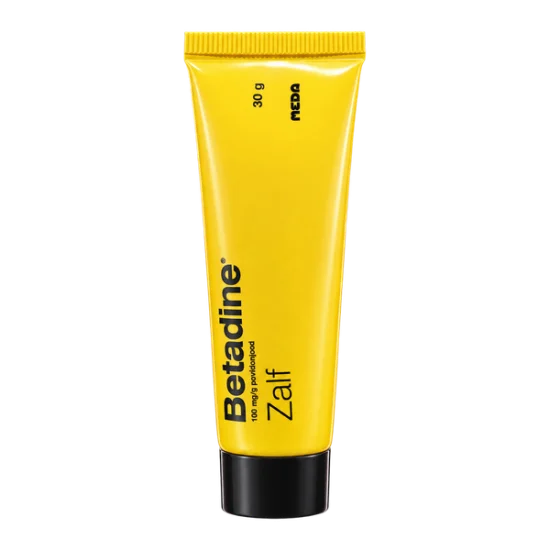
I used a thin layer on a small kitchen cut after washing it. The ointment stayed in place under a light dressing, though I noticed mild stinging during the first few minutes.
Adults and children needing local antiseptic care for minor skin injuries may use Betadine ointment for affected skin. Betadine is intended for external application and helps reduce microorganisms around superficial cuts, abrasions, and minor burns when used correctly.
About this product
Betadine is a topical antiseptic ointment supplied in a tube, with a 30 g presentation. Its intended use is local skin care rather than treatment of deep wounds, extensive burns, or unexplained skin disease.
Pharmacological action
Topical antiseptics reduce the number of microorganisms on the skin surface. This supports routine care of minor injuries and may help lower contamination during the early stages of wound management.
What it contains
Betadine is a topical antiseptic ointment supplied in a 30 g tube for external application to affected skin. The available product information does not specify its active ingredient or full composition.
Directions for use
Betadine ointment may be used for superficial cuts, grazes, small abrasions, and minor burns. The area should be assessed before application. A wound that is deep, heavily contaminated, gaping, caused by an animal or human bite, or associated with loss of sensation requires clinical assessment rather than repeated home treatment.
A practical application sequence is:
- Wash your hands before touching the wound.
- Rinse visible dirt from the affected skin with clean running water.
- Pat the surrounding skin dry with clean material.
- Apply a thin layer of Betadine to the small affected area.
- Wash your hands after application.
- Use a clean dressing when clothing, dust, or repeated contact may disturb the area.
- Replace the dressing if it becomes wet or visibly soiled.
The appropriate amount depends on the size of the affected area and individual circumstances, so there is no single amount that suits everyone. A thin film is generally preferable to a thick coating. More product does not compensate for inadequate cleansing.
Do not apply the ointment into a deep wound, under a tightly sealed dressing, or over a large body area unless a healthcare professional has given specific instructions.
EMA safety information for topical iodine preparations also supports limiting unnecessary prolonged or extensive exposure, especially in people with thyroid, kidney, or iodine-related concerns [2].
Reasons not to use it
Betadine is not suitable for you if you have previously had a serious reaction to this product or any of its ingredients. Extra caution is needed before use in the following situations:
- Known thyroid disease, especially when treatment would involve repeated or extensive application.
- Significant kidney impairment.
- Extensive burns, large open wounds, or repeated application over a wide area.
- Infancy or very young age, unless a clinician has advised its use.
- Pregnancy or breastfeeding when frequent, prolonged, or extensive application is being considered.
- Treatment with lithium or another medicine affected by iodine exposure.
- A history of severe contact dermatitis from topical antiseptics.
Avoid combining Betadine on the same area with several other antiseptics, peroxide products, or irritating topical medicines unless a clinician has selected the combination. Layering products can increase irritation and makes it harder to identify which product caused a reaction.
Do not use the ointment inside the eye. Eye exposure requires prompt rinsing with clean water and medical advice if pain, blurred vision, or persistent redness follows.
When this is not for you
The product should be kept away from the eyes, inside of the mouth, and other mucous membranes unless a clinician has specifically directed its use there. It is not intended for routine application across large areas of unbroken skin.
The World Health Organization places cleansing, protection, and observation at the centre of minor-wound care [1].
Adverse reactions
Most problems with a topical antiseptic are local. Possible reactions include:
- Burning or stinging on broken skin.
- Itching, dryness, or redness.
- Irritant dermatitis after repeated use.
- Allergic contact dermatitis with swelling, blistering, or a spreading rash.
- Temporary staining of the skin or surrounding material.
Stop application and arrange medical assessment if swelling of the lips or face, breathing difficulty, widespread hives, or severe blistering occurs. These symptoms can indicate a significant allergic reaction.
Extended or extensive use of iodine-containing topical preparations can affect thyroid function or contribute to iodine exposure, especially in infants, people with thyroid disease, people with kidney impairment, and those receiving repeated treatment over large areas. EMA information for iodine antiseptics describes these precautions, while MOHAP provides the relevant UAE medicines regulatory context [3].
One practical issue is staining. The colour may remain on skin or fabric for a while, so use clothing and dressings that can tolerate contact with a topical antiseptic. Do not use strong solvents on the skin to remove staining.
Uses
Betadine ointment may be used for superficial cuts, grazes, small abrasions, and minor burns.
Comparison
The most useful comparison is by application method and clinical purpose, not by brand name. Betadine ointment is designed to remain on a small skin area, while cleansing with water removes debris and a simple protective dressing shields the wound from friction.
| Approach | Main role | Practical limitation |
|---|---|---|
| Betadine ointment | Local antiseptic coating for minor superficial skin injuries | May irritate sensitive skin; unsuitable for extensive or deep wounds without clinical direction |
| Clean water and gentle cleansing | Removes dirt and loose contaminants | Does not provide a prolonged antiseptic coating |
| Protective dressing alone | Limits friction and contact with dust | Does not clean the wound or reduce microorganisms by itself |
Iodine-based topical products and non-iodine antiseptics can differ in tolerability, tissue compatibility, and restrictions. A clinician may choose a different approach for a person with thyroid disease, kidney impairment, extensive wounds, recurrent skin reactions, or a need for specialised wound management.
Betadine should not be selected for a condition merely because the skin looks red. Redness can result from irritation, allergy, eczema, burns, pressure, or infection, and each situation may require a different treatment.
Common mistakes
Several habits reduce the usefulness of topical wound care:
- Applying the ointment before removing dirt. Product applied over grit or soil does not clean the wound.
- Using too much. A thick layer can macerate nearby skin and interfere with dressing adhesion.
- Covering a wet, dirty wound immediately. A dressing should protect a cleaned area, not trap contamination.
- Using it on every red patch. Redness alone does not establish infection.
- Continuing despite a spreading rash. This can turn irritation into a larger dermatitis.
- Treating a deep wound at home for several days. Depth, gaping edges, bites, punctures, and embedded material require assessment.
- Sharing the tube. Shared topical products can transfer microorganisms between users.
- Applying it near the eyes or inside the mouth. The ointment is intended for external skin use.
- Forgetting hand hygiene. Clean hands help prevent recontamination before and after application.
- Expecting instant healing. Antisepsis supports wound care; it does not make tissue repair immediate.
A small wound that is not improving should be reassessed rather than covered with progressively thicker layers.
What doctors say
In clinical practice, doctors usually judge a topical antiseptic by the wound, not by the product name alone. A small clean abrasion may need cleansing, a light protective layer, and observation. A puncture wound, bite, deep cut, or wound with dead tissue needs a different assessment. The decision also depends on wound depth and contamination. Early assessment can help identify injuries that need closure, tetanus review, or other treatment.
Doctors also look for risk factors that change healing. Diabetes, poor circulation, immunosuppressive treatment, steroid use, and reduced sensation can allow a minor injury to worsen without obvious pain. A person with reduced sensation should inspect the area visually rather than relying only on discomfort.
A common prescribing mistake is treating antisepsis as the entire wound plan. Cleansing, protection, tetanus status, pain control, and review of healing remain separate decisions. Antiseptic ointment can support local care, but it does not close tissue or remove an abscess.
The expected course should be gradual improvement. If the wound becomes more painful, warmer, more swollen, or more heavily discharged, repeated applications should not delay assessment.

Questions and answers
Can Betadine be used with cosmetics, sunscreen, or other topical products?
Do not layer cosmetics, sunscreen, moisturisers, or other antiseptics directly over the treated wound. The American Academy of Dermatology guidance available in 2024 supports keeping wound care simple and reducing avoidable irritation. Allow the treated area to settle, and apply sunscreen only to intact surrounding skin once the wound has closed unless a clinician gives different instructions.
What should I do if the expected result does not come?
If the wound does not begin to improve, or if pain, swelling, warmth, discharge, or redness increases, stop relying on repeated applications and arrange medical assessment. NICE wound-infection guidance, reviewed in 2024, treats worsening local signs and systemic symptoms as reasons for clinical evaluation. Fever, red streaks, severe pain, or rapidly spreading redness require prompt attention.
How much Betadine should I apply, and should I wash my hands or cover the area?
Wash your hands, clean the affected skin, and apply a thin coating to the small injured area. The amount depends on the wound size, so there is no single amount that suits everyone. Wash your hands again afterwards, and cover the area with a clean dressing when friction, dust, or contact is likely; avoid an airtight covering unless specifically directed.
What should I check or discuss with a doctor before starting Betadine?
Discuss previous reactions to iodine-containing topical products, thyroid disease, kidney impairment, pregnancy, breastfeeding, extensive wounds, and lithium treatment. EMA safety information published in 2023 identifies thyroid-related and extensive-use precautions for topical iodine preparations. Medical assessment is also appropriate for bites, punctures, deep cuts, large burns, embedded debris, or wounds in people with diabetes or poor circulation.
Is Betadine suitable for older adults?
Older adults may use a topical antiseptic for an appropriate minor injury, but thin or fragile skin can react more readily to repeated applications. Guidance from the British Geriatrics Society published in 2022 emphasises checking skin integrity, circulation, sensation, and medicine interactions in older people. A clinician should assess wounds that heal slowly, recur, or occur on feet with reduced sensation.
Do you offer anonymous delivery?
Your order will be securely packed and shipped within 24 hours. This is exactly what your package will look like (images of an actual item sent). It has the size and look of a regular private letter (24x11x0.7 cm) and its contents cannot be seen.
Comparison
Betadine Current
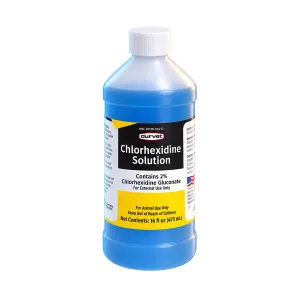
Chlorhexidine
Sources
- World Health Organization (2018). Basic Emergency Care: Approach to the Acutely Ill and Injured
- European Medicines Agency (2023). Summary of Product Characteristics (SmPC) — povidone-iodine topical preparation
- Ministry of Health and Prevention (MOHAP), United Arab Emirates (2023). National medicines regulator product information — povidone-iodine topical preparation