Skip to content
Spiriva
Active ingredient: Tiotropium

Spiriva

Quality products
24/7 Support
Fast delivery
Delivery from 4 days
Select pack Package Per unit Price

Free delivery on orders from AED 796.00, free express delivery from AED 1,194.00

Secure Payments
Track your order
Best price guarantee

Spiriva Respimat is prescribed for adults with chronic obstructive pulmonary disease and, where clinically appropriate, maintenance treatment of asthma. It relaxes airway smooth muscle and supports easier breathing across the day.

About this product

Tiotropium, the active ingredient of Spiriva, is a long-acting muscarinic antagonist delivered through a soft-mist inhaler.

Tiotropium belongs to the long-acting anticholinergic group, also called long-acting muscarinic antagonists.

Pharmacological action

Tiotropium blocks muscarinic receptors in airway smooth muscle. These receptors normally respond to acetylcholine, a chemical messenger that can tighten the bronchial muscles and increase airway narrowing. By reducing this cholinergic signal, tiotropium helps prevent bronchospasm and supports a wider airway diameter.

The medicine is classified as a long-acting muscarinic antagonist. It does not work by stimulating the airways in the same way as a short-acting beta-2 agonist.

Tiotropium has useful kinetic selectivity within the muscarinic receptor family. It separates relatively slowly from M1 and M3 receptors in the airways, while its interaction with M2 receptors is shorter. This pattern supports bronchodilation without producing a constant generalized anticholinergic effect throughout the body. The European Medicines Agency describes tiotropium as a long-acting bronchodilator for maintenance treatment in obstructive airway disease [1].

Receptor selectivity and duration

Older inhaled anticholinergics, including ipratropium and oxitropium, have shorter clinical durations. Tiotropium remains bound to airway muscarinic receptors for longer, which explains its role in once-daily maintenance therapy.

Prevention of airway bronchospasm

Bronchospasm occurs when the muscles around the bronchi contract and narrow the passage through which air moves. Tiotropium reduces the acetylcholine-driven component of this contraction. It does not remove mucus, treat a chest infection, or replace oxygen therapy during respiratory failure.

What it contains

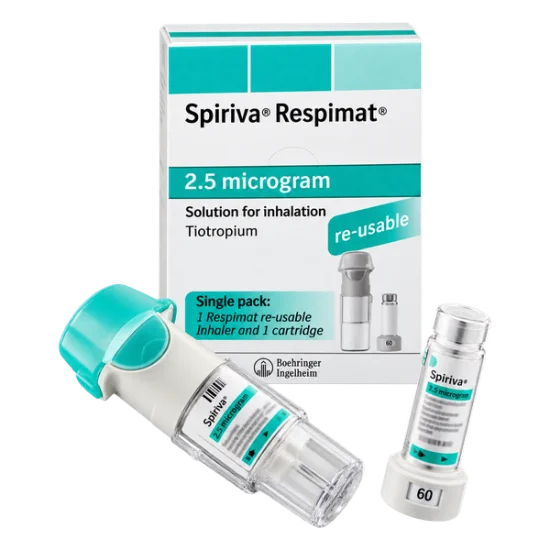
Spiriva Respimat contains tiotropium in an inhalation solution. The product presentation includes a reusable Respimat inhaler and a cartridge containing the solution. Each delivered actuation provides 2.5 micrograms of tiotropium; the prescribed amount per intake is set individually for each person.

Tiotropium belongs to the long-acting anticholinergic group, also called long-acting muscarinic antagonists. It is used as maintenance therapy, which means it helps keep airways open over time rather than providing immediate relief during a sudden breathing crisis.

Spiriva delivery system Medicine form Main use
Respimat inhaler Soft-mist inhalation solution containing tiotropium Once-daily maintenance bronchodilation
HandiHaler system Dry-powder capsule containing tiotropium Maintenance bronchodilation with a capsule-piercing inhaler

The product described on this page is Spiriva Respimat inhalation solution. HandiHaler capsules use a different device and technique, so a patient should not transfer capsules into a Respimat inhaler or use the Respimat cartridge in another inhaler.

Spiriva Respimat soft-mist delivery

The Respimat device releases the solution as a fine, slow cloud. The patient presses the dose-release button while breathing in slowly and deeply through the mouth. A slow inhalation helps the mist travel beyond the mouth and throat.

When learning the device, practise the breathing movement without pressing the dose button first. The key sequence is slow inhalation, dose release, and continued breathing in.

The inhaler requires preparation when a new cartridge is inserted. Priming removes air from the internal system and ensures the device can produce a consistent mist. Priming uses several test sprays according to the device instructions, away from the face and eyes.

The mouthpiece should remain clean and dry. Do not wash the inhaler under running water. A clean, dry cloth is suitable for wiping the mouthpiece, while the inhaler should be maintained according to the device instructions supplied for the Respimat system.

Directions for use

Spiriva Respimat is inhaled through the mouth once daily when prescribed for maintenance treatment. The exact amount per intake is set individually for each person. The Respimat presentation uses two inhalations to deliver the usual daily tiotropium dose, but the prescribed regimen takes priority.

  • Use Spiriva at the same time each day.
  • Exhale fully before placing the mouthpiece between the lips.
  • Seal the lips around the mouthpiece without covering the air vents.
  • Begin a slow, deep breath through the mouth.
  • Press the dose-release button while continuing to breathe in.
  • Hold the breath briefly if comfortable, then breathe out normally.
  • Repeat the second inhalation when the prescribed regimen requires two inhalations.
  • Do not spray the medicine toward the eyes.
  • Do not swallow the inhalation solution.

Missed doses should be handled according to the prescribed regimen. A forgotten dose should not be replaced by taking extra inhalations close together. If the next scheduled dose is approaching, the missed dose is generally omitted rather than doubled.

A common practical error is pressing the button before starting to inhale. That releases mist into the room instead of the lungs. Start the slow breath first, then press the button.

Respimat preparation and cleaning

A new cartridge must be inserted into the reusable inhaler and the device must be primed before regular dosing. The priming process is not the treatment dose. It prepares the internal mechanism to deliver the solution consistently.

Weekly mouthpiece cleaning helps prevent residue from obstructing the spray outlet. Do not use needles or sharp objects to clear the nozzle. A damaged spray outlet can change the mist pattern and reduce reliable delivery.

Patients with limited hand strength, tremor, arthritis, or poor coordination may need a clinician to observe their technique. A spacer is not used with Respimat unless a respiratory professional specifically directs a different setup.

HandiHaler capsule technique

HandiHaler capsules are inhaled through a capsule-piercing device and are not swallowed. The capsule is placed inside the device, pierced, and inhaled through the mouthpiece so the powder is released. This method is separate from the Respimat liquid cartridge system.

The distinction matters because swallowing an inhalation capsule does not deliver tiotropium to the lungs. A patient who has been prescribed Spiriva Respimat should use the Respimat device supplied for that presentation rather than attempting to adapt the treatment to a capsule inhaler.

Reasons not to use it

  • Glaucoma or raised eye pressure
  • Enlarged prostate or difficulty urinating
  • Previous urinary retention
  • Severe kidney disease
  • Allergy to tiotropium or atropine-related medicines
  • Pregnancy or breastfeeding
  • New or rapidly worsening breathlessness
  • Use of other inhaled anticholinergic medicines

Combining more than one anticholinergic inhaler may increase dry mouth, constipation, urinary retention, blurred vision, or palpitations. Tell the prescriber about all inhalers and medicines used for bladder symptoms, Parkinsonian symptoms, or gastrointestinal spasms.

The World Health Organization identifies chronic obstructive pulmonary disease as a long-term respiratory condition requiring sustained management rather than treatment of isolated symptoms [3].

When this is not for you

Spiriva is not suitable for people who have had a serious allergic reaction to tiotropium, atropine-like medicines, or any component of the inhalation product. Speak with a clinician before using it if you have trouble urinating, glaucoma, serious kidney problems, or strong reactions to inhaled anticholinergics. Tell the prescriber about pregnancy, breastfeeding, and any other anticholinergic inhalers.

Adverse reactions

Dry mouth is one of the most recognisable anticholinergic effects of tiotropium. Constipation, throat irritation, headache, cough, and palpitations can also occur. The FDA prescribing information identifies anticholinergic reactions, urinary difficulties, eye effects, and paradoxical bronchospasm as clinically relevant safety concerns [2].

Common problems include:

  • Dry mouth or a dry throat
  • Cough after inhalation
  • Hoarseness or throat irritation
  • Constipation
  • Headache or dizziness
  • Awareness of the heartbeat
  • Difficulty passing urine in susceptible patients

A patient with severe prostate enlargement may notice urinary hesitancy or incomplete bladder emptying. Someone with narrow-angle glaucoma may develop eye pain, blurred vision, halos around lights, or eye redness if mist reaches the eyes. These symptoms require urgent medical assessment.

If the mist reaches the eyes and causes pain or blurred vision, do not continue repeated doses while waiting for symptoms to settle. Seek urgent clinical advice, especially with a history of glaucoma.

Paradoxical bronchospasm is uncommon but serious. It means breathing becomes suddenly worse immediately after inhalation, with wheezing or chest tightness. Stop further inhalations and obtain urgent medical help if this occurs.

Uses

Spiriva Respimat is prescribed for adults with chronic obstructive pulmonary disease and, where clinically appropriate, maintenance treatment of asthma.

Tiotropium is chosen when sustained bronchodilation is needed for chronic airway obstruction. Ipratropium may be used when a shorter-acting anticholinergic effect is clinically suitable. The choice depends on diagnosis, symptom pattern, exacerbation risk, current inhalers, and lung-function findings.

Spiriva may improve airflow measurements and reduce day-to-day breathing limitation in suitable patients. The response is assessed through symptoms, exacerbation history, inhaler technique, and lung-function testing rather than by one symptom alone.

Asthma treatment requires additional care. Tiotropium may be used as an add-on maintenance bronchodilator in selected patients, but it does not replace inhaled corticosteroid treatment where anti-inflammatory control is required.

Comparison

Tiotropium, ipratropium, and oxitropium all have anticholinergic bronchodilator activity, but they do not provide identical treatment patterns.

Active ingredient Pharmacological role Typical duration
Tiotropium Long-acting muscarinic antagonist Approximately 24-hour maintenance coverage
Ipratropium Short-acting muscarinic antagonist Several hours, usually requiring repeated dosing
Oxitropium Short-acting anticholinergic bronchodilator Shorter maintenance intervals than tiotropium

A rescue bronchodilator and Spiriva have different jobs. Spiriva is taken regularly even on days when breathing feels stable. Stopping it because symptoms have improved can remove the maintenance effect that helped produce that stability.

Common mistakes

Several practical errors can reduce the amount of tiotropium reaching the lungs.

  1. Using Spiriva only when breathlessness appears. Spiriva is a maintenance inhaler and works best when taken on its prescribed schedule.

  2. Taking extra doses for sudden symptoms. Additional inhalations do not provide the same rapid response as a prescribed reliever and may increase anticholinergic adverse effects.

  3. Breathing too quickly. Fast inhalation can reduce deposition in the lower airways. Respimat is designed for a slow, steady breath.

  4. Pressing the dose button too early. The mist can escape before inhalation begins.

  5. Failing to prime a new cartridge. The first sprays may not represent a reliable treatment dose until the internal system is prepared.

  6. Pointing the inhaler toward the eyes. Tiotropium mist can worsen glaucoma-related symptoms in susceptible individuals.

  7. Using the wrong device. Respimat cartridges and HandiHaler capsules are not interchangeable.

  8. Swallowing an inhalation capsule. A capsule designed for inhalation must be pierced and inhaled through the correct device.

One detail patients often miss is that symptom improvement does not mean the underlying airway disease has disappeared. Maintenance treatment controls airway narrowing; it does not permanently remove the cause of COPD or asthma.

What doctors say

In clinical practice, physicians usually judge Spiriva by the patient’s breathing pattern across several weeks, not by a single inhalation. Useful measures include exercise tolerance, night-time symptoms, rescue-inhaler use, exacerbations, and spirometry.

A doctor would also watch technique before increasing treatment. An apparently weak response can result from a poor inhalation manoeuvre, an unprimed device, spraying into the eyes, or taking the medicine inconsistently. Changing a prescription cannot correct mist that never reaches the lungs.

Spirometry measures forced expiratory volume in one second, known as FEV1, along with other lung-function values. A spirometer does not diagnose every cause of breathlessness, but it helps clinicians assess airflow limitation and response to treatment. The Global Initiative for Chronic Obstructive Lung Disease recommends combining symptoms, exacerbation history, and objective assessment when managing COPD [4].

Questions and answers

How long does one Spiriva dose keep working?

A Spiriva Respimat dose is intended to provide bronchodilator coverage across approximately 24 hours when used as prescribed. Tiotropium’s prolonged muscarinic-receptor activity supports once-daily maintenance treatment. The EMA's 2024 product information describes tiotropium as a long-acting bronchodilator for sustained airway management, with treatment response assessed over time rather than after one isolated dose . Relief from a sudden attack should come from the separately prescribed rescue plan. Individual responses can vary with disease severity and inhaler technique.

Which symptoms mean Spiriva should be stopped and urgent medical help obtained?

Sudden worsening wheezing or breathlessness immediately after inhalation may indicate paradoxical bronchospasm and requires urgent medical attention. Eye pain, blurred vision, halos, or marked eye redness can signal an acute pressure-related eye problem. Inability to pass urine, facial swelling, tongue swelling, or severe rash may indicate a serious reaction. The FDA's 2024 prescribing information treats these reactions as reasons for prompt assessment rather than routine self-management .

Can Spiriva affect driving, concentration, or work with machinery?

Dizziness and blurred vision can occur and may impair driving or machinery work in an individual patient. Tiotropium is not generally used as a sedative, but each person’s response can differ, especially during the first days of treatment or after a regimen change. The EMA's 2024 safety information supports avoiding hazardous tasks until the patient knows how the inhaler affects vision and alertness . Do not drive if blurred vision, dizziness, or palpitations are present.

Is Spiriva suitable for older adults?

Older adults can use tiotropium when the prescriber considers kidney function, urinary symptoms, glaucoma risk, and inhaler technique. Age alone does not determine the dose, but reduced kidney function can increase exposure to medicines cleared through the kidneys. WHO respiratory-care principles published in 2023 support individual assessment of comorbidities and functional ability in older people with chronic airway disease . A technique check is useful when hand strength, memory, or coordination has changed.

What is the best time of day to use Spiriva?

The best time is a consistent daily time that fits the prescribed plan. Morning use may be practical for patients whose symptoms are worse during daytime activity, while another time may suit a different routine. The key requirement is keeping the interval between doses consistent and avoiding additional inhalations to compensate for a forgotten dose. GOLD guidance published in 2025 for COPD management supports regular maintenance use rather than symptom-triggered use alone .

How does Spiriva differ from ipratropium and oxitropium?

Spiriva contains tiotropium, a long-acting muscarinic antagonist, while ipratropium and oxitropium are shorter-acting anticholinergic bronchodilators. Tiotropium is designed for sustained maintenance coverage, whereas shorter-acting agents may require repeated administration. A 2015 Cochrane review of inhaled anticholinergic bronchodilators describes differences in duration and treatment roles across this medicine group [5]. The medicines are not automatically interchangeable because their devices, schedules, and clinical purposes differ.

Do you offer anonymous delivery?

Your order will be securely packed and shipped within 24 hours. This is exactly what your package will look like (images of an actual item sent). It has the size and look of a regular private letter (24x11x0.7 cm) and its contents cannot be seen.

Sources

  1. European Medicines Agency (2024). Spiriva Respimat — Summary of Product Characteristics and European public assessment information.
  2. U.S. Food and Drug Administration (2024). Spiriva Respimat — Prescribing Information.
  3. World Health Organization (2023). Chronic obstructive pulmonary disease: Fact sheet.
  4. Global Initiative for Chronic Obstructive Lung Disease (2025). Global Strategy for the Prevention, Diagnosis and Management of Chronic Obstructive Pulmonary Disease.
  5. Cochrane (2015). Inhaled anticholinergics for chronic obstructive pulmonary disease.

Spiriva: What Customers Say

3.9
Based on 4 reviews
Anil R., 56 Al Nahda Several months
Verified
Rating: 3.5 out of 5

The morning tightness became less troublesome after the first few weeks. I needed practice with the slow breath because my first attempts released the mist too soon. Dry mouth was noticeable at night, so I kept water nearby.

25 Oct 2026
Sultan, 38 Al Ain Three months
Verified
Rating: 5 out of 5

The device felt easier than the inhaler I had used before. I sometimes forgot the dose on busy workdays, and the breathing symptoms returned later. Setting a fixed morning routine helped.

4 Nov 2026
Joel, 69 Liwa One month
Verified
Rating: 3.5 out of 5

Walking indoors became easier after the treatment settled in. The first week brought throat irritation and a little cough. Cleaning the mouthpiece regularly seemed to reduce the irritation, although the medicine was not a complete answer during flare-ups.

9 Nov 2026
Hassan S., 42 Bur Dubai Six weeks
Verified
Rating: 3.5 out of 5

I expected immediate relief and was disappointed on the first day. The doctor explained that Spiriva was for daily control, while another inhaler covered sudden symptoms. After using the correct technique, the treatment fitted my routine better.

20 Nov 2026
Get our free app Shop faster and track your orders 3.8 · 441 reviews Install