Skip to content
Prasugrel
Active ingredient: Prasugrel

Prasugrel

Quality products
24/7 Support
Fast delivery
Delivery from 4 days
Select pack Package Per unit Price

Free delivery on orders from AED 796.00, free express delivery from AED 1,194.00

Secure Payments
Track your order
Best price guarantee

Prasugrel is an oral P2Y12 inhibitor for adults with acute coronary syndrome undergoing percutaneous coronary intervention. Used with aspirin, it limits platelet activation, helping reduce stent thrombosis and recurrent ischemic cardiovascular events.

About this product

Prasugrel belongs to the thienopyridine class of antiplatelet medicines. It is a prodrug, meaning the liver converts it into an active metabolite before it can inhibit platelets.

Pharmacological action

The active metabolite binds irreversibly to the platelet P2Y12 receptor, reducing the response to adenosine diphosphate and limiting platelet aggregation [1].

Platelet Inhibition Pathway

Platelets help form clots at sites of damaged blood vessels. Adenosine diphosphate activates the P2Y12 receptor, amplifying platelet recruitment and stabilising the developing clot. Prasugrel interrupts this signal after hepatic activation.

The pharmacological sequence is:

  • Oral absorption of prasugrel.
  • Conversion to an active metabolite through hepatic metabolism.
  • Irreversible binding to platelet P2Y12 receptors.
  • Reduced platelet activation and aggregation.
  • Lower thrombus formation after coronary stent placement.

Unlike ticagrelor, prasugrel does not act as a directly active reversible P2Y12 inhibitor. Its irreversible action provides sustained platelet inhibition, while also creating a longer recovery period when treatment is stopped.

What it contains

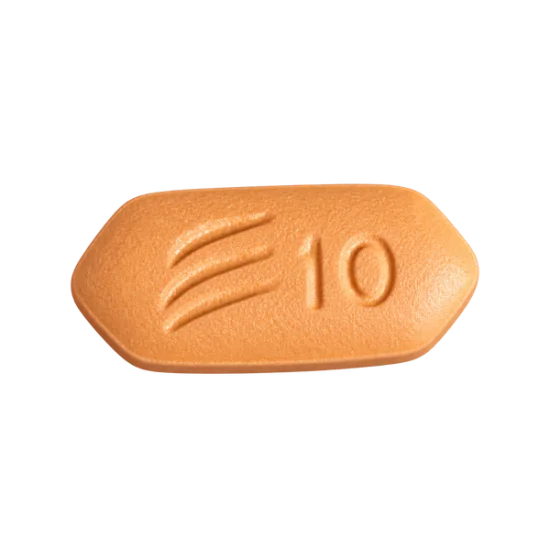
Prasugrel is a thienopyridine-class antiplatelet medicine and a prodrug. The liver converts it into an active metabolite, which inhibits platelet activation. The pack marking is 10.

Directions for use

The usual clinical approach involves:

  • A loading dose around the time of PCI when appropriate.
  • Continued prasugrel at the prescribed maintenance dose.
  • Aspirin taken alongside it unless a cardiologist changes the regimen.
  • Duration adjusted according to ischemic risk, bleeding risk, stent factors, and the clinical diagnosis.

Guidelines from the European Society of Cardiology describe DAPT duration as an individualised decision rather than a fixed lifelong rule. A standard course may extend for about twelve months after an acute coronary syndrome, while shorter or longer treatment can be considered in selected patients [3].

The prescription should specify the dose and frequency. For this product, how much to use and how often depends on the purpose of treatment and is agreed with a doctor or pharmacist.

Can prasugrel be taken with food or on an empty stomach?

Prasugrel may be taken with food or without food, provided it is taken consistently and swallowed as prescribed. Food does not remove the need for aspirin when aspirin forms part of the DAPT regimen. The 2023 FDA prescribing information allows administration without regard to meals. If nausea occurs, taking the tablet with a light meal may be more comfortable, but do not alter the prescribed schedule.

How long does treatment last, and is long-term use acceptable?

Treatment length depends on the acute coronary syndrome, PCI findings, stent thrombosis risk, bleeding risk, and later need for anticoagulation. Many patients receive DAPT for around twelve months, followed by a cardiology review; some require a shorter or extended course. The 2023 ESC guideline supports individualised duration rather than automatic lifelong prasugrel. Long-term use is acceptable only when the treating team judges that ongoing ischemic protection outweighs bleeding risk.

Take prasugrel at the same time each day. A phone alarm can help, but keep the schedule consistent if work shifts or travel alter your routine.

Reasons not to use it

The following conditions require avoidance or specialist review:

  • Previous stroke or transient ischaemic attack.
  • Active pathological bleeding.
  • A known allergy to prasugrel or another thienopyridine.
  • Urgent surgery where platelet inhibition cannot safely continue.
  • Advanced age or low body weight requiring a revised risk assessment.
  • Concurrent anticoagulant treatment requiring a coordinated antithrombotic plan.
  • Significant liver disease or another condition associated with high bleeding risk.

Pregnancy and breastfeeding require an individual decision because clinical experience is limited. Treatment after PCI may still be medically necessary, so the risk of stopping therapy must be weighed against fetal or infant exposure.

When this is not for you

Prasugrel is not for you if you have had a stroke or transient ischaemic attack, active bleeding, or another clinician-identified contraindication. Tell your doctor about your age, body weight, bleeding history, liver disease, planned surgery, and any anticoagulant treatment before starting it.

Adverse reactions

Bleeding is the main safety limitation of prasugrel. Common problems include easy bruising, nosebleeds, gum bleeding, and prolonged bleeding from small cuts. More serious bleeding can involve the gastrointestinal tract or brain.

Risk rises further with:

  • Active internal bleeding.
  • Recent surgery or major trauma.
  • Peptic ulcer disease.
  • Concurrent anticoagulants.
  • Long-term use of non-steroidal anti-inflammatory drugs.
  • Severe liver disease.
  • Uncontrolled hypertension.
  • A planned operation or invasive dental procedure.

The medicine should not be combined casually with aspirin-containing pain products, ibuprofen, naproxen, or anticoagulants. These combinations may increase bleeding. Proton-pump inhibitor treatment may be considered when gastrointestinal risk is high, based on the individual clinical situation.

A small bruise is different from a dangerous haemorrhage. Seek urgent medical attention for sudden weakness, facial drooping, speech difficulty, fainting, severe headache, vomiting blood, or black tar-like stools.

Use a soft toothbrush and an electric shaver if gum or skin bleeding becomes frequent. Avoid starting an over-the-counter anti-inflammatory painkiller without checking its interaction with prasugrel.

Uses

Prasugrel is used as the P2Y12 component in adults with acute coronary syndrome who undergo PCI, including coronary stent placement. Aspirin provides a separate antiplatelet pathway, so the combination blocks platelet activation more broadly than either treatment alone.

Comparison

Prasugrel, ticagrelor, and clopidogrel are P2Y12 inhibitors, but they differ in activation, receptor binding, onset, and response variability. Prasugrel and ticagrelor generally produce stronger platelet inhibition than clopidogrel in acute coronary syndrome treatment, although stronger inhibition also brings more bleeding concern.

P2Y12 inhibitor Pharmacological profile Main clinical trade-off
Prasugrel Irreversible thienopyridine prodrug with strong platelet inhibition Lower ischemic risk in selected PCI patients, with increased bleeding risk
Ticagrelor Direct-acting, reversible P2Y12 inhibitor Rapid inhibition, with dyspnoea and bleeding among recognised problems
Clopidogrel Irreversible thienopyridine prodrug Greater response variability and less intense platelet inhibition

Clopidogrel depends more heavily on metabolic activation and genetic variation involving CYP2C19. Some patients generate less active metabolite, producing weaker platelet inhibition. Prasugrel also requires activation, yet its conversion is more consistent across patients than clopidogrel activation.

Clinical comparisons must be interpreted by treatment setting. Prasugrel is intended for patients with acute coronary syndrome who are managed with PCI, not for routine prevention in people without a coronary indication. The TRITON-TIMI 38 study found fewer cardiovascular events with prasugrel than clopidogrel in the selected PCI population, with more major bleeding [2].

Meta-analyses published in cardiovascular journals have found that potent P2Y12 inhibitors can reduce major adverse cardiovascular events compared with clopidogrel in suitable post-PCI patients. The benefit is balanced against bleeding, age, body weight, previous stroke, and the need for surgery.

Clinical Trial Insights and Meta-Analysis Data

A physician weighs two competing outcomes: an arterial clot and clinically significant bleeding. Prasugrel may be favoured when the risk of coronary thrombosis is high and bleeding risk is acceptable. Ticagrelor may be selected when a reversible drug is preferred, while clopidogrel may suit patients in whom bleeding concerns or tolerability limit more potent options.

No P2Y12 inhibitor is automatically best for every patient. Coronary anatomy, PCI findings, renal function, previous cerebrovascular disease, planned surgery, and concurrent anticoagulants all influence the choice.

Common mistakes

Several practical errors can weaken treatment or increase harm:

  • Stopping prasugrel after chest discomfort improves.
  • Taking an extra tablet after a missed dose.
  • Forgetting to mention prasugrel before surgery or dental extraction.
  • Using ibuprofen or naproxen without checking for additive bleeding risk.
  • Taking aspirin irregularly when it is part of the DAPT plan.
  • Confusing a loading dose with the ongoing maintenance dose.
  • Assuming bruising alone means treatment must end.
  • Restarting prasugrel after a procedure without a clear plan from the treating team.

Alcohol can worsen judgement and increase the chance of falls or missed doses. Heavy alcohol intake may also aggravate gastrointestinal bleeding risk. Regular exercise is usually encouraged after cardiac rehabilitation, but contact sports may be unsuitable when bleeding risk is elevated.

What doctors say

In cardiology practice, prasugrel is selected for a defined reason: strong platelet inhibition after PCI in an acute coronary syndrome setting. A cardiologist will usually ask about previous stroke, body weight, age, bleeding history, kidney and liver function, and other antithrombotic medicines before choosing it.

The treatment target is not a sensation. Patients may feel no different while prasugrel reduces platelet reactivity. A lack of symptoms does not mean the medicine can be stopped.

Doctors also distinguish expected bruising from emergency bleeding. A small bruise may be monitored, while neurological symptoms, gastrointestinal bleeding, or uncontrolled bleeding require urgent assessment. The European Medicines Agency describes prasugrel within this same risk-benefit framework for selected acute coronary syndrome patients undergoing PCI [4].

Questions and answers

Which diet, exercise, or habits support treatment with prasugrel?

A heart-healthy diet, smoking cessation, blood-pressure control, diabetes management, and cardiac rehabilitation support recovery after PCI. The American Heart Association supports regular activity suited to the patient’s cardiac status, while strenuous or contact activity may need restriction when bleeding risk is high. Prasugrel itself does not replace statins, blood-pressure treatment, or lifestyle measures. The treating team can adjust activity advice as recovery progresses. A 2023 WHO cardiovascular disease fact sheet also identifies tobacco exposure, unhealthy diet, physical inactivity, and harmful alcohol use as modifiable cardiovascular risks [5].

Which condition rules out prasugrel?

A previous stroke or transient ischaemic attack rules out prasugrel because the bleeding risk can outweigh the expected coronary benefit. Active bleeding is another clear reason not to start or continue treatment without urgent specialist direction. The FDA prescribing information also highlights age, low body weight, and prior cerebrovascular events as factors requiring careful selection. This safety rule remains relevant in 2026 clinical prescribing.

How long does one prasugrel dose keep working?

One dose begins platelet inhibition after metabolic activation, and the effect on exposed platelets is irreversible. Platelet function recovers as new platelets are produced, which may take several days after treatment stops. The 2023 EMA product information describes this prolonged pharmacodynamic effect and the need to plan interruptions before surgery. A single missed dose does not mean that platelet inhibition disappears immediately, but repeated missed doses can reduce protection.

What should happen if the expected cardiovascular protection does not seem to occur?

Prasugrel does not relieve chest pain immediately and does not dissolve an existing coronary clot. New chest pressure, breathlessness, sweating, faintness, or pain spreading to the arm or jaw requires emergency assessment rather than an extra tablet. The 2023 ESC acute coronary syndrome guideline treats recurrent ischemic symptoms as a reason for urgent clinical evaluation. Do not change the dose independently when symptoms occur.

Can prasugrel be used during pregnancy or breastfeeding?

Pregnancy and breastfeeding require a specialist risk-benefit decision because human safety information is limited. The need to prevent stent thrombosis may be urgent, so stopping treatment can carry serious maternal risk. The 2023 EMA product information advises that reproductive decisions should account for both maternal cardiovascular needs and infant exposure. A pregnancy should be reported promptly to the cardiology and maternity teams rather than managed by abruptly stopping prasugrel.

Can prasugrel be taken with food or on an empty stomach?

Prasugrel may be taken with food or without food, provided it is taken consistently and swallowed as prescribed. Food does not remove the need for aspirin when aspirin forms part of the DAPT regimen. The 2023 FDA prescribing information allows administration without regard to meals. If nausea occurs, taking the tablet with a light meal may be more comfortable, but do not alter the prescribed schedule.

How long does treatment last, and is long-term use acceptable?

Treatment length depends on the acute coronary syndrome, PCI findings, stent thrombosis risk, bleeding risk, and later need for anticoagulation. Many patients receive DAPT for around twelve months, followed by a cardiology review; some require a shorter or extended course. The 2023 ESC guideline supports individualised duration rather than automatic lifelong prasugrel. Long-term use is acceptable only when the treating team judges that ongoing ischemic protection outweighs bleeding risk.

Do you offer anonymous delivery?

Your order will be securely packed and shipped within 24 hours. This is exactly what your package will look like (images of an actual item sent). It has the size and look of a regular private letter (24x11x0.7 cm) and its contents cannot be seen.

Sources

  1. U.S. Food and Drug Administration (2023). Effient (prasugrel hydrochloride) Prescribing Information.
  2. New England Journal of Medicine (2007). Prasugrel versus Clopidogrel in Patients with Acute Coronary Syndromes.
  3. European Society of Cardiology (2023). 2023 ESC Guidelines for the Management of Acute Coronary Syndromes.
  4. European Medicines Agency (2023). Efient — Summary of Product Characteristics.
  5. World Health Organization (2023). Cardiovascular Diseases Fact Sheet.

Prasugrel: What Customers Say

3.9
Based on 4 reviews
Rashid, 41 Kalba During the first month
Verified
Rating: 3.5 out of 5

I took prasugrel with aspirin after my PCI. During the first month I noticed bruises on my forearms, but I had no nosebleeds and kept taking it on schedule. The hardest part was remembering the tablet during early work shifts.

19 Oct 2026
Daniel K., 40 Deira After three months
Verified
Rating: 4.5 out of 5

After three months, I felt well and assumed the medicine was no longer needed. My cardiology team explained that the absence of chest symptoms was not a reason to stop. I used a daily alarm and did not miss another dose.

30 Oct 2026
Ramon, 43 Al Reem Island
Verified
Rating: 4 out of 5

I had gum bleeding after brushing and became worried. The dental check found irritation rather than major bleeding, but I was told not to stop prasugrel myself. Changing to a softer brush helped.

4 Nov 2026
Saeed N., 68 Bur Dubai
Verified
Rating: 3.5 out of 5

The treatment prevented a problem after my stent, but bruising was frequent and an anti-inflammatory pain tablet made it worse. The cardiac team changed the pain plan and reviewed the antiplatelet treatment.

15 Nov 2026
Get our free app Shop faster and track your orders 3.8 · 441 reviews Install