Skip to content
Nitroglycerin
Active ingredient: Glyceryl Trinitrate

Nitroglycerin

Quality products
24/7 Support
Fast delivery
Delivery from 4 days
Select pack Package Per unit Price

Free delivery on orders from AED 796.00, free express delivery from AED 1,194.00

Secure Payments
Track your order
Best price guarantee

Nitroglycerin is a sublingual nitrate tablet containing glyceryl trinitrate for people with angina associated with coronary artery disease. It relaxes blood vessels and helps relieve or prevent chest discomfort caused by an imbalance between the heart muscle’s oxygen needs and supply. The dose is decided individually based on age, other medicines, and health conditions.

About this product

Nitroglycerin is a nitrate medicine containing glyceryl trinitrate and supplied as a sublingual tablet. It belongs to the nitrate group, which relaxes blood vessels and is used for angina associated with coronary artery disease.

Pharmacological action

Nitroglycerin acts as a donor of nitric oxide. Inside vascular smooth muscle, its active metabolites increase cyclic guanosine monophosphate, or cGMP. This signal reduces smooth-muscle contraction and produces vasodilation.

The largest clinical effect usually occurs in the venous circulation. Dilated veins hold more blood away from the heart, reducing venous return. This lowers preload, meaning the amount of blood filling the heart before contraction. Lower preload reduces wall stress and myocardial oxygen demand.

Nitroglycerin also relaxes arterial vessels to a degree, which can reduce the resistance against which the heart pumps. Coronary vasodilation may improve blood flow in areas affected by spasm or uneven circulation. The pharmacological principle is recognised in regulatory information for glyceryl trinitrate products, including documentation reviewed by the European Medicines Agency [2].

Vascular Smooth Muscle Relaxation

A headache does not necessarily mean that the medicine is damaging the brain. It reflects vascular relaxation and can become less troublesome after repeated exposure, although severe or persistent headache needs medical review.

What it contains

Nitroglycerin contains glyceryl trinitrate as its active ingredient. It belongs to the nitrate group and is supplied as a sublingual tablet designed to dissolve under the tongue.

Directions for use

A prescribed sublingual dose is placed under the tongue at the onset of angina or before a known trigger, according to the individual treatment plan. The tablet should dissolve in the mouth. Swallowing it whole may delay absorption and reduce the intended speed of relief.

The dose is decided individually, taking age, other medicines, and health conditions into account. A missed preventive dose should not be replaced with extra tablets unless the prescriber has given that instruction.

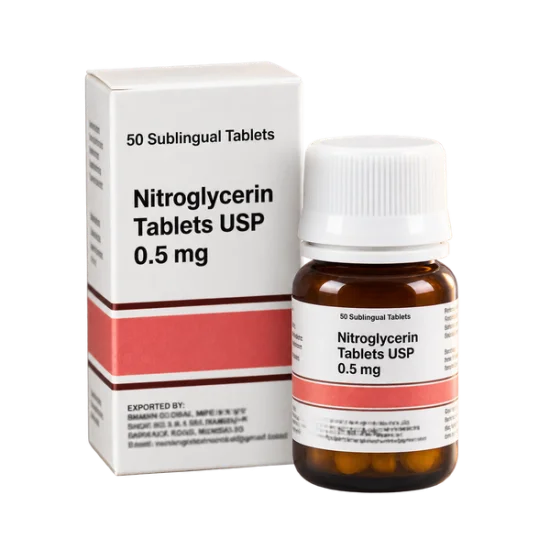
Nitroglycerin is supplied here as sublingual tablets in a bottle. The tablet is intended to dissolve under the tongue, where glyceryl trinitrate is absorbed rapidly.

Use follows the individually prescribed plan. Key administration points include:

  • Sit or lie down before taking the tablet.
  • Place the prescribed tablet under the tongue.
  • Allow it to dissolve without chewing or swallowing it immediately.
  • Avoid eating, drinking, or rinsing the mouth until it has dissolved.
  • Do not take extra doses to compensate for a missed preventive dose.
  • Record the timing and severity of repeated angina episodes for the treating clinician.

The tablet should not be crushed, split, or chewed unless a prescriber specifically directs this. Altering a sublingual tablet changes where the dose is absorbed and can delay the intended effect.

If chest pain does not improve promptly according to the prescribed emergency plan, or if it returns quickly, emergency services are needed. Do not drive yourself while experiencing potentially cardiac chest pain.

Keep the tablet accessible during activities that have previously triggered angina, but do not store it loose in a weekly pill organiser unless the product information specifically permits that arrangement.

Alcohol can intensify dizziness and blood-pressure reduction. Hot weather, vigorous exertion, dehydration, fever, and standing suddenly may also make light-headedness more likely.

Reasons not to use it

Nitroglycerin is not suitable for everyone. The medicine is not for you if you:

  • Use sildenafil or another phosphodiesterase-5 inhibitor.
  • Use riociguat or another soluble guanylate cyclase stimulator.
  • Have severe low blood pressure or circulatory collapse.
  • Have severe anaemia or a known disorder affecting oxygen-carrying capacity.
  • Have raised intracranial pressure unless a specialist has directed treatment.
  • Have a known allergy to glyceryl trinitrate or another nitrate.
  • Have chest pain caused by a condition for which nitrate treatment is unsuitable.
  • Have recently taken a medicine that can produce a dangerous additive blood-pressure reduction.

Nitroglycerin combined with sildenafil can cause profound, persistent hypotension. The same concern applies to tadalafil, vardenafil, avanafil, and related erectile-dysfunction medicines. Timing must be separated according to the specific drug’s duration and medical instructions; a simple 24-hour rule is not sufficient for every medicine.

Riociguat is also contraindicated with nitrates because both pathways increase vasodilatory signalling. The result can be severe blood-pressure reduction, fainting, and cardiovascular instability.

When this is not for you

Do not use nitroglycerin if you take sildenafil, tadalafil, vardenafil, avanafil, riociguat, or a similar medicine unless emergency clinicians give specific instructions. It may also be unsuitable if you have very low blood pressure, severe anaemia, circulatory collapse, raised pressure inside the skull, an allergy to nitrates, or chest pain from a condition that should not be treated with nitrates.

Tell your clinician about all medicines and alcohol use because combinations that lower blood pressure can cause severe dizziness, fainting, or cardiovascular instability.

Tell the emergency team the exact time of the last nitroglycerin dose and mention any sildenafil, tadalafil, vardenafil, avanafil, or riociguat use. This information can change immediate treatment decisions.

Adverse reactions

Nitroglycerin side effects mainly result from vasodilation. Common reactions include:

  • Headache.
  • Dizziness or light-headedness.
  • Flushing.
  • Weakness.
  • Nausea.
  • A temporary fall in blood pressure.
  • Palpitations or a faster heartbeat.

Headache is the side effect patients mention most often. It may appear soon after administration and can be stronger when treatment begins. A prescriber may adjust the plan if headaches are persistent, but the dose should not be changed independently.

A sudden blood-pressure drop can cause blurred vision, weakness, fainting, or a feeling that the room is moving. Sitting down before administration helps reduce injury risk. Avoid climbing stairs, driving, or operating machinery until the response is clear. The effect may be stronger after alcohol or dehydration. Patients should wait until they feel steady before walking.

Rare but serious reactions include severe hypotension, collapse, allergic reactions, and methemoglobinemia. Methemoglobinemia reduces the blood’s ability to carry oxygen. Possible signs include blue or grey lips, unusual breathlessness, confusion, marked fatigue, rapid heartbeat, or chest symptoms that do not respond as expected.

A headache after a nitrate dose may be predictable, but a sudden severe headache with weakness, fainting, confusion, or visual loss is not a routine nuisance reaction and needs urgent assessment.

Other blood-pressure medicines, alcohol, alpha-blockers, calcium-channel blockers, diuretics, and some medicines used for erectile dysfunction may intensify dizziness or hypotension. Digoxin does not create the same absolute interaction as sildenafil or riociguat, but patients taking Digoxin require careful review because the underlying heart condition and combined cardiovascular effects influence treatment decisions.

Uses

Nitroglycerin contains glyceryl trinitrate, a nitrate used to relieve or prevent angina associated with coronary artery disease. Angina occurs when the heart muscle needs more oxygen than the coronary circulation can provide, often during exertion or emotional stress.

Nitroglycerin can be prescribed for:

  • Acute episodes of stable angina.
  • Short-term prevention before predictable exertion that triggers chest pain.
  • Symptom control in selected patients with coronary artery disease.
  • Relief of chest tightness caused by myocardial oxygen imbalance.

Nitroglycerin does not remove a coronary artery blockage. It reduces the pressure and volume work required from the heart, which can improve the balance between myocardial oxygen supply and demand. The American Heart Association describes angina as a symptom requiring assessment of its underlying cardiovascular cause, especially when the pattern changes [1].

Management of Coronary Artery Disease Symptoms

Chest pain that is new, more severe, prolonged, or accompanied by sweating, nausea, breathlessness, fainting, or pain spreading to the arm or jaw requires emergency assessment. Nitroglycerin should not be used to postpone urgent care.

Sit down before using a sublingual dose. Sudden blood-pressure reduction can cause light-headedness, and standing immediately afterwards increases the risk of falling.

Comparison

Nitroglycerin is a single-ingredient nitrate delivered as a sublingual tablet. Its mechanism differs from approaches that do not use nitrate-mediated blood-vessel relaxation, while its sublingual form is intended for use under the tongue rather than as a swallowed tablet.

Common mistakes

Several mistakes can reduce the benefit of nitroglycerin or increase risk:

  • Swallowing the tablet instead of allowing sublingual absorption.
  • Standing immediately after taking it.
  • Taking it with sildenafil, tadalafil, or riociguat.
  • Repeating doses without following the emergency plan.
  • Using it for unexplained chest pain while delaying emergency care.
  • Drinking alcohol when already prone to low blood pressure.
  • Storing tablets in unsuitable conditions that expose them to heat, moisture, or repeated opening.
  • Assuming a familiar headache proves that every later episode of chest pain is ordinary angina.
  • Stopping a prescribed preventive nitrate schedule abruptly without discussing the treatment plan.
  • Forgetting to report fainting, falls, blue lips, or breathlessness after a dose.

One practical detail is easy to miss: nitroglycerin tablets intended for sublingual use are not ordinary swallowable tablets. The administration route is part of the medicine’s design.

What doctors say

In clinical practice, physicians treat sublingual nitroglycerin as a targeted rescue medicine for known angina, not as a general remedy for every type of chest discomfort. A predictable response supports the angina diagnosis but does not prove that the pain is harmless.

Doctors also look for changes in pattern. Angina occurring at rest, pain lasting longer than usual, reduced exercise tolerance, or symptoms accompanied by sweating and breathlessness can indicate unstable coronary disease or acute myocardial injury.

Patients often focus on headache and overlook blood-pressure symptoms. A prescriber usually wants to know whether the patient felt faint, fell, experienced palpitations, or needed repeated doses during one episode.

Nitrate tolerance is another practical issue. Continuous exposure can reduce benefit, so preventive schedules may be designed around a daily nitrate-free period. Sublingual rescue treatment remains a separate question from long-term prevention, and the two plans should not be mixed without clinical direction.

MOHAP guidance and local cardiovascular practice place emphasis on medication reconciliation for patients with heart disease. This is especially relevant when several medicines lower blood pressure or affect vascular tone.

Questions and answers

Which condition rules out Nitroglycerin use?

A recent dose of sildenafil, tadalafil, vardenafil, avanafil, or riociguat rules out nitroglycerin use because the combination can cause dangerous hypotension. Severe anaemia, circulatory collapse, and certain causes of raised intracranial pressure are also important contraindications. The FDA prescribing information for nitroglycerin describes these interactions and haemodynamic risks in its current regulatory framework, with the cited label originating in 2023 [3]. Do not take a nitrate for chest pain after using an erectile-dysfunction medicine unless emergency clinicians give specific instructions.

How soon can the effect become noticeable?

Sublingual nitroglycerin is absorbed through the tissues beneath the tongue, so its effect may begin within minutes rather than requiring gastrointestinal digestion. The response varies with circulation, the severity of the episode, and the individual treatment plan. The American College of Cardiology describes sublingual nitrate therapy as a rapid option for suitable angina episodes, while persistent or atypical pain requires emergency evaluation. The clinical principle is reflected in ACC guidance published in 2021 [4].

Which habits can help or hinder the result?

Sitting before administration, avoiding sudden standing, and recognising predictable exertion triggers can reduce falls and improve practical use. Alcohol, dehydration, hot environments, and vigorous activity can worsen dizziness or hypotension. Smoking also increases cardiovascular risk and may contribute to recurrent angina, while gradual activity planning may help when approved within a cardiac rehabilitation programme. WHO cardiovascular disease guidance published in 2023 links tobacco exposure and other modifiable factors with coronary risk [5].

What happens after stopping, and is tapering needed?

Stopping nitroglycerin may allow the original angina symptoms to return, especially when it has been used as part of a preventive schedule. A sublingual rescue dose is not normally tapered in the way some long-term medicines are, but planned nitrate therapy may require a clinician-directed schedule to prevent tolerance and maintain symptom control. The FDA prescribing information dated 2023 distinguishes acute sublingual use from longer-acting nitrate regimens. Do not replace a discontinued nitrate with repeated unscheduled doses.

Which symptoms mean stopping and seeking urgent medical help?

Urgent help is needed for chest pain that is new, severe, prolonged, worsening, or different from the established angina pattern. Fainting, severe weakness, confusion, blue or grey lips, serious breathlessness, collapse, or symptoms spreading to the arm, jaw, or back also require emergency care. A suspected heart attack should not be managed by repeatedly waiting for nitroglycerin to work. European Medicines Agency safety information from 2018 supports immediate assessment when severe hypotension, hypoxia, or serious cardiovascular symptoms occur.

Can Nitroglycerin cause headaches?

Yes. Headache is a well-known nitrate reaction caused by blood-vessel dilation, and it may be more noticeable when treatment starts. Some patients find that it becomes less troublesome with continued prescribed use, while others need a treatment review because the symptom is too limiting. A sudden severe headache with fainting, confusion, weakness, or visual disturbance is different from an expected mild nitrate headache and requires urgent assessment. FDA prescribing information from 2023 advises medical review when severe reactions accompany nitrate use.

Do you offer anonymous delivery?

Your order will be securely packed and shipped within 24 hours. This is exactly what your package will look like (images of an actual item sent). It has the size and look of a regular private letter (24x11x0.7 cm) and its contents cannot be seen.

Formulation and Route Considerations

Nitroglycerin belongs to a wider nitrate group that can be delivered through different routes in clinical practice. These include sublingual tablets, oral extended-release preparations, mouth sprays, topical products, transdermal systems, and intravenous preparations used in hospitals.

These forms are not interchangeable. They differ in onset, duration, dosing schedule, and clinical purpose. A sublingual tablet is used for rapid symptom relief or planned short-term prevention, while a prolonged-release or transdermal preparation may be used for scheduled prevention.

The product described on this page is the 0.5 mg sublingual tablet. Other nitrate delivery systems should not be substituted without a prescriber’s direction because changing the route can produce an unintended dose or duration of action.

Regular exposure to nitrates can lead to tolerance, in which the same dose produces a weaker response. Preventive regimens may therefore include a nitrate-free interval. The correct interval depends on the prescribed product and treatment schedule.

Sources

  1. American Heart Association (2023). Angina (Chest Pain)
  2. European Medicines Agency (2018). Summary of Product Characteristics (SmPC) — glyceryl trinitrate
  3. U.S. Food and Drug Administration (2023). Nitroglycerin Sublingual Tablets — Prescribing Information
  4. American College of Cardiology (2021). 2021 AHA/ACC Guideline for the Evaluation and Diagnosis of Chest Pain
  5. World Health Organization (2023). Cardiovascular Diseases: Key Facts

Nitroglycerin: What Customers Say

4
Based on 4 reviews
John, 37 Khalifa City Three months
Verified
Rating: 4 out of 5

The chest tightness eased quickly when I used it as prescribed before exertion. The headache was strong during the first week and made me sit down for longer than expected.

16 Oct 2026
Karim, 39 Jumeirah Intermittent use
Verified
Rating: 4.5 out of 5

It helped with the pressure, and I liked that the tablet dissolved quickly. I became dizzy once after standing too soon, so I started taking it while seated.

26 Oct 2026
Arjun, 44 Ras Al Khaimah Six weeks
Verified
Rating: 4 out of 5

The response was useful at first, but I had two episodes that felt different from my usual angina. I went for urgent assessment instead of taking repeated tablets.

2 Nov 2026
Omar, 37 Mussafah Two months
Verified
Rating: 3.5 out of 5

The medicine reduced the chest discomfort, but headaches and flushing were frustrating. My cardiology team adjusted the wider treatment plan rather than telling me to keep increasing the dose.

13 Nov 2026
Get our free app Shop faster and track your orders 3.8 · 441 reviews Install