Skip to content
Estriol
Active ingredient: Estriol

Estriol

Quality products
24/7 Support
Fast delivery
Delivery from 4 days
Select pack Package Per unit Price

Free delivery on orders from AED 796.00, free express delivery from AED 1,194.00

Secure Payments
Track your order
Best price guarantee

Estriol Cream is intended for postmenopausal women with oestrogen-deficiency symptoms. Local treatment helps restore the vaginal mucosa and may ease some lower urinary tract complaints.[1]

About this product

Estriol, the active ingredient in Estriol Cream, is a short-acting oestrogen used for menopausal hormone therapy and local urogenital symptoms. The 0.01% w/w cream is intended for postmenopausal women with oestrogen-deficiency symptoms such as vaginal dryness, itching, atrophic vaginitis, and painful intercourse.

Pharmacological action

Estriol Mechanism and Oestrogen Activity

Estriol binds to oestrogen receptors in vaginal, cervical, urethral, and bladder tissues. This receptor activity supports epithelial maturation, improves local blood flow, and promotes a more acidic vaginal environment. These changes can reduce dryness and improve the natural protective function of the vaginal lining.[2]

Estriol has a shorter biological duration than estradiol. That difference helps explain why estriol is often selected for local urogenital treatment, while other oestrogen preparations may be chosen when broader systemic symptoms require treatment.

What it contains

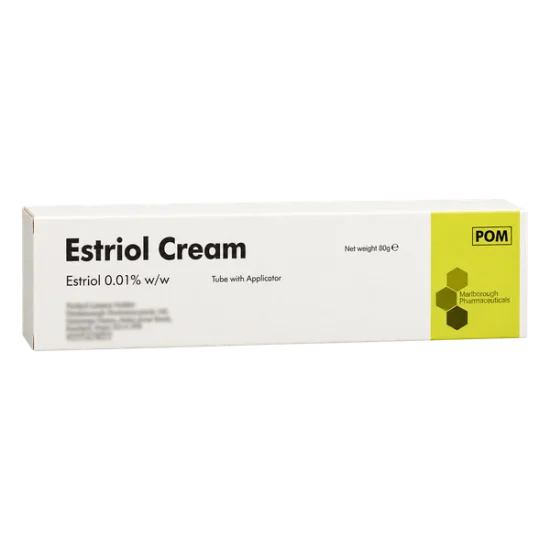
Estriol Cream contains estriol 0.01% w/w in a topical vaginal formulation supplied with an applicator, with a net quantity of 80 g.

Directions for use

Estriol Cream Administration and Dose Planning

Estriol Cream is applied vaginally or externally only when directed for the relevant symptom. The applicator is used for intravaginal administration when included in the prescribed plan.

  • Use the prescribed amount and schedule.
  • Apply the cream by the route specified for the treatment plan.
  • Keep the cream away from the eyes and wash hands after application.
  • Do not share the applicator.
  • Do not extend treatment beyond the planned review period without medical direction.
  • If an application is missed, use it when remembered unless the next scheduled application is near.
  • Do not apply a double amount to compensate for a missed application.

Dosing differs between strengths and between users, so there is no single amount that suits everyone. The suitable regimen depends on symptom severity, age, previous hormone exposure, uterine status, treatment response, and the reason for prescribing.

Applying the cream at bedtime can reduce leakage soon after use. A small amount of discharge may still occur, so a panty liner can be practical during the first days of treatment.

A common mistake is assuming that more cream will produce faster relief. Extra application increases exposure without guaranteeing faster tissue recovery and may increase irritation, breast tenderness, discharge, or spotting.

Another practical point concerns the applicator. Insert it gently and stop if there is sharp pain or resistance. Painful insertion can reflect severe dryness, pelvic-floor spasm, vaginal narrowing, infection, or another condition requiring assessment.

Reasons not to use it

Important contraindications and precautions include:

  • Known or suspected breast cancer
  • Known or suspected endometrial cancer
  • Other oestrogen-dependent malignancy
  • Undiagnosed vaginal or uterine bleeding
  • Untreated endometrial hyperplasia
  • Previous or current deep-vein thrombosis or pulmonary embolism
  • Active or acute liver disease
  • Previous serious liver dysfunction until liver tests and clinical status are resolved
  • Pregnancy or suspected pregnancy
  • Known allergy to estriol or an excipient in the cream

Interactions can involve medicines that alter hormone metabolism or increase thrombosis risk. Tell the prescriber about anticoagulants, anticonvulsants, medicines for tuberculosis, certain anti-infective treatments, systemic hormones, and herbal products with hormonal activity. Vaginal products may also be affected by other creams, pessaries, or medicated preparations used in the same area.

MOHAP and EMA safety principles support assessing unexplained bleeding and hormone-sensitive conditions before local oestrogen treatment.[3]

When this is not for you

Estriol is not suitable for everyone. This medication is not for you if you have a known or suspected oestrogen-dependent cancer, unexplained genital bleeding, untreated endometrial hyperplasia, active or previous venous thromboembolism where oestrogen therapy is unsuitable, or acute liver disease.

Pregnancy is a contraindication for this product. Estriol should not be used to support fertility or treat infertility due to “cervical hostility”; that historical concept does not make unsupervised vaginal oestrogen appropriate.

Women with migraine, gallbladder disease, diabetes, hypertension, lupus, otosclerosis, or a history of hormone-sensitive disease may require an individual risk assessment. A history of breast cancer needs specialist input before any oestrogen exposure.

Adverse reactions

Estriol is often tolerated well when used locally, but local and systemic reactions remain possible. Product information for vaginal oestrogen preparations describes breast discomfort, nausea, vaginal discharge, spotting, fluid retention, and local irritation among possible reactions.[1]

Possible effects include:

  • Breast tension, tenderness, or pain
  • Nausea or stomach discomfort
  • Increased vaginal discharge
  • Spotting or light vaginal bleeding
  • Fluid retention or ankle swelling
  • Headache
  • Local burning, itching, or irritation
  • Cervical hypersecretion
  • Worsening of an existing hormone-sensitive condition

Mild local irritation may settle as the tissue adapts. Persistent burning, worsening itching, unpleasant odour, new pelvic pain, or unusual discharge needs clinical review because infection or another vaginal disorder may be present.

Unexpected vaginal bleeding deserves attention. A small amount of spotting can occur during early treatment, especially when the vaginal lining is fragile. Bleeding that is heavy, recurrent, or begins after a stable period requires investigation.

Serious complications are uncommon with low-dose local treatment, but oestrogen-related warnings still matter. Seek urgent medical care for one-sided leg swelling, sudden chest pain, unexplained breathlessness, coughing blood, sudden weakness, or a severe new headache.

Breast tenderness often provides a useful practical signal that the body is receiving more oestrogen than expected. Report persistent or marked breast symptoms rather than responding by changing the cream amount independently.

Uses

Estriol may be prescribed for:

  • Menopausal hormone replacement therapy focused on urogenital symptoms
  • Menopausal atrophic vaginitis
  • Vaginal dryness and itching caused by oestrogen deficiency
  • Dyspareunia, meaning pain during sexual intercourse
  • Some micturition complaints associated with postmenopausal tissue changes
  • Urinary symptoms linked to vaginal and urethral atrophy
  • Selected preoperative or postoperative vaginal treatment plans
  • Climacteric complaints when local oestrogen therapy is clinically appropriate

The phrase “climacteric complaints” covers symptoms occurring around the menopausal transition. Local Estriol Cream is aimed mainly at vaginal and lower urinary tract symptoms rather than broad symptoms such as hot flushes, night sweats, or mood changes.

Role in Menopausal Hormone Replacement Therapy

Estriol can form part of menopausal hormone replacement therapy when reduced local oestrogen activity causes vaginal or urinary discomfort. The treatment is local, so the clinical goal is to improve tissue quality at the application site rather than provide full-body hormone replacement.

Clinical practice often uses local oestrogen for women whose main problem is vaginal dryness, recurrent irritation, or painful intercourse. The response develops gradually as the vaginal epithelium becomes better hydrated and more resilient.

Vaginal dryness can make intercourse painful before any obvious inflammation appears. Tell the prescriber whether the main symptom is dryness, burning, itching, urinary urgency, or pain, because each detail affects treatment planning.

Management of Vaginal Atrophy and Dyspareunia

Vaginal atrophy can cause a thin, pale, less elastic vaginal lining. Small areas of irritation may produce burning or light spotting after intercourse. By stimulating local oestrogen receptors, estriol supports maturation of the vaginal epithelium and can improve lubrication and tissue flexibility.

Dyspareunia has several possible causes. Oestrogen deficiency is one cause, but pelvic-floor muscle tension, infection, dermatological disease, endometriosis, and other conditions can also produce pain. Estriol is most relevant when the symptoms fit a local oestrogen-deficiency pattern.

The applicator helps place the cream inside the vagina when the prescribed regimen requires intravaginal treatment. External application may be directed separately for symptoms affecting the vulval area.

Comparison

The European Medicines Agency evaluates local oestrogen products according to their formulation, route, absorption, and indication. Local treatment does not mean that systemic absorption is impossible. Small amounts may enter the bloodstream, especially during initial treatment or when the vaginal lining is severely atrophic.

Oestrogen approach Main clinical emphasis Duration and exposure
Estriol cream Local vaginal and vulval symptoms Shorter-acting oestrogen used locally
Estradiol therapy Local symptoms or broader menopausal symptoms, depending on formulation More potent systemic activity when absorbed in relevant amounts
Non-hormonal vaginal moisturisers Symptom relief without oestrogen receptor stimulation Temporary lubrication and hydration rather than hormonal tissue restoration

Clinical evidence supports local oestrogen as an option for genitourinary symptoms of menopause. It does not establish Estriol Cream as a treatment for every urinary infection, every form of incontinence, or every cause of painful intercourse.

Common mistakes

Several usage patterns can reduce benefit or create avoidable discomfort:

  • Applying extra cream because symptoms have not improved after one or two applications
  • Stopping immediately after the first mild episode of discharge without assessing whether it is expected
  • Continuing treatment despite unexplained bleeding
  • Using the cream for urinary symptoms caused by an untreated infection
  • Applying several vaginal products at the same time without checking compatibility
  • Inserting the applicator forcefully when the tissue is painful or narrowed
  • Forgetting to mention previous breast cancer or blood clots
  • Assuming local administration eliminates all systemic exposure
  • Sharing the applicator with another person
  • Changing the schedule without recording when applications were made
Keep a simple treatment record with the application date, the main symptom, and any bleeding or irritation. This gives the prescriber useful information without relying on memory at the follow-up visit.

The expected benefit is tissue recovery, not immediate anaesthesia. Severe pain during intercourse may improve only partly if pelvic-floor tension or another condition is also present.

What doctors say

In clinical practice, physicians often separate local vaginal symptoms from whole-body menopausal symptoms before choosing treatment. Estriol Cream may be a rational option when dryness, irritation, painful intercourse, or urinary discomfort is the main problem.

A doctor would usually set expectations around gradual improvement rather than immediate relief. Tissue recovery can take time, and severe atrophy may respond more slowly than mild dryness. Persistent symptoms after a reasonable treatment period can indicate infection, vulval skin disease, pelvic-floor dysfunction, prolapse, or a diagnosis that needs a different approach.

The British Menopause Society and WHO recognise genitourinary symptoms as a distinct menopausal health issue requiring symptom-directed care. Local oestrogen can be useful, but the treatment plan should match the symptom pattern and the person’s medical history.[4]

One detail that is easy to overlook is the uterus. Women with a uterus and women who have had a hysterectomy may have different hormone-treatment considerations. Vaginal bleeding after menopause always deserves a clear explanation.

Questions and answers

Can people under 18 use Estriol Cream?

Estriol Cream is intended for postmenopausal oestrogen-deficiency symptoms, not routine use in children or adolescents. Paediatric vaginal symptoms require a different diagnostic approach because infection, dermatological disease, trauma, or anatomical problems may be involved. EMA guidance from 2023 for oestrogen products supports age-appropriate prescribing based on the licensed indication, while WHO principles discourage hormone treatment without a clear clinical reason. A person under 18 should use estriol only under specialist direction. Specialist assessment is needed before use.

Does Estriol Cream cause breast tenderness or breast pain?

Breast tenderness or pain can occur because breast tissue responds to oestrogen. The symptom may be mild and temporary, but persistent, severe, or one-sided breast changes require medical assessment. EMA product information from 2023 for vaginal oestrogen therapy describes breast discomfort among possible adverse reactions. The symptom should not be managed by increasing or reducing the cream amount independently.

Can alcohol be used while applying Estriol Cream?

Alcohol does not directly neutralise estriol applied vaginally, and there is no standard alcohol prohibition listed by WHO in 2024 for local estriol treatment. Heavy alcohol intake can worsen sleep disturbance, hot flushes, mood symptoms, and dehydration, which may make menopause symptoms feel worse. Alcohol can also affect adherence when evening applications are part of the routine. Keep the prescribed schedule and report any unusual reaction.

What should happen if the expected result does not come?

If dryness, itching, painful intercourse, or urinary discomfort persists, the diagnosis and application technique need review. The symptoms may arise from infection, vulval dermatitis, pelvic-floor dysfunction, prolapse, medication effects, or another condition rather than oestrogen deficiency alone. NICE guidance from 2024 on menopause care supports reassessment when symptoms remain troublesome after treatment. Do not compensate by applying more cream.

What should happen after a missed application?

Apply the missed dose when remembered unless the next scheduled application is close. In that situation, skip the missed application and return to the usual schedule. Do not use a double amount, because extra cream can increase local irritation, discharge, spotting, or breast symptoms without providing faster improvement. EMA administration guidance from 2023 for vaginal oestrogen products follows this general missed-dose approach.

Do you offer anonymous delivery?

Your order will be securely packed and shipped within 24 hours. This is exactly what your package will look like (images of an actual item sent). It has the size and look of a regular private letter (24x11x0.7 cm) and its contents cannot be seen.

Estriol and Vaginal and Urinary Tract Health

Oestrogen-sensitive tissues extend beyond the vagina. The urethra and the bladder base also respond to hormonal changes. After menopause, reduced oestrogen activity may contribute to urinary urgency, frequency, burning, stress incontinence, and recurrent lower urinary tract symptoms.

Local estriol may help restore the mucosal barrier and tissue elasticity. Some postmenopausal women report fewer irritation symptoms and improved comfort during urination after the vaginal tissues have recovered. Local oestrogen is also used in clinical plans aimed at reducing recurrent urinary tract infections in suitable postmenopausal patients, though it does not replace antibiotic treatment for an active infection.

Urinary incontinence remains a complex condition. Pelvic-floor weakness, overactive bladder, prolapse, neurological disease, diabetes, and infection can all contribute. Estriol may support the urethral and vaginal tissues, but it cannot correct every underlying cause.

New burning with fever, flank pain, visible blood in urine, or feeling acutely unwell needs assessment for infection or another urinary condition. Do not use local oestrogen as a substitute for treatment of an acute urinary infection.

Estriol may also be included before or after selected vaginal procedures in postmenopausal women. Improving tissue quality can help clinicians manage dryness and fragility around a planned procedure. The timing depends on the operation and the prescriber’s protocol.

Sources

  1. European Medicines Agency (2023). Summary of Product Characteristics (SmPC) — estriol
  2. National Institute for Health and Care Excellence (2024). Menopause: diagnosis and management
  3. Ministry of Health and Prevention, United Arab Emirates (2023). Registered product information — estriol
  4. World Health Organization (2024). Menopause: fact sheet

Estriol: What Customers Say

4.4
Based on 4 reviews
Sarah F., 28 Mirdif Several weeks
Verified
Rating: 5 out of 5

Dryness had been the main issue, and intercourse was uncomfortable. The first few applications caused mild discharge, but that settled. I noticed improvement gradually rather than after the first use.

3 Oct 2026
Noura, 38 Al Nahda
Verified
Rating: 3.5 out of 5

The itching became less troublesome after the early treatment period. I still had occasional burning, so an examination found another cause that needed separate treatment. The cream helped, but it was not the only part of the solution.

11 Oct 2026
Mariam R., 57 Khalifa City Several weeks
Verified
Rating: 5 out of 5

Urinary urgency felt less frequent after several weeks. I missed one application and did not double the next one. Breast tenderness appeared briefly and then eased.

17 Oct 2026
Hessa, 57 Jebel Ali
Verified
Rating: 4 out of 5

I noticed light bleeding and felt worried. I stopped applying the cream until it was assessed. The episode needed checking rather than simply increasing or continuing the dose.

29 Oct 2026
Get our free app Shop faster and track your orders 3.8 · 441 reviews Install