Skip to content
Dramamine
Active ingredient: Dimenhydrinate

Dramamine

Quality products
24/7 Support
Fast delivery
Delivery from 4 days
Select pack Package Per unit Price

Free delivery on orders from AED 796.00, free express delivery from AED 1,194.00

Secure Payments
Track your order
Best price guarantee

Dramamine tablets are used to help prevent motion sickness, nausea, and travel-related dizziness. The product is intended for people who need oral relief during journeys, while the correct regimen for the chosen strength should be confirmed with a healthcare professional before starting.

About this product

Dramamine tablets are an oral motion-sickness product containing an antihistamine active ingredient, dimenhydrinate. They belong to a therapeutic group used to reduce vestibular signals that can contribute to nausea and dizziness.

Pharmacological action

Motion sickness develops when signals from the inner ear, eyes, and deeper sensory tissues do not match. During a boat trip, for example, the inner ear detects movement while the eyes may focus on a stable cabin. The brain receives conflicting information and can respond with nausea, sweating, dizziness, or vomiting. Visual fixation on a distant stable point may reduce the mismatch for some travellers. Symptoms can intensify when head movement, reading, or screen use adds further sensory conflict.

Antihistamine medicines used for motion sickness can dampen signals travelling from the vestibular system to the vomiting centre in the brain. Some also have anticholinergic activity, which can reduce vestibular stimulation but may cause dry mouth, blurred vision, constipation, or sleepiness [1].

What it contains

These substances belong to related therapeutic groups, yet they should not be treated as interchangeable without confirming the exact formulation. The duration of action, degree of drowsiness, age restrictions, and tablet instructions can vary.

Directions for use

Dramamine tablets are taken by mouth. The regimen for the chosen strength should be confirmed with a healthcare professional before starting.

Practical administration points include:

  • Take the tablet before the anticipated motion exposure when advised for the selected formulation.
  • Swallow the tablet with water unless the product-specific instructions state another method.
  • Do not take extra tablets because nausea has not improved quickly.
  • Do not combine multiple motion-sickness medicines unless a clinician has specifically advised this.
  • Children require age-appropriate dosing and a formulation intended for their age group.
  • Do not give an adult tablet to a child simply by guessing that a smaller piece will provide a suitable dose.
  • If a dose is missed, do not automatically double the next dose.
  • Keep a written record when more than one person is travelling, especially when children are involved.

The most common timing error is taking the tablet only after the vehicle has started moving. Preventive treatment works best when sufficient time is allowed for absorption before exposure to the trigger.

Children need extra care. Age, body size, medical history, and the exact tablet strength all affect suitability. Products intended for children may have different directions from adult tablets. A chewable formulation may also contain phenylalanine, which matters for a child with phenylketonuria.

Test the medicine’s sedating effect before a journey that requires alertness. A first dose taken immediately before driving leaves little opportunity to assess how strongly sleepiness develops.

Can Dramamine tablets be taken with food or on an empty stomach?

Food may affect how quickly an oral tablet feels active, while taking it with a light meal can be more comfortable for some people who experience stomach upset. The selected formulation’s directions should guide the timing, and the regimen for the chosen strength should be confirmed before starting. The FDA’s motion-sickness information published in 2022 supports taking account of timing before travel rather than waiting until symptoms are established [4]. Heavy meals, alcohol, and dehydration may make travel-related nausea feel worse.

Reasons not to use it

Specific situations requiring medical review include:

  • Narrow-angle glaucoma or raised pressure inside the eye
  • Difficulty urinating or prostate-related urinary obstruction
  • Severe constipation or intestinal obstruction
  • Asthma or chronic breathing problems
  • Seizure disorders
  • Significant liver or kidney disease
  • Pregnancy or breastfeeding
  • Advanced age with a history of confusion or falls
  • Use in young children without age-specific guidance

Alcohol can increase sleepiness, poor coordination, and impaired judgement. The same concern applies to sleeping tablets, sedatives, opioid pain medicines, some anxiety medicines, and other products that depress the central nervous system.

Anticholinergic effects can also become stronger when combined with other medicines that cause dry mouth, blurred vision, constipation, urinary retention, or confusion.

The FDA describes sedating antihistamines as medicines that can impair alertness and coordination, making alcohol and driving important safety considerations [2].

When this is not for you

Dramamine is not suitable for everyone. This medication is not for you if a clinician has advised against antihistamine or anticholinergic treatment, or if you have had a serious allergic reaction to the selected active ingredient.

Do not drive, cycle in heavy traffic, operate machinery, climb, or work at height until you know how the tablets affect you. A person using several medicines should provide the full list, including sleep aids, allergy medicines, herbal products, and occasional tablets.

Adverse reactions

Sleepiness is the side effect most likely to affect daily activities. Other possible reactions include tiredness, reduced concentration, dry mouth, blurred vision, constipation, headache, and difficulty passing urine. These effects reflect activity on central nervous system and cholinergic pathways.

Common tolerability problems include:

  • Drowsiness or an unsteady feeling
  • Dry mouth and increased thirst
  • Blurred vision or difficulty focusing
  • Constipation
  • Reduced coordination
  • Headache
  • Occasional irritability or unusual excitement, especially in children

The response is individual. One traveller may feel only mild tiredness, while another may struggle to stay awake after the same type of tablet. Older adults can be more vulnerable to confusion, falls, urinary retention, and constipation.

Blurred vision deserves practical attention. It may be difficult to distinguish medicine-related visual focusing problems from travel fatigue, dehydration, or an eye condition. Driving should wait until normal alertness and vision have returned.

Seek urgent medical help for severe confusion, fainting, breathing difficulty, facial swelling, a widespread allergic rash, a fast or irregular heartbeat, or inability to urinate. Severe agitation or hallucinations also require prompt assessment.

Dry mouth can become worse in hot weather or on long flights. Carry water and avoid relying on alcohol-containing mouthwash, which may increase oral dryness.

Uses

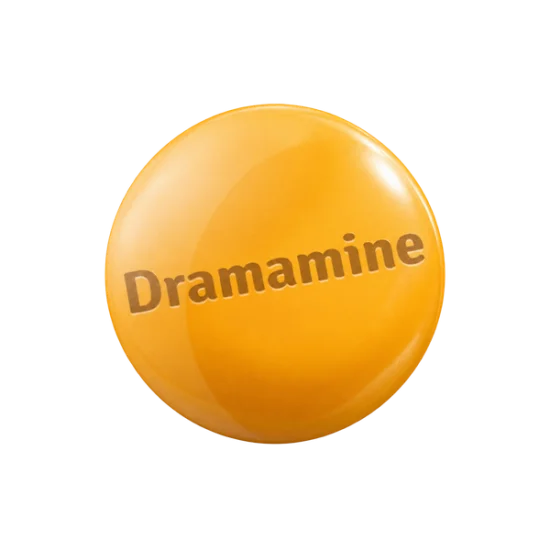
Dramamine tablets are used to help prevent motion sickness, nausea, and travel-related dizziness.

Comparison

Motion sickness can also be managed with non-drug measures. Sitting near the centre of a boat, choosing a forward-facing seat in a vehicle, looking toward the horizon, and keeping the head still may reduce sensory conflict.

Other medicine categories include antihistamine options with different sedation profiles and anticholinergic treatments used for selected travellers. A clinician may consider the journey length, previous response, glaucoma risk, urinary symptoms, age, pregnancy status, and the need for alertness.

Common mistakes

Several practical mistakes can reduce benefit or increase side effects:

  • Taking the first tablet only after vomiting has started
  • Assuming every Dramamine tablet has the same ingredient or duration
  • Combining it with another sedating allergy or sleep product
  • Drinking alcohol during the journey
  • Driving because the person feels awake during the first hour
  • Giving an adult tablet to a child without age-specific advice
  • Crushing or chewing a tablet without confirming that the formulation allows it
  • Repeating a dose too soon after vomiting
  • Treating persistent, unexplained vertigo as ordinary travel sickness
  • Ignoring urinary retention, severe confusion, or visual changes

One overlooked issue is dehydration. Heat, vomiting, and dry cabin air can intensify weakness and dizziness, making it difficult to tell whether symptoms come from motion sickness or fluid loss.

Another is the assumption that a smaller tablet piece automatically creates a safe child dose. Tablet splitting may produce an inaccurate amount and may alter how a formulation releases its contents.

What doctors say

In clinical practice, doctors usually separate occasional motion sickness from unexplained recurrent dizziness. A tablet may be reasonable for a predictable travel trigger, while repeated vertigo requires assessment of the ear, nervous system, blood pressure, hydration, and current medicines.

Physicians also consider the trade-off between symptom control and alertness. A traveller who sleeps through a short ferry crossing may tolerate sedation, while a person responsible for children or driving may need a different plan.

The selected strength matters. The regimen for the chosen strength should be confirmed with a healthcare professional before starting, especially for children, older adults, pregnancy, glaucoma, urinary symptoms, or multiple medicines.

The World Health Organization describes motion sickness as a sensory-conflict problem involving visual and vestibular input, supporting the use of behavioural measures alongside medicine [3].

Questions and answers

Can Dramamine tablets be taken with food or on an empty stomach?

Food may affect how quickly an oral tablet feels active, while taking it with a light meal can be more comfortable for some people who experience stomach upset. The selected formulation’s directions should guide the timing, and the regimen for the chosen strength should be confirmed before starting. The FDA’s motion-sickness information published in 2022 supports taking account of timing before travel rather than waiting until symptoms are established [4]. Heavy meals, alcohol, and dehydration may make travel-related nausea feel worse.

Which diet, exercise, or habits help or hinder the result?

A light meal, regular water intake, a forward-facing seat, fresh air, and looking at the horizon may help reduce sensory conflict. Reading, using a phone, turning the head repeatedly, and travelling on an empty stomach can worsen symptoms for some people. The CDC Yellow Book chapter on motion sickness, published in 2024, recommends behavioural measures such as choosing a stable visual reference and reducing unnecessary head movement [5]. Gentle activity is preferable to strenuous exercise immediately before a journey because overheating and fatigue can add to dizziness.

What happens after stopping Dramamine, and does it need tapering?

Dramamine used for occasional travel does not generally require a tapering schedule. After the effect wears off, motion sickness may return if the person remains exposed to the trigger, but this is a return of the underlying travel stimulus rather than a withdrawal process. The European Medicines Agency’s general pharmacovigilance principles support distinguishing a medicine withdrawal reaction from recurrence of the treated symptom. EMA pharmacovigilance guidance published in 2021 describes how adverse reactions and withdrawal effects are assessed. Persistent nausea or dizziness after stopping deserves assessment when it occurs outside travel or continues after the journey ends.

Can Dramamine be combined with sedatives, sleep medicines, or supplements?

Combining Dramamine with sleeping tablets, opioid pain medicines, sedative anxiety medicines, sedating antihistamines, or alcohol can increase drowsiness and impaired coordination. Some supplements marketed for sleep or relaxation may also add to sedation. MOHAP safety principles for centrally acting medicines support reviewing the complete medicine and supplement list before combining products. FDA safety information published in 2022 also advises checking for additive central nervous system effects. Avoid driving after a combination unless a clinician has confirmed that alertness is unaffected.

Can the tablet be split, crushed, or chewed?

Do not split, crush, or chew the tablet unless the selected formulation has been confirmed as suitable for that method. A divided tablet may not provide two equal doses, and altering a modified-release product can change the release pattern. The FDA product information for oral antihistamine tablets, reviewed in 2022, distinguishes immediate-release products from formulations that require specific handling. Children should not receive a crushed adult tablet as an improvised substitute for an age-appropriate formulation.

Do you offer anonymous delivery?

Your order will be securely packed and shipped within 24 hours. This is exactly what your package will look like (images of an actual item sent). It has the size and look of a regular private letter (24x11x0.7 cm) and its contents cannot be seen.

Sources

  1. U.S. Food and Drug Administration (2022). Drug Facts Label — Dimenhydrinate tablets
  2. U.S. Food and Drug Administration (2022). Over-the-counter labeling — Dramamine Original Formula (dimenhydrinate)
  3. Autonomic Neuroscience: Basic and Clinical (2006). Motion sickness susceptibility
  4. U.S. Food and Drug Administration (2022). Drug Facts Label — Dimenhydrinate: directions for motion sickness
  5. Centers for Disease Control and Prevention (2024). Yellow Book: Motion Sickness

Dramamine: What Customers Say

3.1
Based on 4 reviews
Tariq, 42 Sharjah
Verified
Rating: 3 out of 5

I used the recommended tablet dose before a long road journey. The nausea was much better, but I became sleepy enough that I changed driving plans. It helped the trip, although I would not take it before work.

30 Oct 2026
Anjali, 65 Al Khawaneej
Verified
Rating: 3 out of 5

I took a tablet before a boat outing and had less stomach upset than usual. Dry mouth lasted into the afternoon, and I needed to drink more water. The effect was useful, but the tired feeling was stronger than expected.

1 Oct 2026
Ali, 53 Al Qusais
Verified
Rating: 3.5 out of 5

The tablet helped when I used it before travelling rather than waiting for symptoms. I still felt slightly blurred and avoided reading during the ride. It was less convenient for a journey where I needed to stay focused.

9 Oct 2026
Karim R., 52 Jumeirah
Verified
Rating: 3 out of 5

I had taken it for a short trip and felt fine at first, then became drowsy later. I did not combine it with alcohol, which seemed sensible. The nausea was controlled, but I would plan the timing more carefully next time.

19 Oct 2026
Get our free app Shop faster and track your orders Install