I used one confirmed nighttime dose for several nights during a difficult sleep period. I fell asleep faster, but the first morning felt heavy and I avoided driving until later.
Doxylamine
Doxylamine blocks brain histamine signals that promote alertness and can help adults with occasional, short-term sleeplessness. As a tablet containing doxylamine, it produces sedation by crossing the blood–brain barrier and blocking central H1 receptors.
About this product
As a tablet containing doxylamine, it produces sedation by crossing the blood–brain barrier and blocking central H1 receptors.
Doxylamine belongs to the ethanolamine group of first-generation antihistamines. Its medicinal action comes from blocking histamine H1 receptors, including receptors in the central nervous system.
Pharmacological action
Mechanism of Action in the Central Nervous System
Histamine helps maintain wakefulness. Doxylamine crosses the blood–brain barrier and blocks central H1 receptors, reducing histamine signalling in brain areas involved in alertness. The result is sleepiness, reduced mental arousal, and an increased tendency to fall asleep.
Its action is different from melatonin-based products. Doxylamine directly suppresses wake-promoting histamine signalling, while melatonin acts through receptors involved in the body’s circadian rhythm. Doxylamine also has anticholinergic activity, which can cause dry mouth, constipation, blurred vision, and difficulty urinating.
The U.S. Food and Drug Administration recognises doxylamine-containing products as short-term sleep aids when used according to their approved directions [1]. The sedative effect is pharmacological, not a correction of the body clock.
What it contains
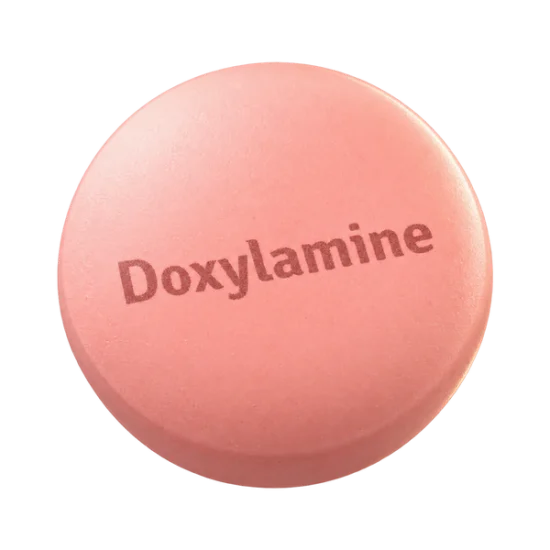
Doxylamine belongs to the ethanolamine group of first-generation antihistamines. Its medicinal action comes from blocking histamine H1 receptors, including receptors in the central nervous system. The product is supplied as pills or tablets containing doxylamine.
Doxylamine is used mainly for temporary sleep difficulty. It is not designed to correct the underlying causes of persistent insomnia, such as obstructive sleep apnoea, depression, chronic pain, restless legs syndrome, or uncontrolled anxiety.
Doxylamine succinate is the salt form used in many pharmaceutical formulations. The succinate portion helps create a stable medicinal form for oral tablets; the sedating pharmacological activity comes from doxylamine.
Directions for use
The regimen for the chosen strength should be confirmed with a healthcare professional before starting. Doxylamine is taken by mouth as a tablet, usually in the evening when there is enough time available for uninterrupted sleep.
Practical administration points include:
- Take only the confirmed dose.
- Use it at bedtime rather than during daytime hours.
- Swallow the tablet with water unless a healthcare professional gives different instructions.
- Avoid driving, cycling, operating machinery, or safety-sensitive work after taking it.
- Do not take an extra tablet during the night if sleep does not come quickly.
- If a dose is missed, skip it rather than taking it during the day.
A tablet should not be split, crushed, or chewed unless the specific formulation has been confirmed as suitable for that method. Altering a tablet can change how the dose is released or make swallowing more difficult.
Doxylamine is intended for short-term use. A course that continues beyond occasional nights should be reviewed clinically, especially when sleep difficulty occurs several nights each week.
Reasons not to use it
Doxylamine is not suitable for everyone. The following conditions require avoidance or specific medical assessment before use:
- Angle-closure glaucoma or a narrow drainage angle in the eye.
- Difficulty urinating, urinary retention, bladder-neck obstruction, or significant benign prostatic enlargement.
- Severe breathing problems or untreated sleep apnoea.
- Previous serious reaction to doxylamine or another antihistamine.
- A history of severe confusion or falls after sedating medicines.
- Conditions made worse by anticholinergic effects, including some bowel-obstruction disorders.
- Pregnancy or breastfeeding unless the regimen has been specifically assessed.
People with liver or kidney impairment may clear doxylamine more slowly. The medicine can then remain active longer and increase morning sedation or confusion. Older adults also face a higher risk of falls and cognitive effects.
Alcohol enhances doxylamine’s sedative effect and can increase poor coordination, confusion, falls, and breathing suppression. Avoid alcohol while using it.
Other medicines that may intensify sedation include opioid pain medicines, sedative anxiolytics, sleep medicines, some antipsychotics, sedating antidepressants, and other antihistamines. Combining several central nervous system depressants can produce a stronger effect than expected.
Anticholinergic medicines can add together. Atropine is one example. Other examples include some medicines for bladder symptoms, motion sickness, muscle spasms, Parkinsonian symptoms, and certain gastrointestinal conditions. The combined effect may produce severe dry mouth, blurred vision, constipation, rapid heartbeat, confusion, or urinary retention.
The World Health Organization identifies sedating medicines and alcohol as important contributors to impaired psychomotor performance and injury risk [3].
When this is not for you
This is not for you if you need to be fully alert early the next morning, have untreated sleep apnoea, cannot urinate normally, or have angle-closure glaucoma.
Before using doxylamine, the relevant medical discussion should include:
- Current medicines that cause sleepiness.
- Medicines with anticholinergic activity.
- Glaucoma history.
- Prostate enlargement or weak urinary flow.
- Chronic lung disease or sleep apnoea.
- Pregnancy, planned pregnancy, or breastfeeding.
- Previous falls, confusion, or unusual reactions to antihistamines.
Adverse reactions
Doxylamine’s most predictable effect is drowsiness. The same central H1 blockade that supports sleep can cause next-day sedation, slowed reaction time, reduced concentration, and impaired balance.
Anticholinergic effects can also occur:
| Side effect | Practical response |
|---|---|
| Dry mouth | Sip water and maintain oral hygiene; persistent symptoms need review |
| Constipation | Maintain suitable fluid and fibre intake unless medically restricted |
| Dizziness or poor balance | Rise slowly and avoid driving or hazardous activity |
| Difficulty urinating | Stop further doses and seek medical advice promptly |
Other possible effects include blurred vision, headache, thickened mucus, nausea, and confusion. Older adults may be more sensitive to confusion, falls, urinary retention, and prolonged sedation.
Morning “hangover” effects become more likely when doxylamine is taken late, when sleep time is shortened, or when it is combined with another sedating substance. Alcohol can make the impairment much stronger.
A dry mouth is easy to dismiss. It can become uncomfortable enough to disturb sleep, increase thirst, and worsen dental problems when it persists. Constipation may also appear after only a few doses in people who already have slow bowel movements.
Rare but serious reactions can include severe confusion, hallucinations, marked agitation, irregular heartbeat, breathing difficulty, collapse, or a serious allergic reaction. Urgent medical attention is needed for facial swelling, wheezing, fainting, severe palpitations, or inability to pass urine.
The European Medicines Agency describes antihistamine-related sedation and anticholinergic effects as clinically relevant considerations for medicines in this class [2].

Uses
Doxylamine is intended for occasional sleeplessness and transient insomnia in adults. It may help when the main problem is difficulty falling asleep, although residual sedation can affect alertness after waking.
First-generation antihistamines are sometimes selected for short-term sleep support because their central H1-blocking effect begins during the same night. Their limitation is tolerance: the sedative effect may feel less useful after repeated use, while anticholinergic effects can remain troublesome.
Typical clinical uses include:
- Temporary difficulty falling asleep.
- Short episodes of disturbed sleep.
- Occasional sleep disruption linked to a brief change in routine.
- Short-term nighttime use when daytime alertness is not required soon after waking.
Persistent insomnia requires a different clinical approach. Cognitive behavioural therapy for insomnia, sleep-schedule correction, treatment of pain, and assessment for sleep apnoea may provide more lasting benefit than repeated antihistamine use.
Doxylamine should not be used to cover up unexplained sleepiness during the day. Excessive daytime sleepiness may indicate a sleep disorder, medication effect, neurological condition, or another health problem.
Comparison
Doxylamine and diphenhydramine are first-generation H1 antihistamines with central sedative effects. Both can cause next-day impairment and anticholinergic symptoms. They are not interchangeable without checking the active substance, strength, and intended regimen.
| Feature | Doxylamine | Diphenhydramine |
|---|---|---|
| Main action | Central H1 blockade with anticholinergic activity | Central H1 blockade with anticholinergic activity |
| Clinical profile | Often produces prolonged nighttime and morning sedation | Sedating, with duration influenced by the formulation and dose |
| Main limitations | Drowsiness, dry mouth, constipation, urinary retention, confusion | Drowsiness, dry mouth, dizziness, confusion, urinary retention |
Doxylamine may feel longer-lasting for some users, which can support sleep maintenance but also increase morning impairment. Diphenhydramine may wear off sooner in some people, though it can still cause significant sedation and anticholinergic effects.
Neither medicine is a preferred long-term solution for chronic insomnia. The choice depends on the clinical situation, other medicines, age, urinary symptoms, glaucoma risk, and the required level of alertness the next day.
Common mistakes
Several use patterns reduce benefit or increase harm:
- Taking doxylamine after alcohol.
- Repeating the dose because sleep has not started quickly.
- Combining it with another antihistamine or sleep product.
- Taking it shortly before an early morning journey or work shift.
- Driving after waking while still dizzy or mentally slow.
- Using it repeatedly without reviewing persistent insomnia.
- Ignoring new difficulty urinating.
- Crushing or chewing a tablet without confirming that the formulation permits it.
- Assuming a dry mouth is harmless when it is accompanied by blurred vision or inability to pass urine.
- Giving the medicine to another person with a different medical history.
One practical point is easy to miss: the absence of strong sleepiness does not prove that reaction time is normal. Residual impairment can persist after the subjective feeling of sedation has faded.
What doctors say
In clinical practice, doctors usually view doxylamine as a short-term option for occasional sleeplessness, not as a treatment for the causes of chronic insomnia. The first question is often why sleep has changed: pain, stress, breathing pauses, stimulant use, shift work, restless legs, and mood symptoms can all alter sleep.
A clinician will also consider the next morning. A person who drives early, works at heights, supervises children, or operates machinery may face more harm from residual sedation than benefit from a longer sleep period.
Doctors pay close attention to age. In older adults, the balance often shifts toward confusion, constipation, urinary retention, and falls. The American Geriatrics Society lists first-generation antihistamines among medicines that may be inappropriate for many older people because of anticholinergic burden [4].
The practical expectation is modest: doxylamine may help with temporary sleep onset, but it does not restore a disrupted sleep schedule or treat sleep apnoea.
Questions and answers
Can a doxylamine tablet be split, crushed, or chewed?
A doxylamine tablet should only be split, crushed, or chewed when the specific formulation has been confirmed as suitable for that method. The U.S. Food and Drug Administration advises that dosage-form instructions can affect how an oral medicine is released and tolerated, with guidance applicable to doxylamine products in 2024 [5]. Swallowing the tablet whole with water is the usual approach unless a healthcare professional confirms another method. Do not alter it to obtain a faster sedative effect.
How does doxylamine differ from diphenhydramine?
Both medicines block central H1 histamine receptors and can cause sedation, dry mouth, dizziness, and constipation. The British National Formulary (2025) describes both as first-generation antihistamines with anticholinergic effects, while their duration and individual response can differ. Doxylamine may cause more persistent next-day drowsiness in some users, whereas diphenhydramine may feel shorter-acting for some formulations. Neither should be combined with the other.
Which symptoms mean stopping doxylamine and seeking urgent medical help?
Urgent help is needed for breathing difficulty, facial or throat swelling, fainting, severe palpitations, marked confusion, hallucinations, or inability to pass urine. The European Medicines Agency (2025) treats severe allergic reactions, major central nervous system effects, and serious anticholinergic symptoms as reasons for immediate assessment. Stop further doses when these symptoms appear. Severe dizziness after a fall also warrants prompt medical evaluation.
What should be discussed with a doctor before starting doxylamine?
Discuss glaucoma, prostate enlargement, weak urinary flow, sleep apnoea, chronic lung disease, pregnancy, breastfeeding, liver or kidney impairment, and previous reactions to sedating medicines. MOHAP (2024) medication-safety principles support reviewing the full medicine list before combining products that affect alertness or anticholinergic function. Include non-prescription antihistamines, travel-sickness products, opioid pain medicines, and medicines for bladder symptoms. Alcohol use should also be disclosed because it can intensify sedation.
How long does a doxylamine course last, and is long-term use acceptable?
Doxylamine is intended for short-term management of occasional sleeplessness, not indefinite nightly treatment. NICE (2025) guidance on insomnia emphasises addressing persistent sleep problems and contributing conditions rather than relying on repeated sedating medicines. A course that extends beyond occasional use should be reviewed, especially if sleep difficulty continues or daytime sedation develops. Do not increase the dose or extend the course without confirming the plan with a healthcare professional.
Is doxylamine suitable for older adults?
Older adults are more susceptible to confusion, falls, constipation, urinary retention, blurred vision, and prolonged sedation from first-generation antihistamines. The American Geriatrics Society (2023) advises caution with medicines carrying a strong anticholinergic burden because these effects can cause clinically significant harm. Age-related changes in kidney and liver function may also prolong the medicine’s action. A lower-risk sleep strategy may be preferred after reviewing the person’s health conditions and medicines.
Do you offer anonymous delivery?
Your order will be securely packed and shipped within 24 hours. This is exactly what your package will look like (images of an actual item sent). It has the size and look of a regular private letter (24x11x0.7 cm) and its contents cannot be seen.
Sources
- U.S. Food and Drug Administration (2015). Unisom SleepTabs (doxylamine succinate) Drug Facts label.
- European Medicines Agency (2017). Guideline on Good Pharmacovigilance Practices (GVP), Module VI — Collection, management and submission of reports of suspected adverse reactions to medicinal products.
- World Health Organization (2019). Medication Safety in Polypharmacy.
- American Geriatrics Society (2023). AGS Beers Criteria for Potentially Inappropriate Medication Use in Older Adults.
- U.S. Food and Drug Administration (2013). Tablet Splitting.