After several weeks, I felt less urinary discomfort and was drinking water more regularly. I still needed testing, so I did not treat it as a replacement for medical follow-up.
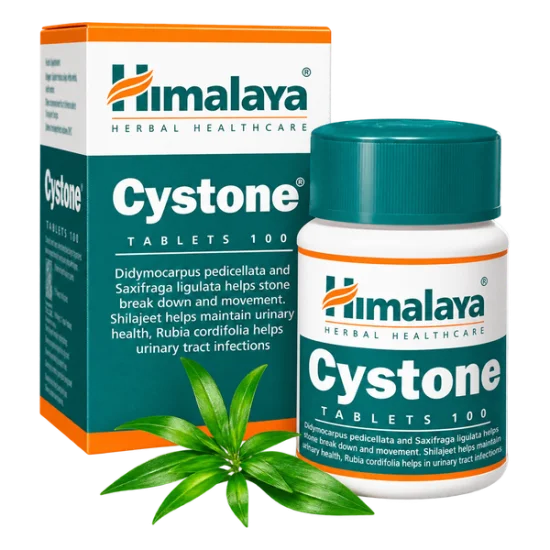
Cystone tablets are a herbal formulation for adults seeking support for urinary tract comfort and normal kidney function. They are used alongside appropriate clinical care for concerns such as urinary crystals, recurrent stone formation, and mild urinary discomfort.
About this product
The formulation is intended to support urine flow and help maintain a healthy urinary environment.
Pharmacological action
The intended actions of a urinary botanical formulation may include support for urine flow, urinary comfort, and the handling of mineral crystallisation. These effects should be understood as supportive rather than equivalent to the action of a prescription stone-dissolving medicine or a procedure.
What it contains
A precise ingredient list is essential when someone has a plant allergy, takes several medicines, is pregnant, or has reduced kidney or liver function. Herbal constituents can have pharmacological effects, even when they are traditionally used for urinary support.
Pharmacological principles
Traditional terminology can also cause confusion. “Natural” describes the source of an ingredient, not its strength, interaction profile, or suitability for every patient. People taking anticoagulants, diuretics, medicines for diabetes, or medicines processed by the liver need a medication review before starting a multi-ingredient herbal product.
Directions for use
The amount and frequency of Cystone depend on the purpose of use and are agreed with a doctor or pharmacist. The suitable regimen can differ between supportive urinary care, recurrent stone prevention, and use after a clinician has assessed a urinary complaint.
Use the tablets as follows:
- Take the agreed dose by mouth.
- Swallow the tablet with water.
- Use the product at the times recommended for the selected regimen.
- Maintain fluid intake only within the limits appropriate for your heart and kidney health.
- Do not increase the amount because discomfort has not improved quickly.
- Do not use Cystone as the sole response to severe pain, fever, vomiting, or difficulty passing urine.
An adult with heart failure, advanced kidney disease, a prescribed fluid restriction, or significant liver disease should not increase water intake without medical guidance. High fluid intake can be unsuitable in some conditions.
If the product is being used for a recurrent stone pattern, the underlying stone type matters. Calcium oxalate, uric acid, struvite, and cystine stones have different risk factors and preventive approaches. A urine analysis and stone analysis can change the advice.
Missed dose
If a dose is missed, take it when remembered unless the next scheduled dose is close. If the next dose is near, skip the missed dose and continue with the agreed schedule. Do not double the next dose.
Reasons not to use it
Cystone is not suitable for you if a clinician has told you that you have a urinary obstruction requiring urgent treatment and you are using the tablets as a substitute for that care. It is also unsuitable when you have a serious allergy to one of its components.
Situations requiring medical review
- Are pregnant, planning pregnancy, or breastfeeding.
- Have chronic kidney disease or reduced urine production.
- Have severe liver disease.
- Have heart failure or a prescribed fluid limit.
- Have repeated urinary infections.
- Have a known stone larger than a clinician considers likely to pass naturally.
- Take anticoagulants, antiplatelet medicines, diuretics, diabetes medicines, blood-pressure medicines, or immunosuppressants.
- Have had an unexplained allergic reaction to a herbal product.
Interaction evidence for multi-botanical products can be less extensive than for single-ingredient medicines. That does not prove that interactions are impossible. A pharmacist or doctor should assess the complete medication list before use, especially when treatment includes warfarin, insulin, medicines that lower blood pressure, or medicines with kidney toxicity.
Pregnancy and breastfeeding deserve separate consideration because safety data may not cover every botanical component or combination. Use during these periods should follow a clinician’s explicit recommendation.
When this is not for you
It is also unsuitable when you have a serious allergy to one of its components.
Extra caution is appropriate when a person has:
- A known allergy to any botanical ingredient.
- A history of severe kidney impairment.
- Significant liver disease.
- Pregnancy or breastfeeding.
- A fluid restriction.
- Recurrent stones without a confirmed diagnosis.
- Multiple medicines with a narrow safety margin.
Adverse reactions
Cystone may be tolerated without major problems by many adults, but a herbal formulation can still cause unwanted effects. Possible reactions include stomach discomfort, nausea, loose stools, constipation, headache, or an allergic response to a botanical component.
Stop using the product and seek prompt medical advice for facial swelling, breathing difficulty, widespread rash, fainting, severe vomiting, or rapidly worsening pain. These symptoms may signal an allergic reaction or a urinary problem that needs assessment.
A practical point is easy to miss: changing urine flow can alter how often someone urinates, but it should not cause severe weakness, confusion, or persistent dizziness. Those symptoms require assessment rather than a higher dose.
Urinary symptoms can also be caused by infection. Fever, chills, flank tenderness, cloudy urine with systemic symptoms, or feeling acutely unwell should not be managed with a urinary-support tablet alone. The WHO describes antimicrobial resistance as a major health concern, so antibiotics should be selected after appropriate clinical assessment rather than taken without confirmation [3].
Uses
The formulation is used in integrative urology as supportive care. It does not replace imaging, urine testing, blood tests, pain control, antibiotics for a confirmed infection, or a procedure when a stone is too large to pass naturally.
Primary urinary tract benefits
Cystone may support the following goals:
- Maintaining normal urinary flow.
- Supporting urinary tract comfort.
- Helping reduce the concentration of crystallising substances through adequate urine production.
- Supporting the natural passage of very small urinary particles.
- Supporting a preventive plan for people with recurrent urinary crystals when a clinician has identified the cause.
- Complementing fluid and dietary measures selected for the stone type.
The phrase “lithotripsy-facilitation” refers to support around the passage or breakdown of small stone material. It does not mean that tablets can mechanically fragment a large obstructing stone. A stone causing obstruction may require urological treatment, such as shock-wave lithotripsy, ureteroscopy, or another procedure selected after imaging.
Role in urinary discomfort
Urinary burning, frequency, and lower abdominal discomfort can have several causes. A urinary tract infection, ureteric stone, enlarged prostate, medication effect, and other conditions can produce similar symptoms. Cystone may be used as supportive urinary care, but it should not delay a urine test when symptoms suggest infection.
The product is most appropriately considered as part of a wider plan that includes fluid intake suited to the person’s kidney and heart function, evaluation of recurrent stones, and attention to the composition of previous stones. Cystone is not a treatment for acute renal colic by itself.
NICE guidance on renal and ureteric stones stresses assessment of stone size, location, obstruction, infection, and kidney function before treatment decisions are made [1].

Comparison
Cystone belongs to a different category from prescription medicines and procedures used for urinary stones. The choice depends on stone size, obstruction, infection, kidney function, symptoms, and recurrence risk.
| Approach | Main role |
|---|---|
| Cystone tablets | Botanical support for urinary comfort, urine flow, and a broader stone-prevention plan |
| Prescription stone-directed treatment | Targets a diagnosed cause or stone type under medical supervision |
| Urological procedure | Removes or fragments a stone that is too large, obstructing, infected, or unlikely to pass |
A botanical product may suit supportive care after a clinician has ruled out urgent obstruction. Prescription treatment is more appropriate when laboratory results identify a correctable metabolic cause, such as persistently high uric acid or another abnormality. A procedure may be needed when a stone causes obstruction, ongoing severe pain, infection, kidney impairment, or failure to pass.
The American Urological Association recommends metabolic evaluation for selected patients with recurrent or high-risk stone disease. Prevention is more successful when it follows the stone’s composition and urine findings rather than relying on a general urinary product alone [2].
Common mistakes
Several habits can reduce the value of urinary-support treatment or delay needed care:
- Increasing the dose because symptoms continue after a short period.
- Drinking excessive amounts of water despite heart or kidney disease.
- Assuming that all urinary pain comes from a stone.
- Treating fever or chills with urinary tablets instead of seeking assessment.
- Combining several herbal urinary products without checking their ingredients.
- Stopping prescribed treatment when symptoms temporarily improve.
- Using an old regimen for a new episode without confirming the diagnosis.
- Ignoring reduced urine output or repeated vomiting.
- Taking a missed dose together with the next dose.
- Failing to mention supplements during a medication review.
One common misunderstanding concerns “flushing” the kidneys. Adequate hydration can reduce urine concentration for many people, but forced water intake does not safely solve every stone problem. The correct amount depends on kidney, heart, and fluid-balance status.
Another mistake is assuming that a lower pain level means the obstruction has resolved. A stone can move, symptoms can fluctuate, and infection can develop without dramatic pain at every stage.
What doctors say
In clinical practice, the first question is not simply whether a urinary product may help. It is whether the symptoms could indicate infection, obstruction, kidney impairment, or another condition requiring targeted treatment.
A physician would usually assess pain location, fever, vomiting, urine changes, previous stones, fluid intake, medicines, and relevant medical history. Imaging may be needed when a stone is suspected. Recurrent stone formers may also benefit from urine chemistry, kidney-function testing, and stone analysis.
Doctors generally view Cystone as a supportive option rather than a replacement for diagnosis. Its practical value is greatest when it is combined with a plan addressing the patient’s stone risk, fluid restrictions, diet, and follow-up findings.
Clinical expectations should remain measured. A tablet cannot guarantee that every stone will pass, cannot reliably treat an infected obstruction, and cannot replace a procedure when the stone is too large or lodged.
Questions and answers
What should I do after missing a Cystone dose?
Take the missed dose when remembered unless the next scheduled dose is close. In that case, skip it and continue with the planned schedule; do not take two doses together. NICE guidance published for renal and ureteric stones in 2019 supports treatment decisions based on symptoms, obstruction, and clinical findings rather than dose escalation . If repeated missed doses occur, use a simple routine linked to a regular meal. A written reminder can also support adherence.
How soon can the effect of Cystone become noticeable?
The time varies with the reason for use, the person’s symptoms, stone characteristics, hydration limits, and any underlying infection or obstruction. Cystone should not be judged by immediate pain relief because it is a supportive botanical product rather than an acute analgesic. The American Urological Association’s 2019 guidance supports evaluating recurrent stone disease through risk assessment and metabolic factors, not symptoms alone . Severe or worsening symptoms need assessment before waiting for an effect.
Which diet, exercise, or habits can help or hinder the result?
Fluid intake should follow the plan suited to kidney and heart function. Avoiding dehydration, limiting excess salt, and following dietary advice based on the stone type may support prevention, while very high salt intake can increase urinary mineral excretion in susceptible people. Regular physical activity is generally useful for health, but strenuous exercise during vomiting, fever, or severe colic can worsen dehydration. WHO guidance published in 2022 emphasises responsible, evidence-based management of urinary infections and avoiding self-treatment that delays appropriate care .
Can Cystone tablets be split, crushed, or chewed?
Swallow the tablets whole unless a doctor or pharmacist has specifically advised another method. Crushing or chewing can make swallowing easier for some people, but it may also alter taste, irritate the mouth, or make an accurate dose harder to take. The product’s tablet design and the person’s swallowing ability should guide the decision; NHS medicines advice published in 2024 also recommends checking the product information before altering a tablet. A clinician should advise on alternatives for anyone unable to swallow tablets.
What should I discuss with a doctor before starting Cystone?
Discuss your symptoms, previous stones, urinary infections, pregnancy or breastfeeding status, kidney and liver function, fluid restrictions, allergies, and every medicine or supplement you use. Mention fever, reduced urine output, visible blood, severe pain, vomiting, or known obstruction before considering supportive treatment. NICE guidance from 2019 identifies obstruction, infection, stone size, and kidney function as factors that affect management. A review is also useful when the product is intended for recurrent stone prevention rather than a single episode.
How long does a course last, and is long-term use acceptable?
The course length depends on the purpose of use and is agreed with a doctor or pharmacist. Long-term use should not continue automatically when symptoms recur, because repeated urinary symptoms may require testing or a different treatment plan. The American Urological Association’s 2019 clinical guidance supports follow-up based on recurrence risk and metabolic evaluation for selected patients . Review is needed if symptoms persist, new medicines are added, or kidney function changes.
Do you offer anonymous delivery?
Your order will be securely packed and shipped within 24 hours. This is exactly what your package will look like (images of an actual item sent). It has the size and look of a regular private letter (24x11x0.7 cm) and its contents cannot be seen.
Sources
- NICE (2019). Renal and ureteric stones: assessment and management, NICE guideline NG118.
- American Urological Association (2019). Medical Management of Kidney Stones: AUA Guideline.
- WHO (2022). Global report on infection prevention and control.