Skip to content
Atrovent
Active ingredient: Ipratropium Bromide

Atrovent

Quality products
24/7 Support
Fast delivery
Delivery from 4 days
Select pack Package Per unit Price

Free delivery on orders from AED 796.00, free express delivery from AED 1,194.00

Secure Payments
Track your order
Best price guarantee

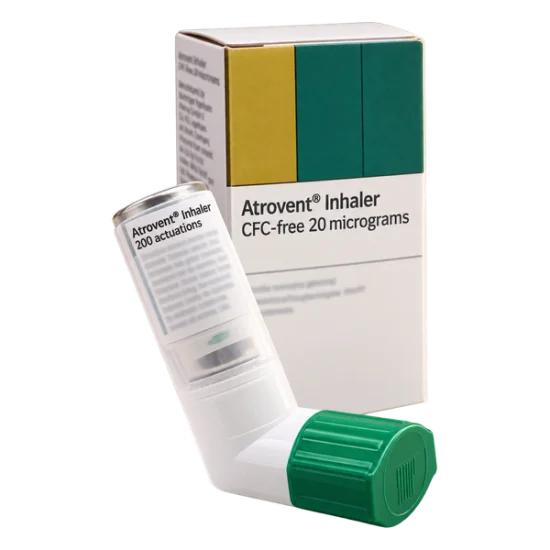
Patients with asthma, chronic bronchitis, emphysema, or COPD-related bronchospasm may be prescribed Atrovent. This pressurised inhaler contains ipratropium bromide, an inhaled anticholinergic bronchodilator that helps open narrowed airways.

About this product

Atrovent is a pressurised inhaler containing ipratropium bromide. Ipratropium belongs to the short-acting muscarinic antagonist class, also called an inhaled anticholinergic. It reduces excessive tightening of airway smooth muscle and improves airflow in obstructive respiratory disease.

Pharmacological action

Acetylcholine is a natural nerve-signalling chemical. In the airways, it can stimulate muscarinic receptors and promote bronchial muscle contraction and mucus secretion. Ipratropium blocks this local cholinergic signal, allowing the bronchial muscles to relax.

The result is bronchodilation.

Atrovent acts mainly within the respiratory tract. It has limited passage into the bloodstream when used correctly, which helps explain why its effects are concentrated in the airways rather than throughout the body. It does not work by reducing airway inflammation in the same way as an inhaled corticosteroid.

The pharmacological profile and safety warnings are described in regulatory prescribing information for ipratropium inhalers [1].

What it contains

Atrovent is a pressurised inhaler containing ipratropium bromide, a short-acting muscarinic antagonist and inhaled anticholinergic bronchodilator. It is supplied with 200 actuations and is administered through the mouth so the medicine reaches the bronchial tree. The amount used at each intake is set individually by the prescriber.

Directions for use

The product is a pressurised inhaler containing 200 actuations. It is administered through the mouth so the medicine reaches the bronchial tree.

The amount used at each intake is set individually rather than being one fixed number for every person. The prescriber determines the number of inhalations, the frequency, and the duration according to age, diagnosis, symptom pattern, and response.

Use involves these practical steps:

  • Sit or stand upright before inhaling.
  • Remove the cap and check that the mouthpiece is clear.
  • Breathe out gently away from the device.
  • Seal your lips around the mouthpiece.
  • Begin a slow, deep breath through the mouth while releasing the prescribed actuation.
  • Hold the breath briefly if comfortable, then breathe out slowly.
  • If another actuation is prescribed, wait briefly and repeat the same technique.
  • Replace the cap after use.

A slow inhalation is essential. Breathing in too quickly can leave medicine in the mouth and throat instead of carrying it into the lower airways. A spacer may help people who struggle to coordinate pressing the inhaler with breathing in, provided the prescriber approves its use with this device.

If an intake is missed, use the next prescribed dose when it is due. Do not compensate by taking repeated extra actuations unless a clinician has given a specific written plan.

Practise the hand-breath coordination before an episode of breathlessness. During severe wheezing, people often press too early or inhale too sharply, reducing the amount reaching the lungs.

A mouthpiece should remain clean and dry. Do not place the inhaler in water or attempt to repair a blocked valve. The remaining actuations matter: a pressurised inhaler can still produce a spray when the delivered medicine is becoming unreliable, so an agreed replacement plan prevents unexpected gaps in treatment.

Reasons not to use it

Atrovent is not suitable for people with a previous serious allergic reaction to ipratropium, atropine-like medicines, or any ingredient in the prescribed inhaler.

  • Narrow-angle glaucoma
  • Prostatic hyperplasia with urinary symptoms
  • Previous urinary retention
  • Cystic fibrosis with increased sensitivity to drying effects
  • Severe difficulty coordinating inhaler use
  • A history of serious reaction to inhaled anticholinergic treatment

Additive anticholinergic effects can occur when it is combined with other medicines that cause dry mouth, constipation, blurred vision, fast heartbeat, or urinary retention. Tell the prescriber about inhaled anticholinergics, medicines for bladder symptoms, some antihistamines, and tricyclic antidepressants before treatment is adjusted.

When this is not for you

NOT for you if: you have had a serious allergic reaction to ipratropium or cannot use the inhaler safely without clinical support.

Adverse reactions

The most familiar adverse effect of ipratropium is dry mouth. Other possible effects include throat irritation, cough, headache, nausea, dizziness, unpleasant taste, and constipation. These reactions are often mild, but persistent symptoms can interfere with treatment.

Potential anticholinergic effects include:

  • Dry mouth or throat
  • Blurred vision
  • Pupil dilation, called mydriasis
  • Eye discomfort or increased eye pressure
  • Difficulty passing urine or urinary retention
  • Palpitations
  • Dizziness or headache
  • Nausea or gastrointestinal discomfort

Ipratropium can cause blurred vision if aerosol reaches the eyes. People with narrow-angle glaucoma are at higher risk of an acute rise in eye pressure. Severe eye pain, halos around lights, marked redness, or sudden visual disturbance needs urgent assessment.

Paradoxical bronchospasm is rare but serious. It means that wheezing or breathing difficulty becomes worse immediately after inhalation rather than better. Stop using the affected dose and seek urgent medical treatment if this reaction occurs.

Dry mouth may improve when you take small sips of water and maintain regular oral hygiene. Do not mask persistent thirst with excessive caffeinated drinks, which can worsen palpitations or sleep disturbance.

Urinary retention deserves special attention in men with prostate enlargement and in anyone with a previous history of difficulty emptying the bladder. A weak urinary stream, painful bladder fullness, or inability to urinate requires prompt medical attention.

One practical detail is easy to miss: blurred vision after inhaler use is not always a general drug reaction. It can occur when the spray contacts the eye, so mouthpiece positioning and a slow inhalation technique matter.

Uses

Atrovent is used for reversible narrowing of the airways associated with obstructive respiratory disorders. Prescribers may use ipratropium inhalation in adults and selected younger patients when bronchospasm contributes to wheezing, chest tightness, coughing, or shortness of breath.

Clinical uses include:

  • Chronic obstructive pulmonary disease, including chronic bronchitis and emphysema
  • Bronchial asthma with bronchospasm
  • Episodes of airflow limitation where an inhaled anticholinergic is clinically appropriate
  • Combination bronchodilator treatment for more pronounced bronchospasm
  • Maintenance relief of symptoms caused by excessive airway constriction

Atrovent can improve the mechanical movement of air through narrowed bronchi. It does not remove the underlying cause of every asthma attack, infection, allergy, or COPD flare. A sudden deterioration in breathing requires urgent medical assessment, especially when speaking becomes difficult, the lips turn blue, or the usual rescue treatment fails.

The World Health Organization and respiratory treatment guidance recognise bronchodilators as a central part of symptom control in chronic obstructive airway disease [2]. The appropriate role of Atrovent depends on the diagnosis, the severity of symptoms, and other inhaled medicines already prescribed.

Comparison

Atrovent differs from beta-2 agonist inhalers and inhaled corticosteroids because it blocks muscarinic airway signalling rather than directly stimulating beta-2 receptors or suppressing airway inflammation.

Approach Main action Typical clinical role
Atrovent, an inhaled anticholinergic Blocks muscarinic signals that tighten airway muscle Bronchodilation in COPD and selected bronchospasm
Short-acting beta-2 agonist Stimulates beta-2 receptors to relax airway muscle Rapid relief of bronchospasm when prescribed
Inhaled corticosteroid Reduces airway inflammation over time Long-term control of steroid-responsive airway disease

Atrovent may be selected when an anticholinergic pathway is useful, when COPD symptoms are prominent, or when a clinician is building a combination bronchodilator regimen. A beta-2 agonist may be preferred for a different symptom pattern or emergency plan. An inhaled corticosteroid addresses inflammation and cannot be replaced by Atrovent simply because both are inhaled.

In severe bronchospasm, an anticholinergic and a beta-2 agonist may be prescribed together. The two medicines act at different receptor systems, which can provide broader bronchodilation than either pathway alone. The exact combination and timing belong in the individual treatment plan.

Common mistakes

Poor outcomes often come from technique or treatment timing rather than from a lack of pharmacological activity. Common errors include:

  • Inhaling too quickly after pressing the canister
  • Failing to breathe out before the actuation
  • Spraying into the mouth without inhaling
  • Firing several actuations together without the prescribed interval
  • Pointing the mouthpiece toward the eyes
  • Using Atrovent as the only response to rapidly worsening asthma
  • Ignoring urinary difficulty after treatment begins
  • Continuing a dose that causes immediate worsening wheeze
  • Sharing an inhaler with another person
  • Assuming the inhaler is empty because the spray feels weaker, or assuming it is full because the valve still sprays

A spacer can help with coordination, but not every spacer fits every pressurised device in the same way. The device combination should be selected by the treatment team.

If the inhaler causes immediate tightness instead of relief, do not repeat multiple actuations to overcome it. Paradoxical bronchospasm needs urgent medical assessment.

What doctors say

In clinical practice, doctors often focus first on inhaler technique. A patient can appear to have treatment-resistant COPD or asthma when the real problem is that the aerosol never reaches the lower airways.

Prescribers also distinguish symptom relief from disease control. Atrovent can reduce bronchial narrowing, but it does not replace anti-inflammatory treatment when asthma inflammation requires it. It also does not treat bacterial infection, pulmonary embolism, heart failure, or low blood oxygen.

A physician will usually review:

  • The diagnosis behind the breathlessness
  • The number of daily actuations
  • Night-time symptoms and activity limitation
  • Use of other bronchodilators
  • Urinary symptoms and eye disease
  • The inhaler technique
  • Whether symptoms are becoming more frequent

The European Medicines Agency describes inhaled ipratropium as a locally acting bronchodilator with anticholinergic activity [3]. That distinction helps explain why Atrovent may relieve airflow limitation without addressing every driver of respiratory disease.

Questions and answers

Can Atrovent be combined with other inhalers or supplements?

Atrovent may be combined with a prescribed adrenergic β2 agonist because the two medicines act through different airway receptors. Respiratory guidelines from the Global Initiative for Chronic Obstructive Lung Disease, updated in 2025, describe bronchodilator combinations as a clinician-directed option in obstructive lung disease. Extra caution is needed with medicines or supplements that intensify dry mouth, constipation, blurred vision, palpitations, or urinary retention. Do not add another inhaled bronchodilator without a defined treatment plan. The prescriber should confirm the timing and doses.

Is Atrovent suitable for older adults?

Older adults can use Atrovent when the prescriber considers the respiratory benefit greater than the anticholinergic risks. Guidance from the WHO and geriatric prescribing principles recognised in 2025 support careful review of glaucoma, prostate symptoms, constipation, cognition, and urinary function in this age group. Older people may also need help coordinating the pressurised inhaler with breathing. A spacer or technique review can improve delivery when hand strength, arthritis, or breathlessness makes timing difficult.

Which condition can rule out Atrovent?

A serious allergy to ipratropium or a related atropine-like substance can rule out treatment. Narrow-angle glaucoma, urinary retention, and symptomatic prostate enlargement may also make Atrovent unsuitable or require a different approach. The FDA prescribing information reviewed in 2025 warns about eye exposure and urinary complications linked to anticholinergic activity. Severe eye pain, sudden visual change, or inability to urinate after inhalation requires urgent assessment.

Can people under 18 use Atrovent?

Use in children and adolescents depends on the specific diagnosis, inhaler formulation, device technique, and prescriber’s instructions. Paediatric respiratory guidance from the British National Formulary for Children in 2025 supports age-appropriate device selection rather than assuming that an adult inhaler technique will work for every child. A young child may need a spacer and mask or another delivery system. The adult dosing pattern should not be transferred to a child without an individual prescription.

How soon can the effect of Atrovent become noticeable?

Bronchodilation may begin after inhalation, though the timing and degree of relief vary with the severity and cause of airway narrowing. The FDA label for ipratropium inhalation, reviewed in 2025, describes a short-acting effect rather than all-day disease control. Some patients notice easier breathing within a short period, while others require combination treatment or assessment of a different cause of breathlessness. Failure to improve during severe symptoms should not be managed by repeated unsupervised doses.

Can Atrovent be used during pregnancy or breastfeeding?

Pregnancy and breastfeeding require an individual decision based on respiratory control and the prescribed formulation. The EMA’s regulatory information for inhaled ipratropium, reviewed in 2025, supports weighing maternal breathing needs against medicine exposure. Poorly controlled asthma or COPD can also create serious risks, so stopping prescribed respiratory treatment abruptly is unsafe. The prescriber should set the inhaler plan, especially when other bronchodilators or corticosteroids are also being used.

Do you offer anonymous delivery?

Your order will be securely packed and shipped within 24 hours. This is exactly what your package will look like (images of an actual item sent). It has the size and look of a regular private letter (24x11x0.7 cm) and its contents cannot be seen.

Sources

  1. U.S. Food and Drug Administration (2020). Atrovent HFA (ipratropium bromide) Inhalation Aerosol Prescribing Information.
  2. World Health Organization (2021). Package of Interventions for Rehabilitation: Module on Chronic Respiratory Diseases.
  3. European Medicines Agency (2023). Summary of Product Characteristics for Ipratropium Bromide Inhalation Products.

Atrovent: What Customers Say

3.6
Based on 4 reviews
James Z., 61 Bur Dubai Several weeks
Verified
Rating: 5 out of 5

The chest tightness eased after I learned to breathe in slowly. I had a dry mouth, although it was manageable with water. My first technique was poor, so the change became clearer after correction.

1 Oct 2026
Meera, 46 Al Reem Island Several weeks
Verified
Rating: 3.5 out of 5

The combination helped me climb stairs with less wheezing. I noticed a bitter taste and mild throat dryness during the first days. The inhaler did not remove every symptom, but breathing felt less restricted.

13 Oct 2026
Hannah, 39 Khor Fakkan Several days
Verified
Rating: 3 out of 5

I expected instant relief every time, but the response was slower than I had assumed. I also had brief blurred vision after one poorly aimed spray. Changing the angle solved that problem.

21 Oct 2026
Shamma, 28 Al Dhaid A short period
Verified
Rating: 3 out of 5

The inhaler was straightforward once I practised the timing. My mouth felt dry after each use, and I disliked the taste. The breathing symptoms improved, but I still needed the rest of my prescribed asthma plan.

29 Oct 2026
Get our free app Shop faster and track your orders Install